



Context
In November 2024 Gervaise DEBUCQUET explained in L&T REX#29 explained how she developed an “enhanced” version of the CERBAZINE crisis simulation game. This simulation game co-designed with Erika LOGEAIS —featuring four fictitious companies confronted with territorial pollution in a former industrial basin—used to be part of an elective course for entry into the Grande École Master’s program since its creation in 2018, involving around one hundred students each year. Drawing on the work ofAlexandre GAREL,Gervaise integrated financial dimensions into the game, including the use of the Corporate Biodiversity Footprint tool and its impact on corporate investment decisions depending on their respective “climates.”
In parallel last November 2024 the first hackathon GAIA for transition and ecological impact took place with participation of four companies based in the Pays de la Loire and Brittany regions. This hackathon fostered the development of territorial cooperation around corporate challenges.
The underlying philosophy of these two events—one highlighting the management of a regional pollution crisis, the other emphasizing territorial cooperation—converged during the GAIA Immersive Days held on March 16 and 17.
A Day for Understanding
Can we truly prepare for the unpredictable? Can we develop skills in responsiveness, anticipation, risk management, and collective intelligence without being overwhelmed by our emotions? As we know, human beings naturally resist stepping outside their comfort zone.
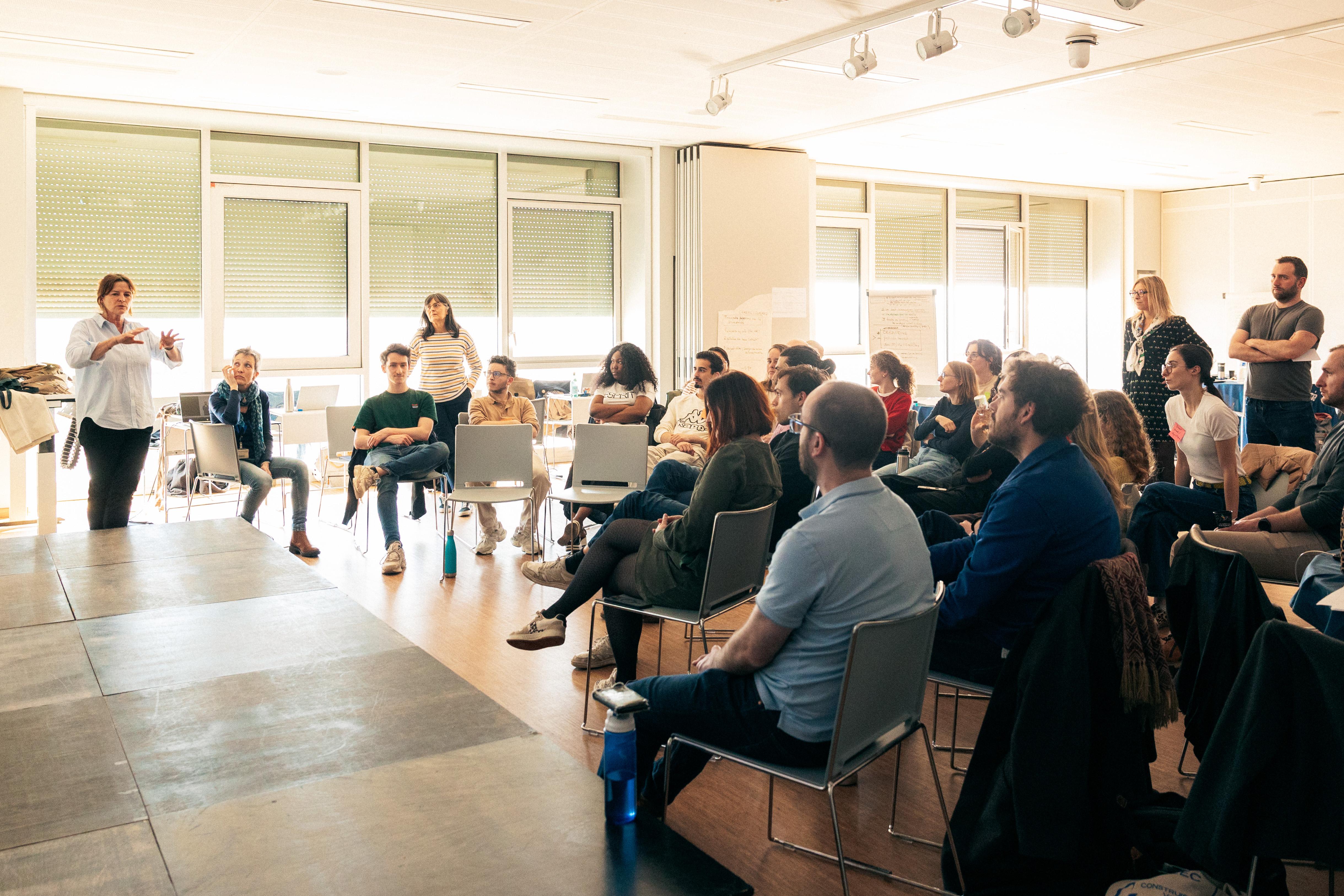
These were the questions faced by students from the MS APTE program and a few participants from the MSc Sustainable Business during the two-day event. MS APTE and a few curious students of the MSC Sustainable Business.
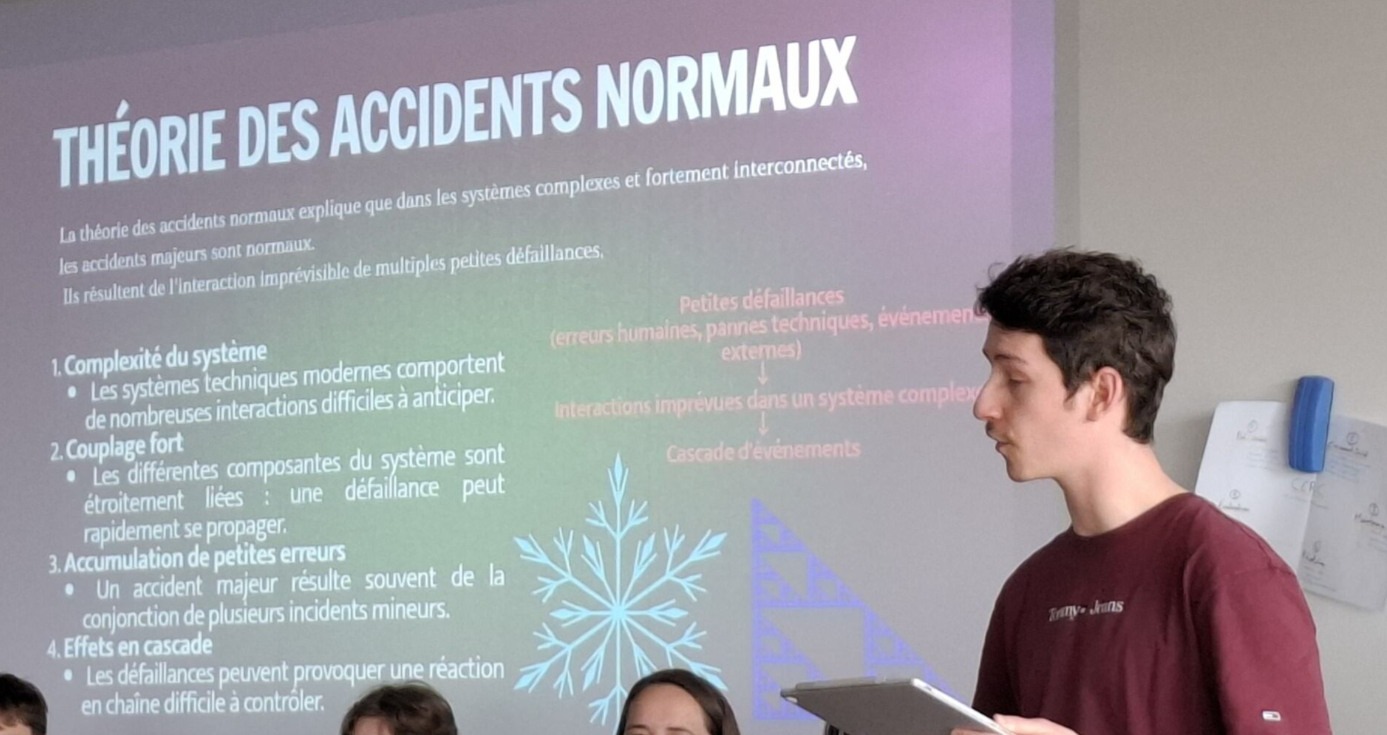
The first day allowed them, working in groups and through the study of a crisis of their choosing, to explore what occurs during “tipping point” events. Their work ranged from understanding decision-making biases under uncertainty, to organizational resilience, to the various forms of communication used in risk management.
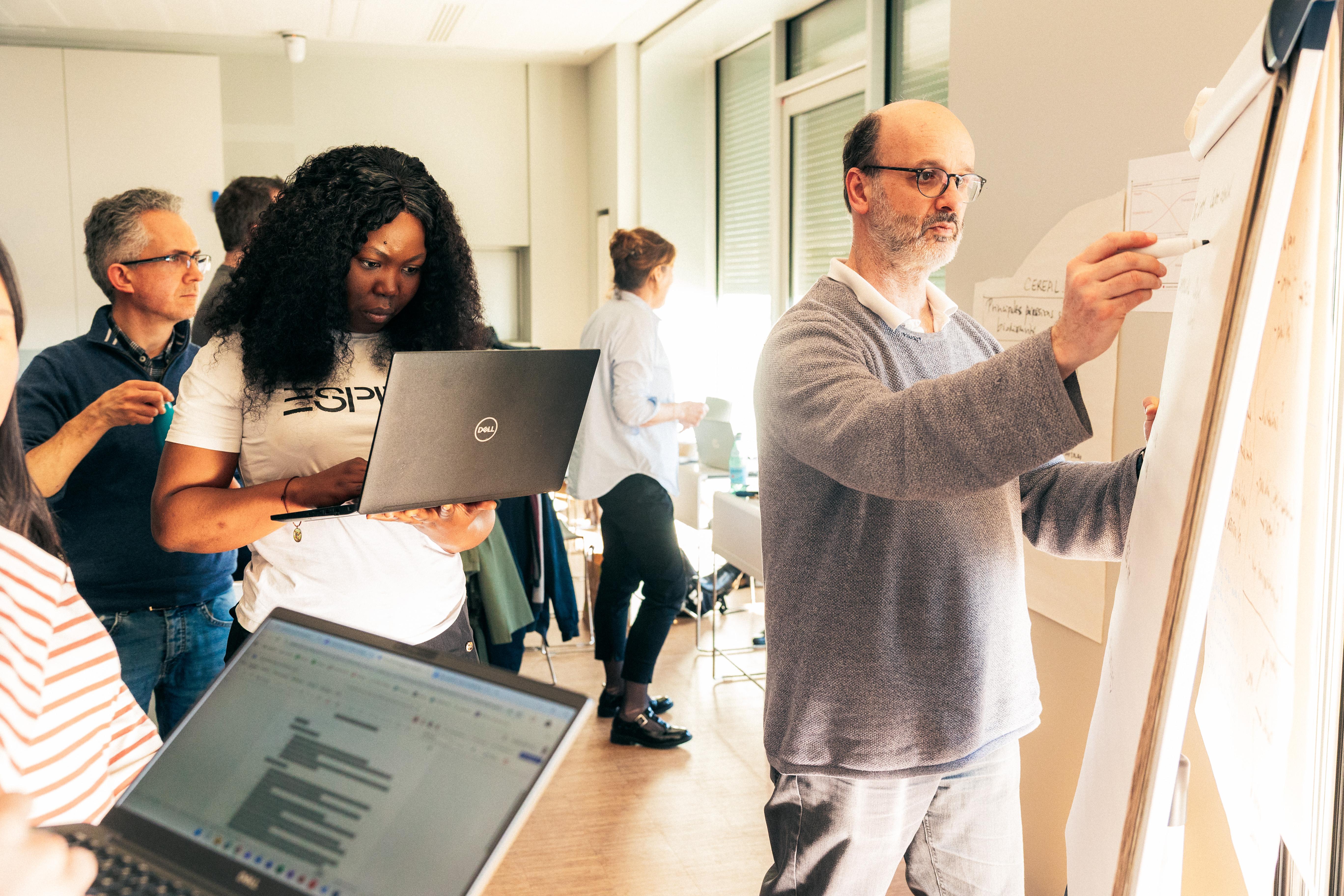
One group also focused on understanding the Corporate Biodiversity Footprint and Net Present Value (NPV), which were essential preparatory elements for the second day’s crisis simulation. This first day followed a flipped-classroom design: each group had to present their findings to their peers, with full creative freedom—from short performances to LEGO constructions. They were also required to design a knowledge quiz for their fellow students.
A Day for Experimentation
On the second day, students were able to take stock of these elements by experiencing the crisis game (as a reminder, see the replay REX), a history of territorial pollution in which all stakeholders find themselves “embarked” in the same boat.
They observed that even with theoretical knowledge—and fully aware they were engaging in a simulation—emotional mechanisms linked to uncertainty could easily arise. The debriefing led by Jonathan Mille, scientific associate at GIECO, and Evelyne Fenart, Head of Crisis Monitoring and Anticipation at Savencia, offered a valuable reflective perspective at the end of the day.
We are never fully prepared to face the unpredictable, and each crisis has its own specificities. However, recognizing weak signals, understanding tipping point dynamics, anticipating risks to better manage urgency and downstream disorganization, and enabling collective intelligence by redefining one’s usual role are essential competencies for students’ professional development.
In our view, management schools must proactively address these challenges. The geopolitical context of early 2026—with the obstruction of the Strait of Hormuz causing cascading economic consequences across all sectors—illustrates this vividly. Have we truly learned from the COVID crisis and our adaptation processes? Current events clearly prompt us to reconsider this, both individually and collectively.
Beyond this specific GAIA Immersive Days event, it may be worthwhile to consider developing a broader initiative centered on crisis management, in order to cultivate these competencies and soft skills in both initial and continuing education programs.


