
Starting from September 2022, Audencia offered students who wanted to follow their PGE advanced management semester in distance learning. A total of 11 courses, taught in English are involved, plus a module dedicated to distance learning.
Teachers, in collaboration with the members of the Learning & Teaching Development cluster, They have scripted three other courses, Digital marketing, Managing across culture, Measuring environmental and social impact, taking into account the specific constraints and opportunities of the distance. The face-to-face sessions were transformed into a variety of complementary teaching resources such as videos, quizzes, virtual classes, interactive and fun activities, etc. made available on the Blackboard platform.
USEFUL LINKS

The designed interactive and fun activities
In this article, we present to you some tailored interactive and fun activities carried out within this program that can be adapted and deployed in other courses and learning contexts.
Explore the interactive activities by clicking on the link behind each course name.
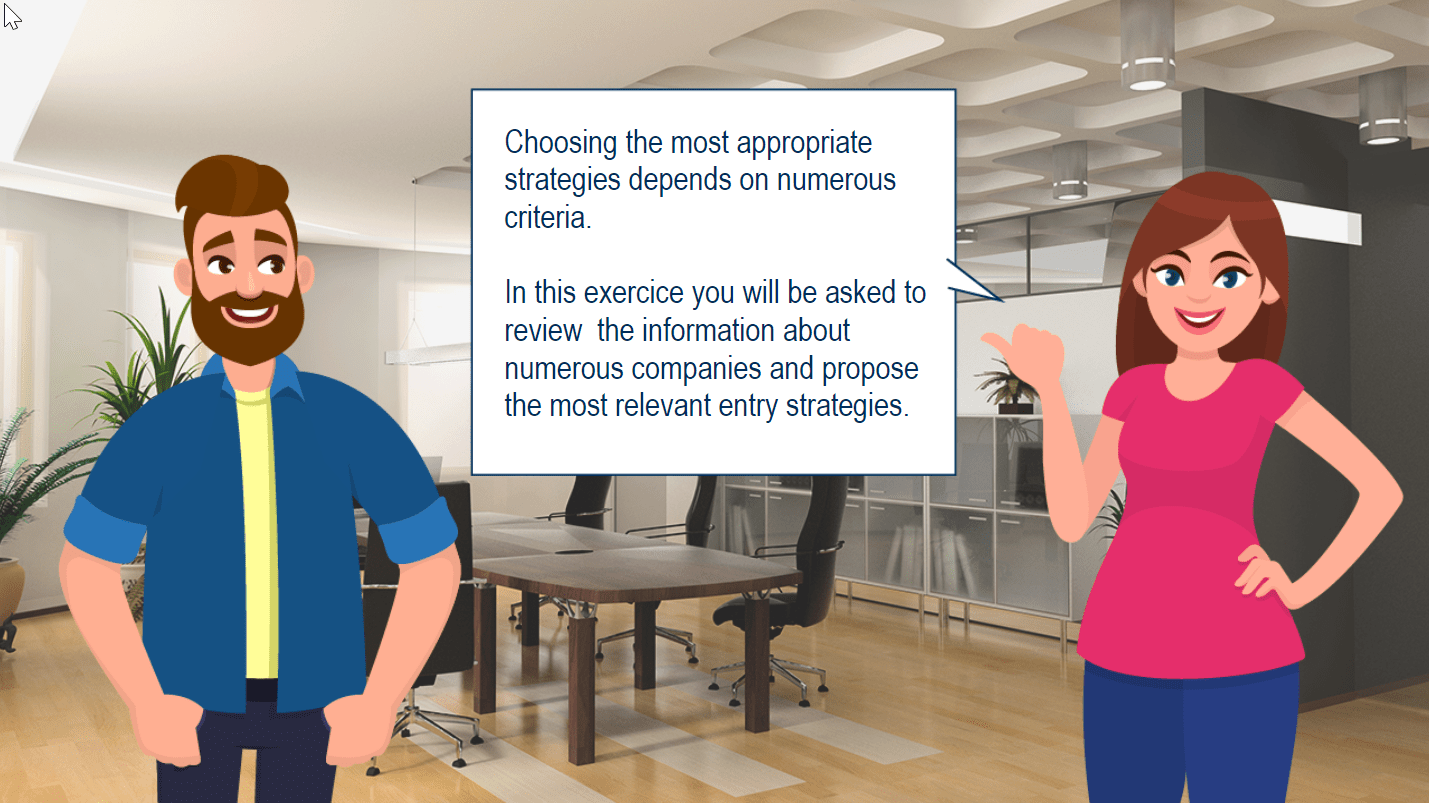
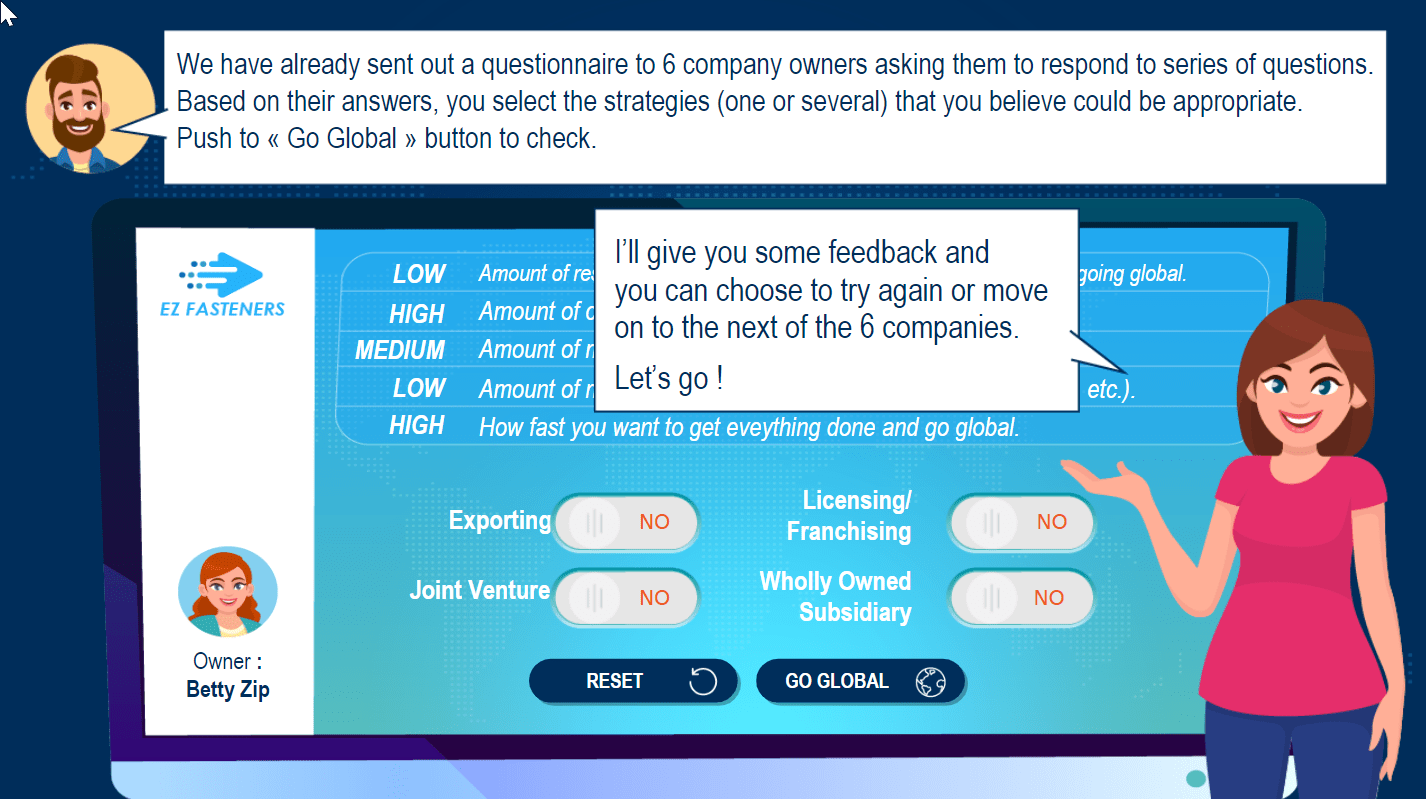
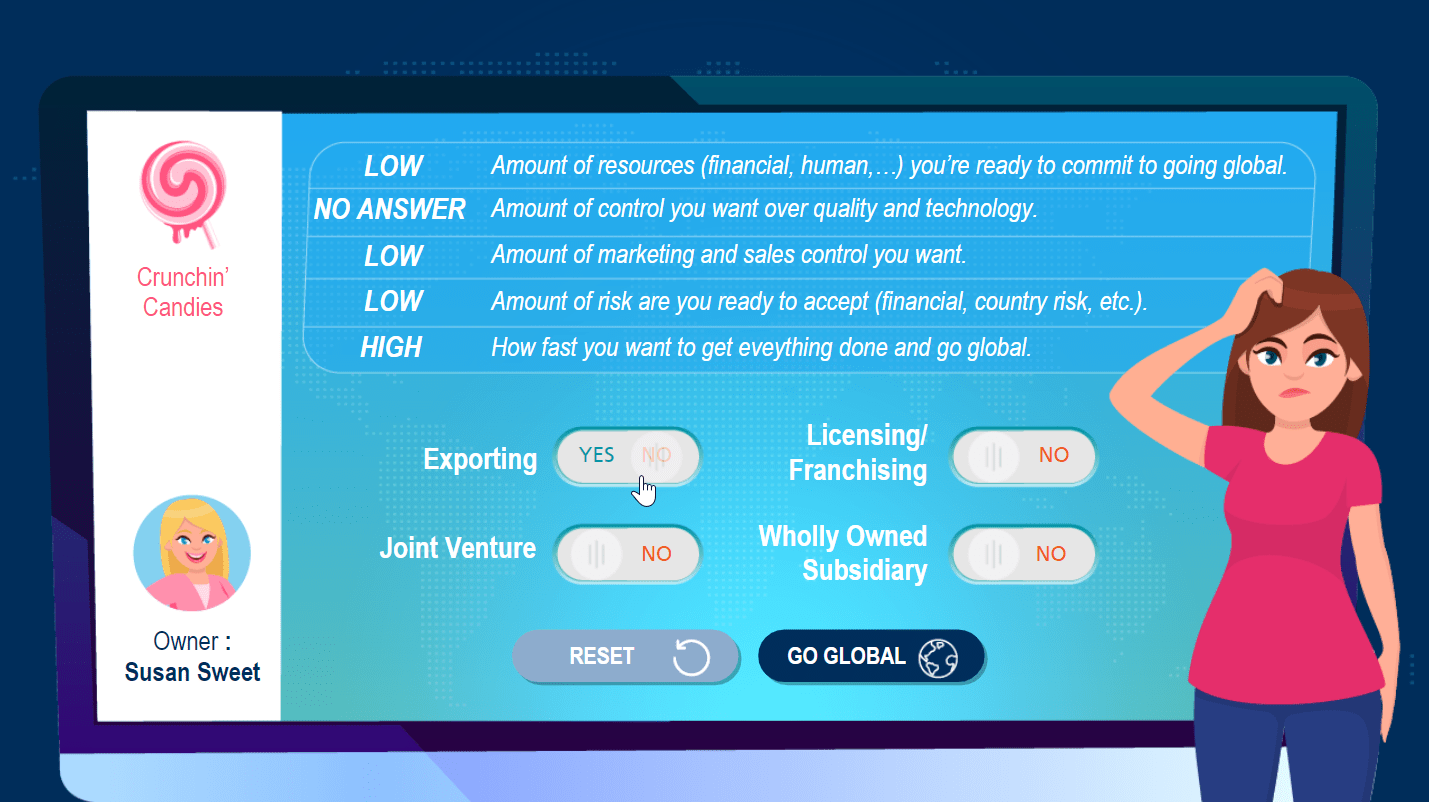
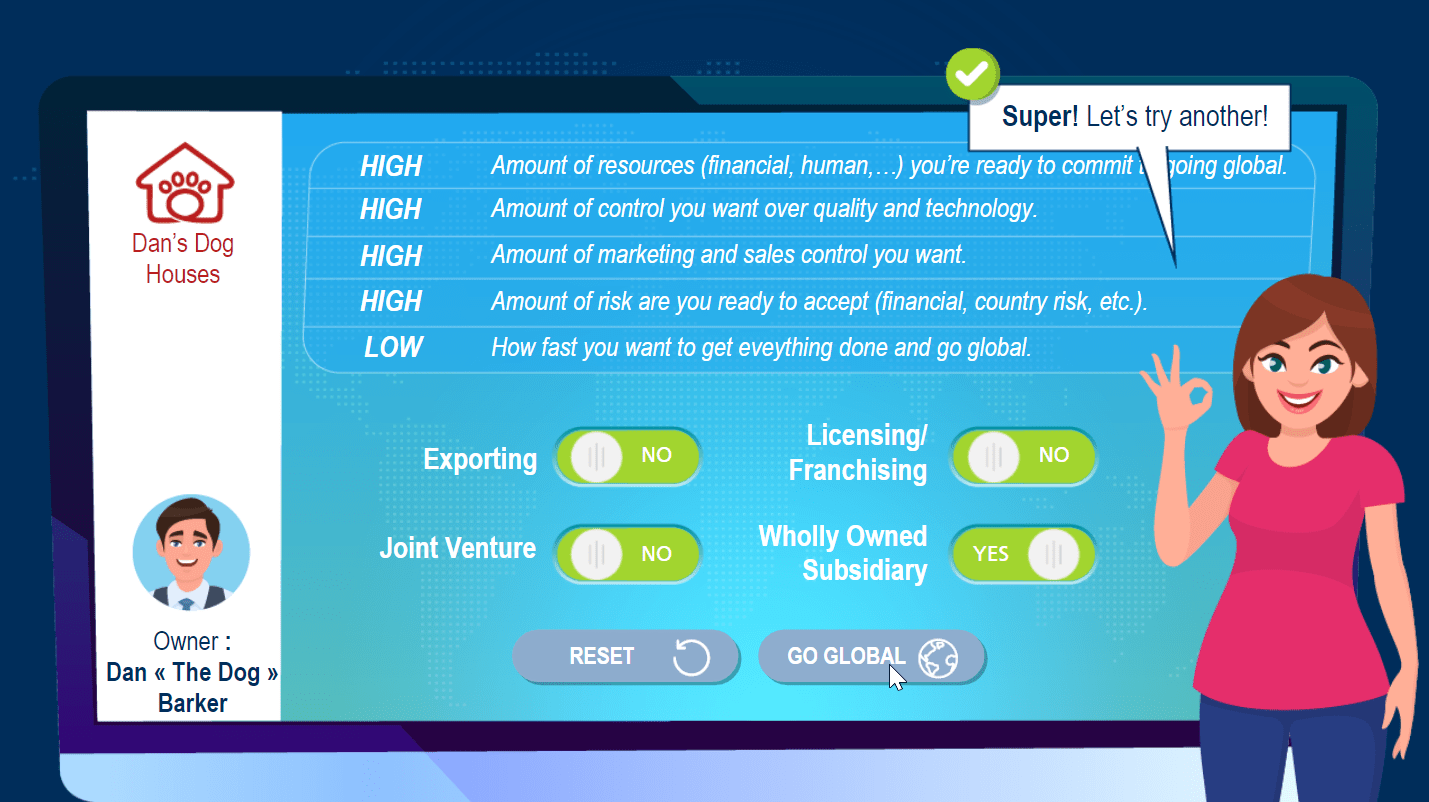
Short “gamified” activities on specific course concepts
Course: Strategic Management
Duration: 5 min
Particularity:
The learner solves the challenge posed by a simple interaction mechanism.
Character attitudes, visual feedback immediately following choices made, the gamification of certain activities (timer and scores, etc.) contribute greatly to the learner’s sense of “fun”.
Some examples
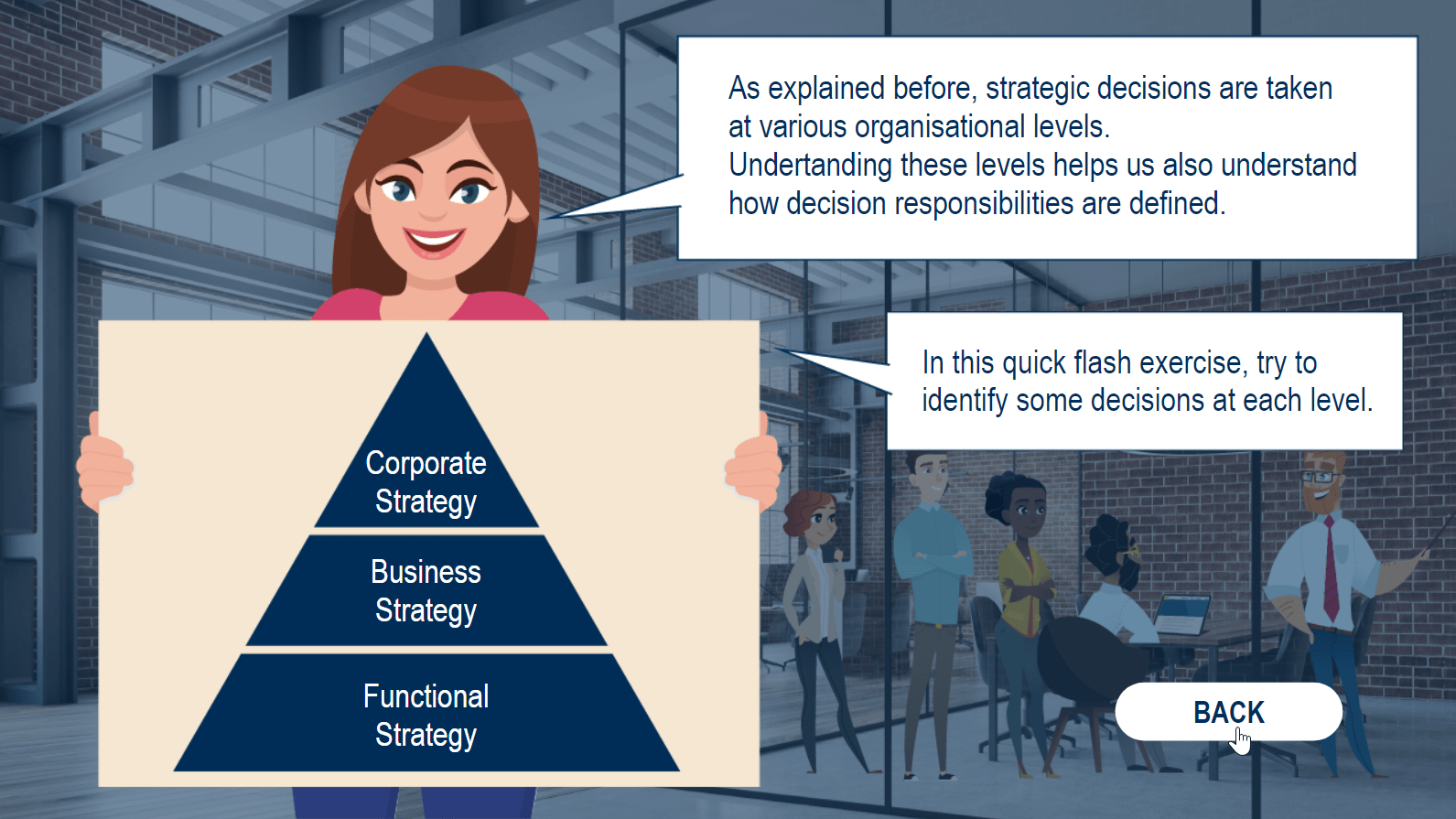
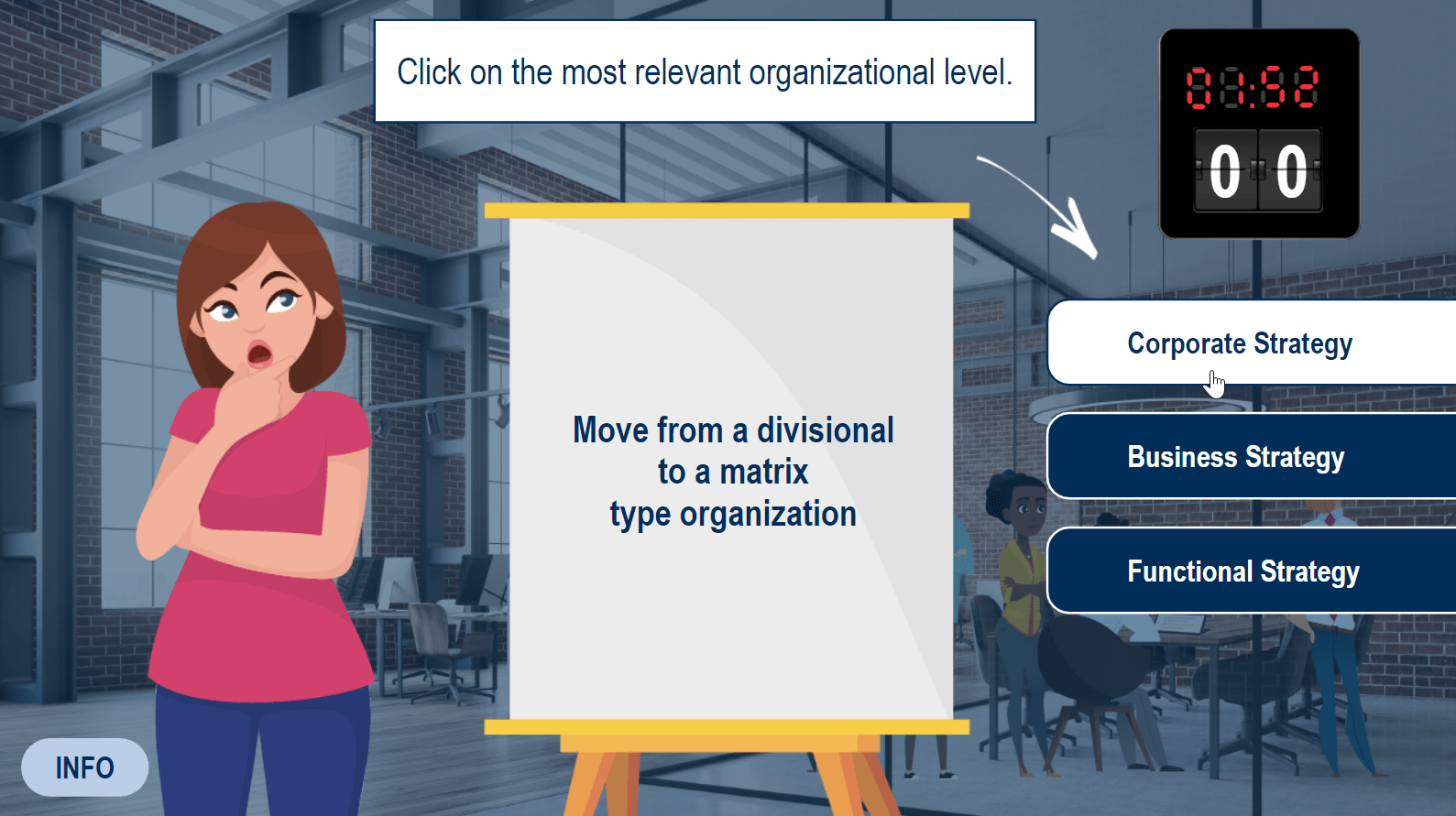
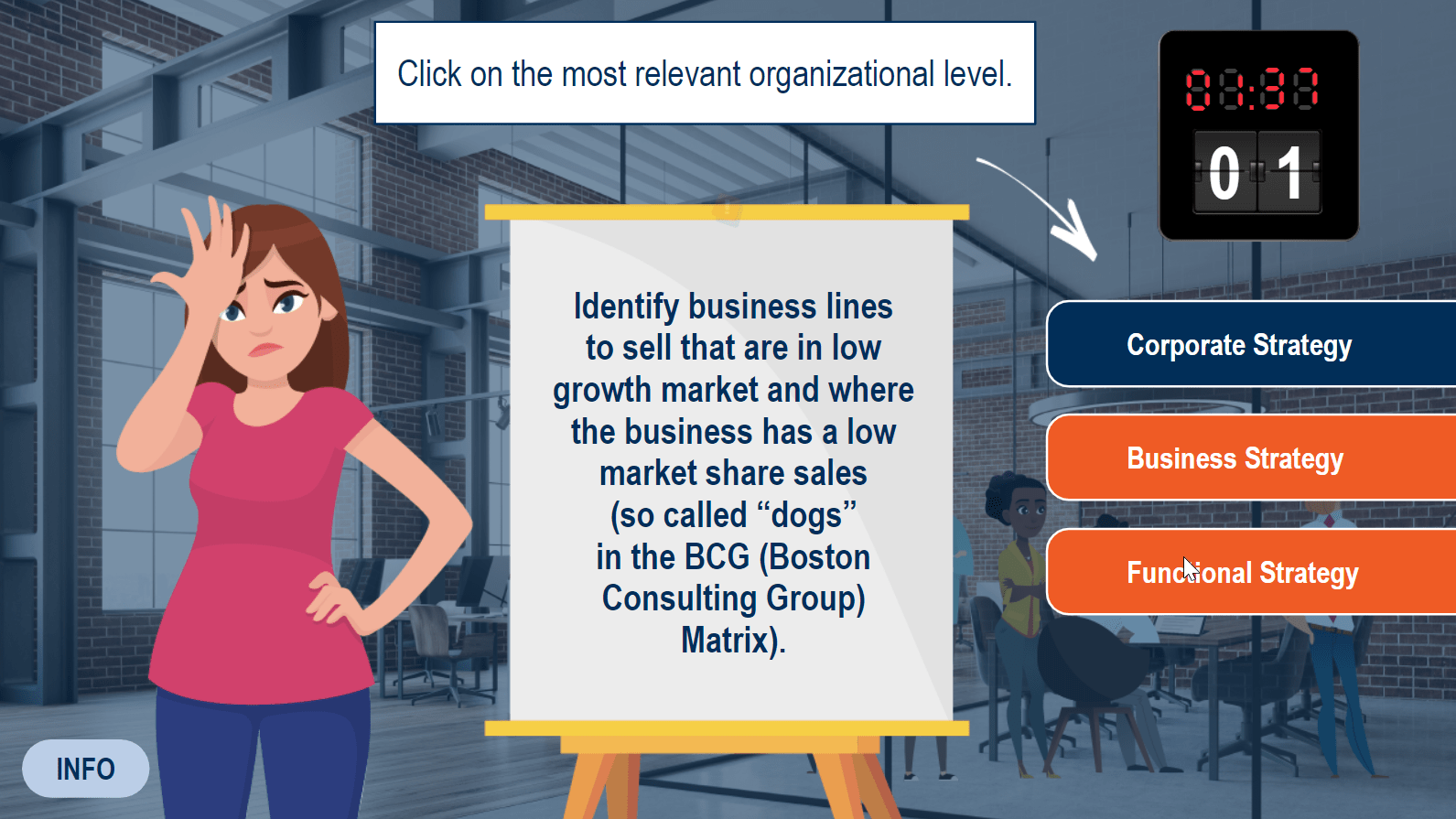
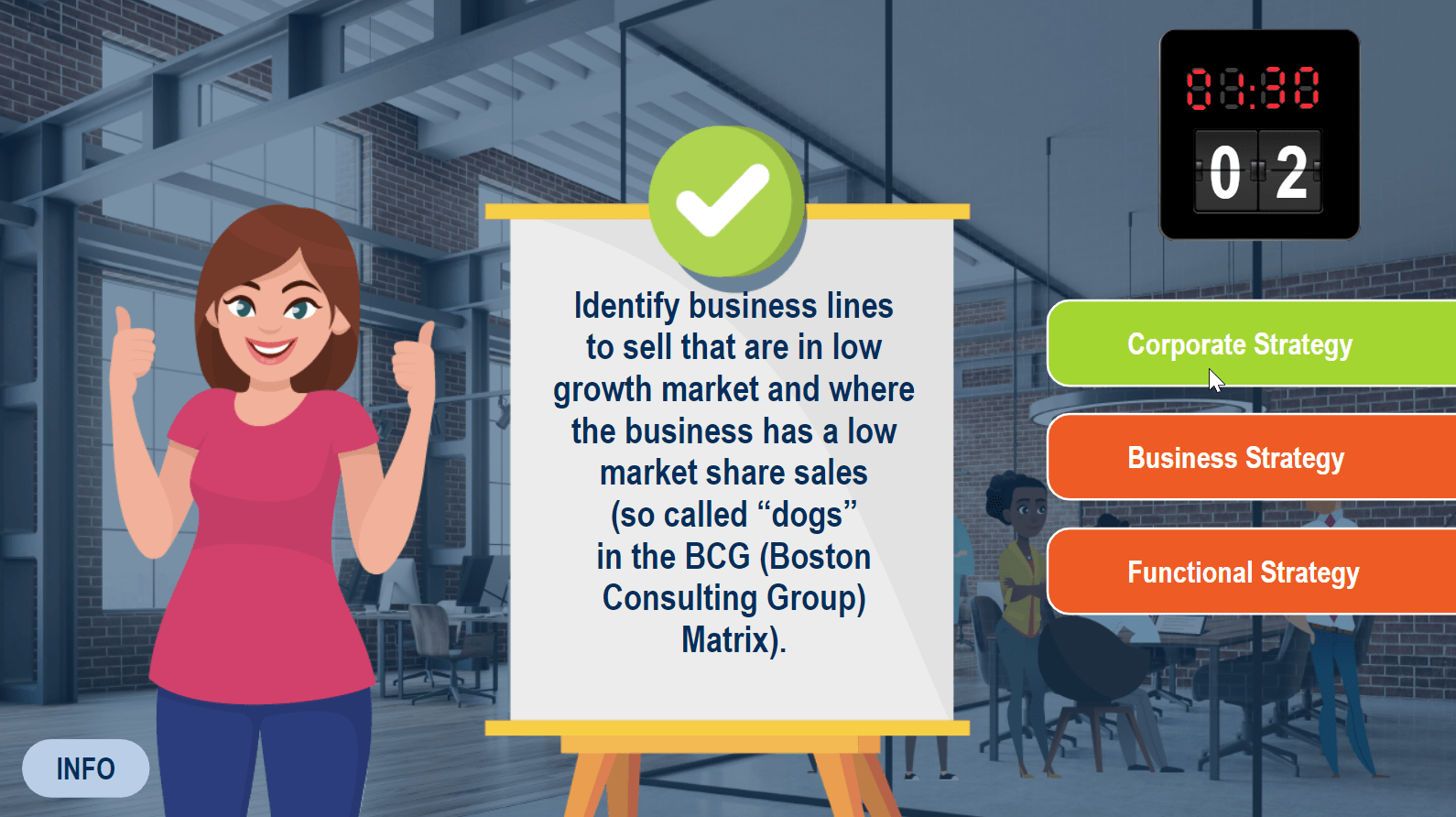
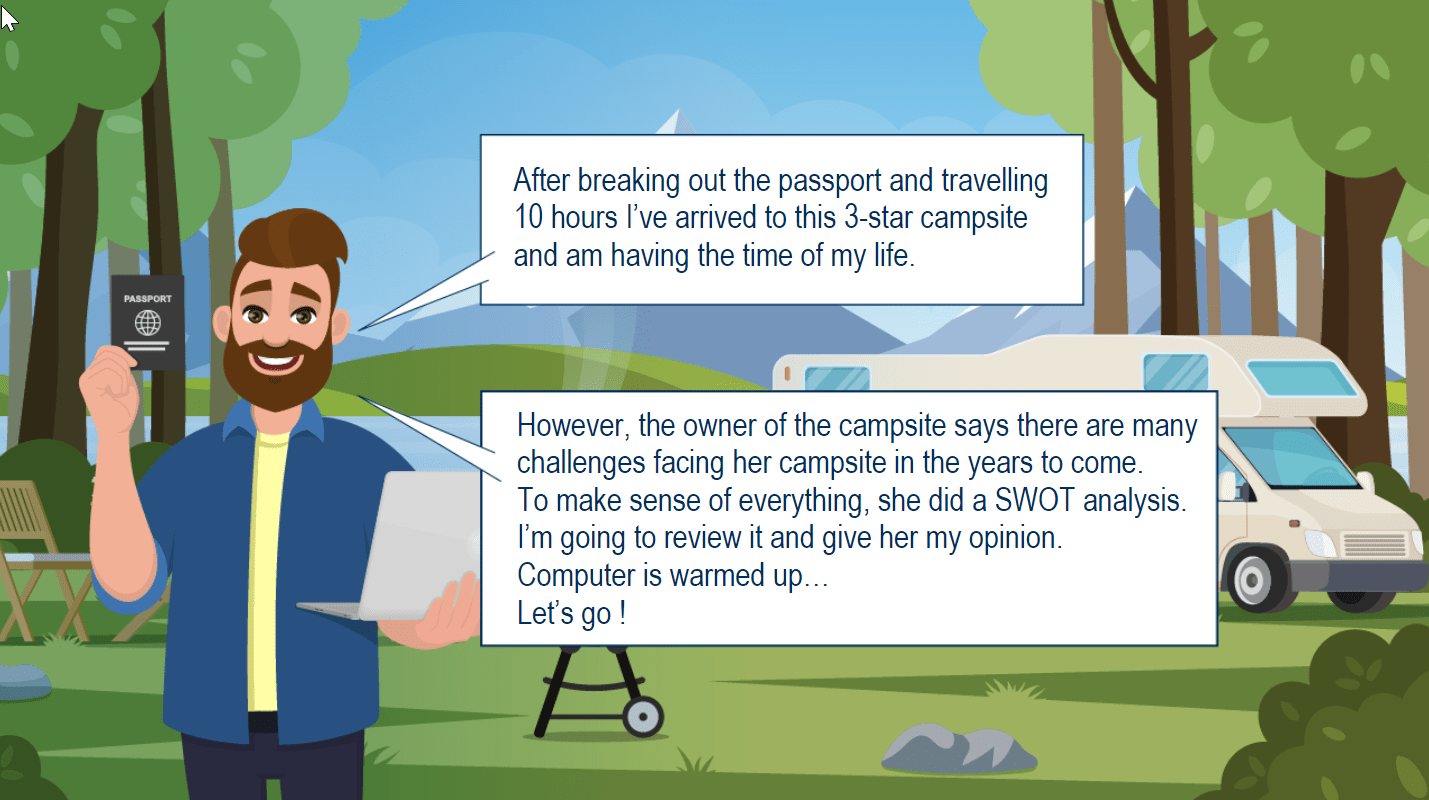
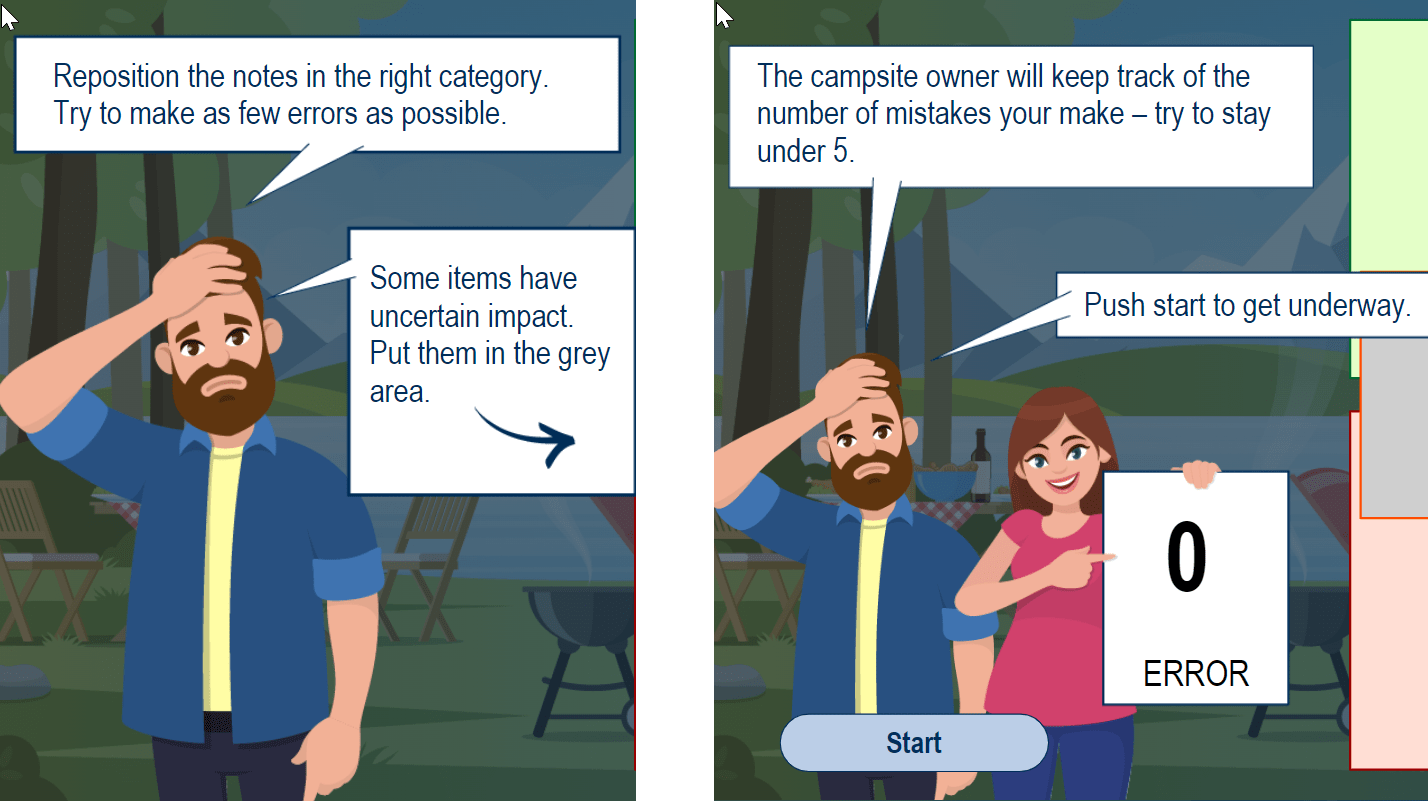
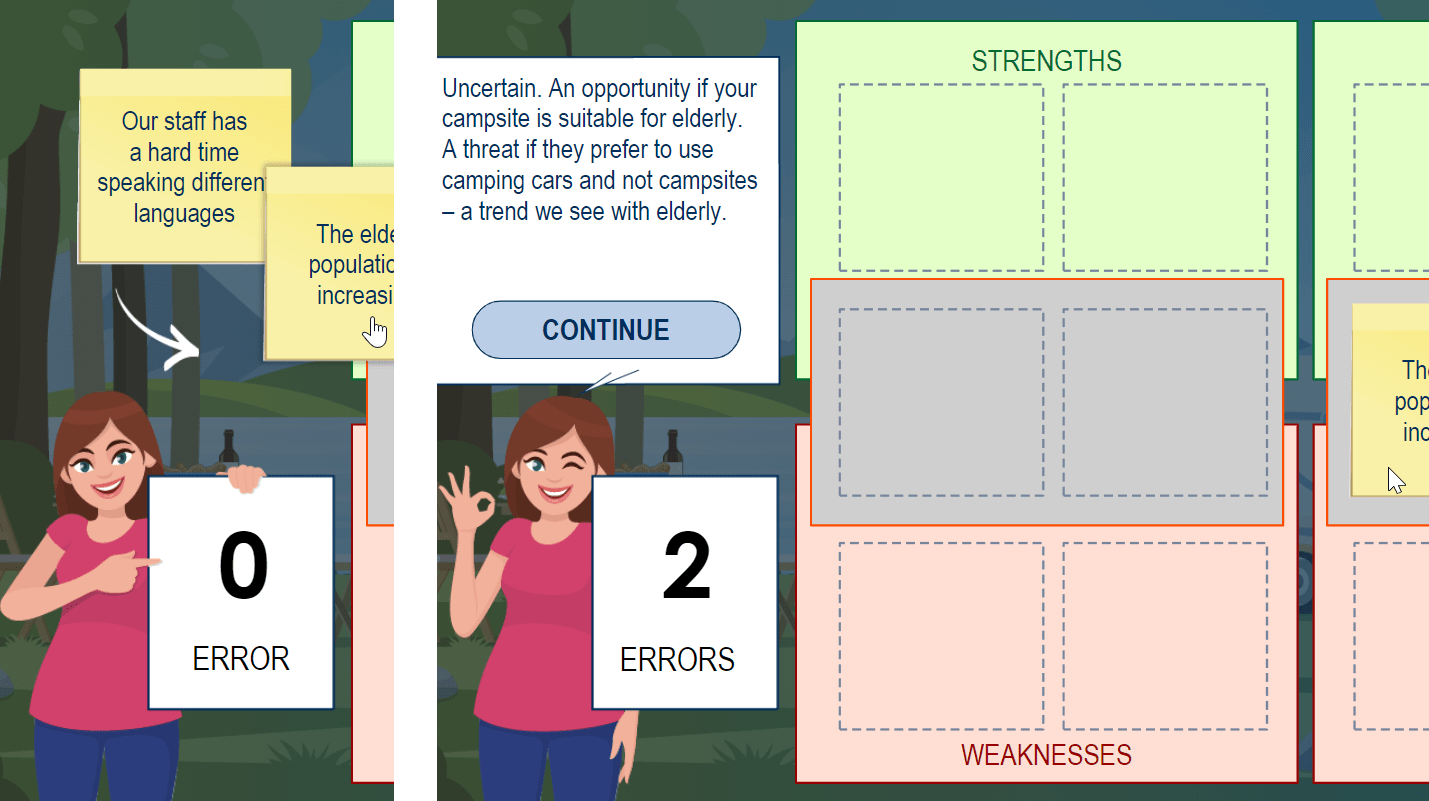
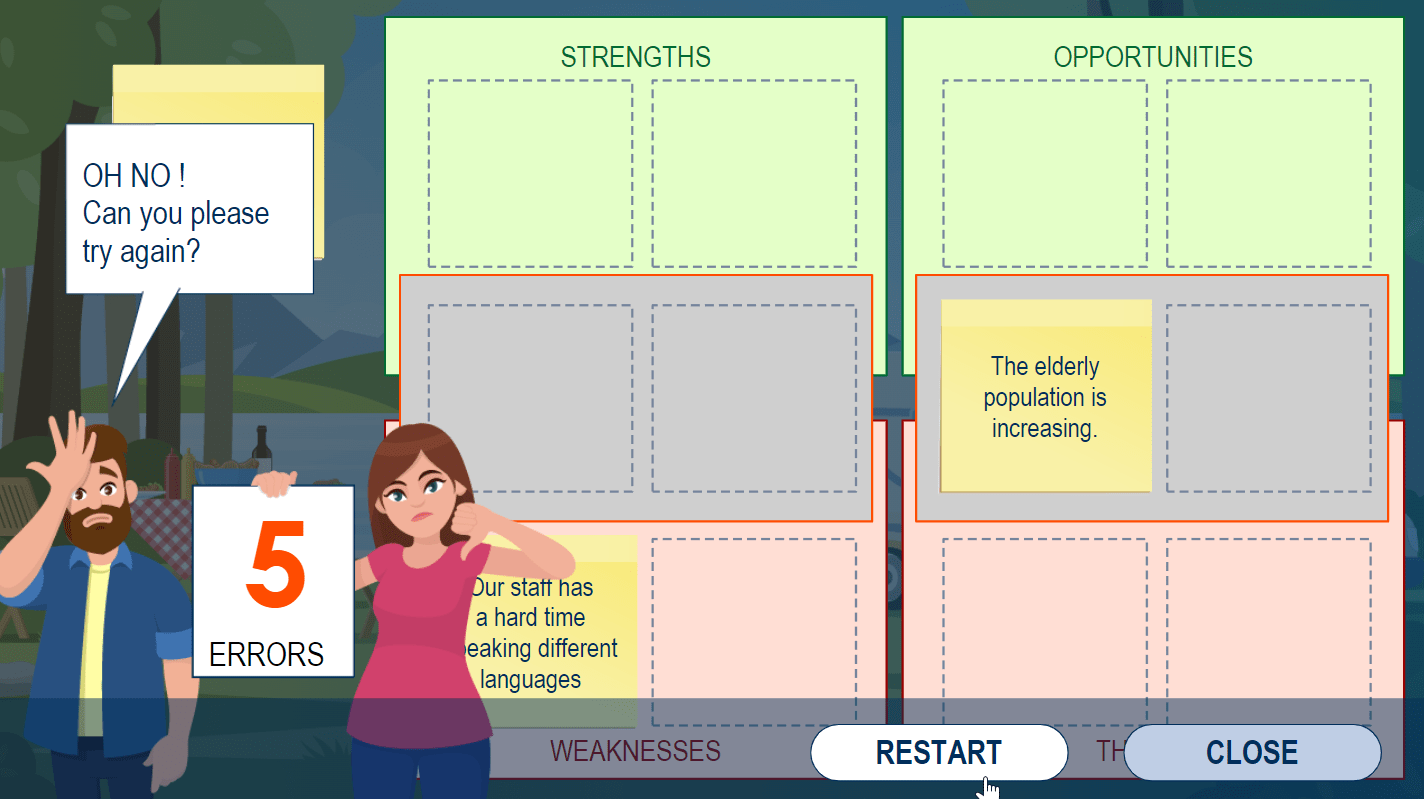
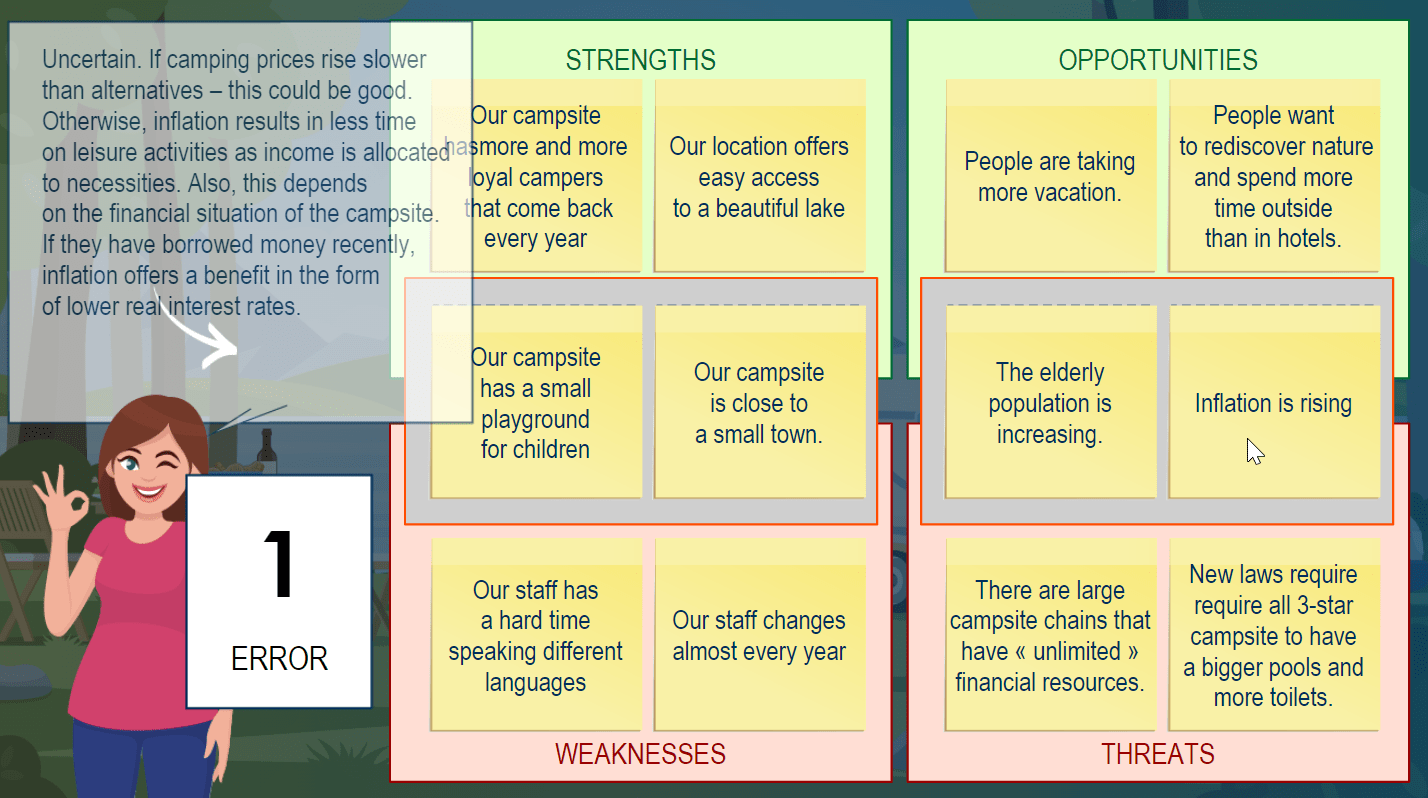
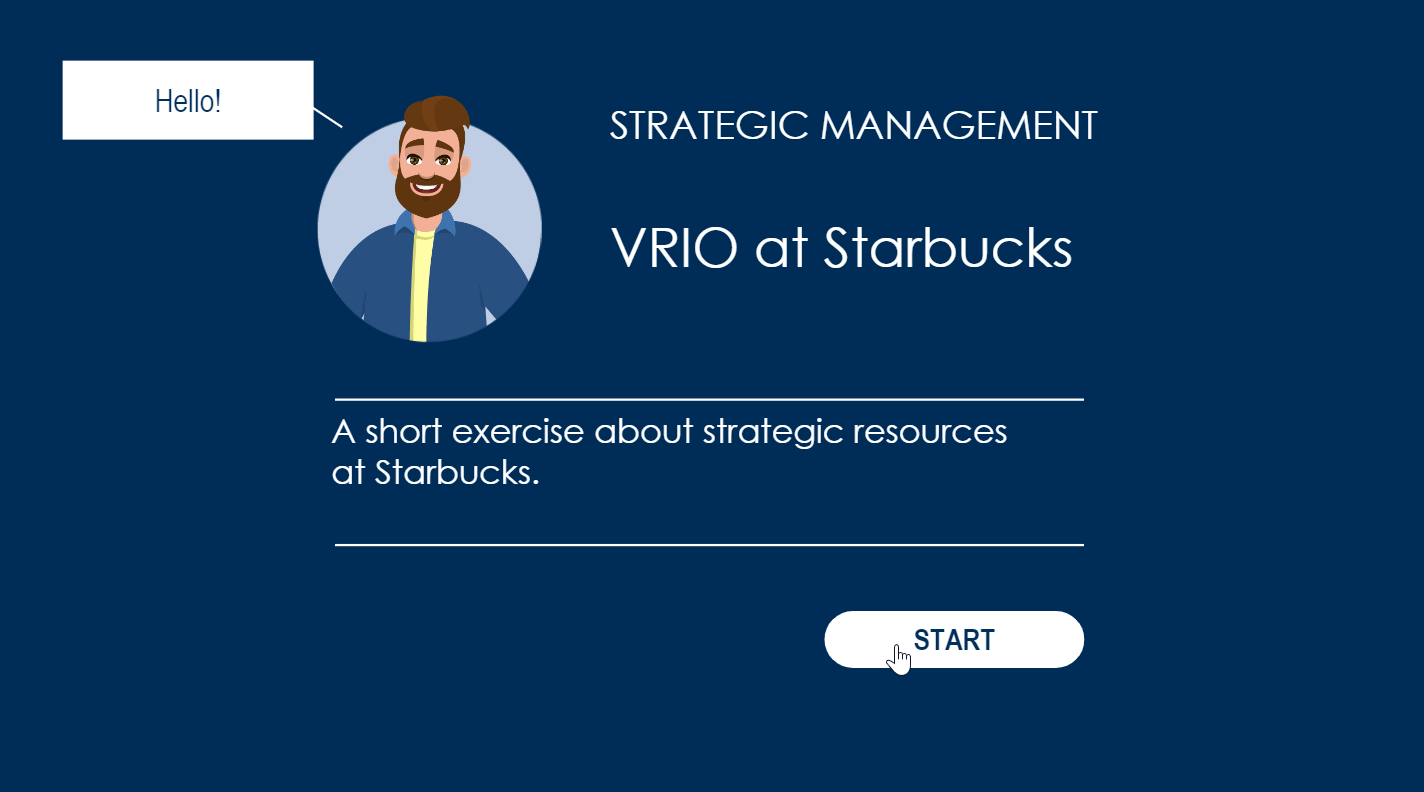
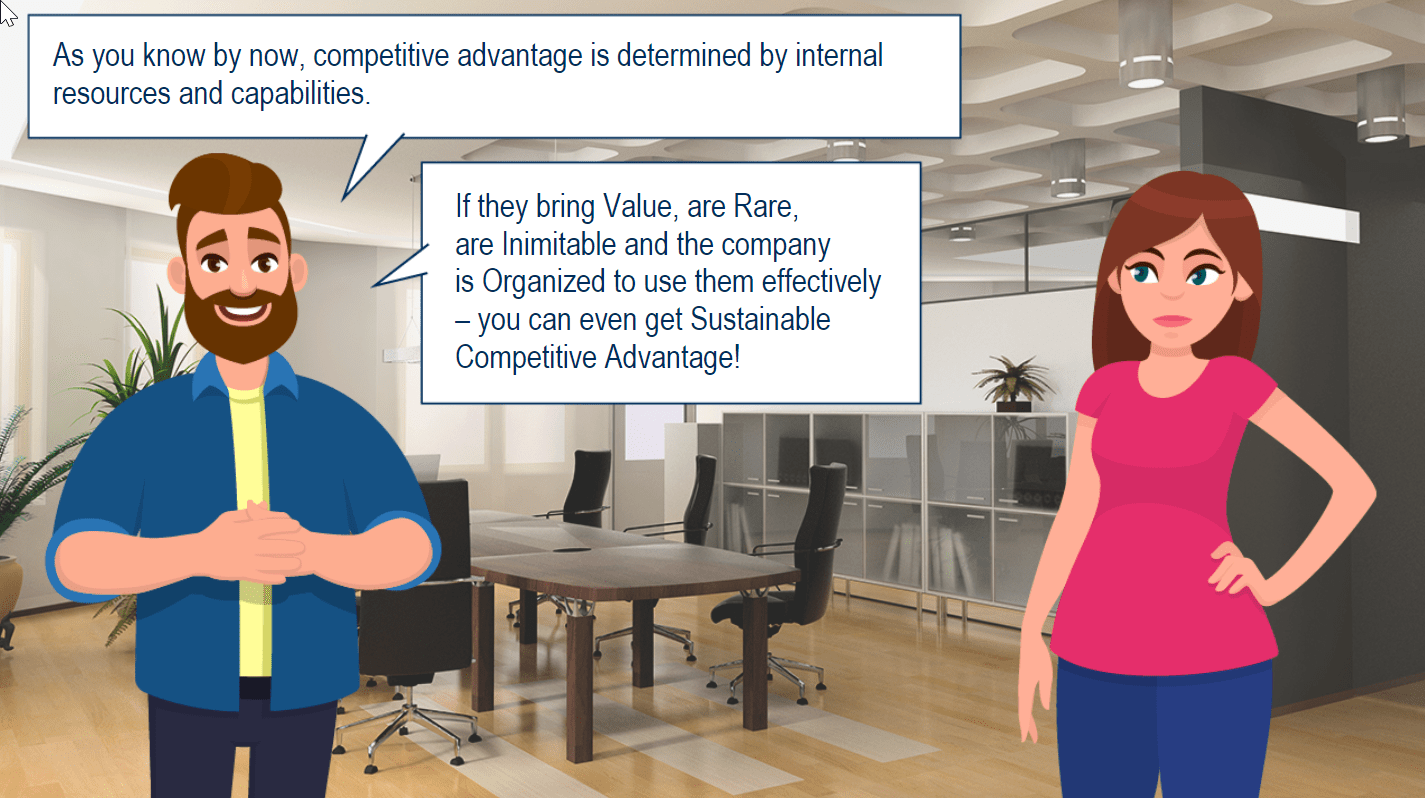
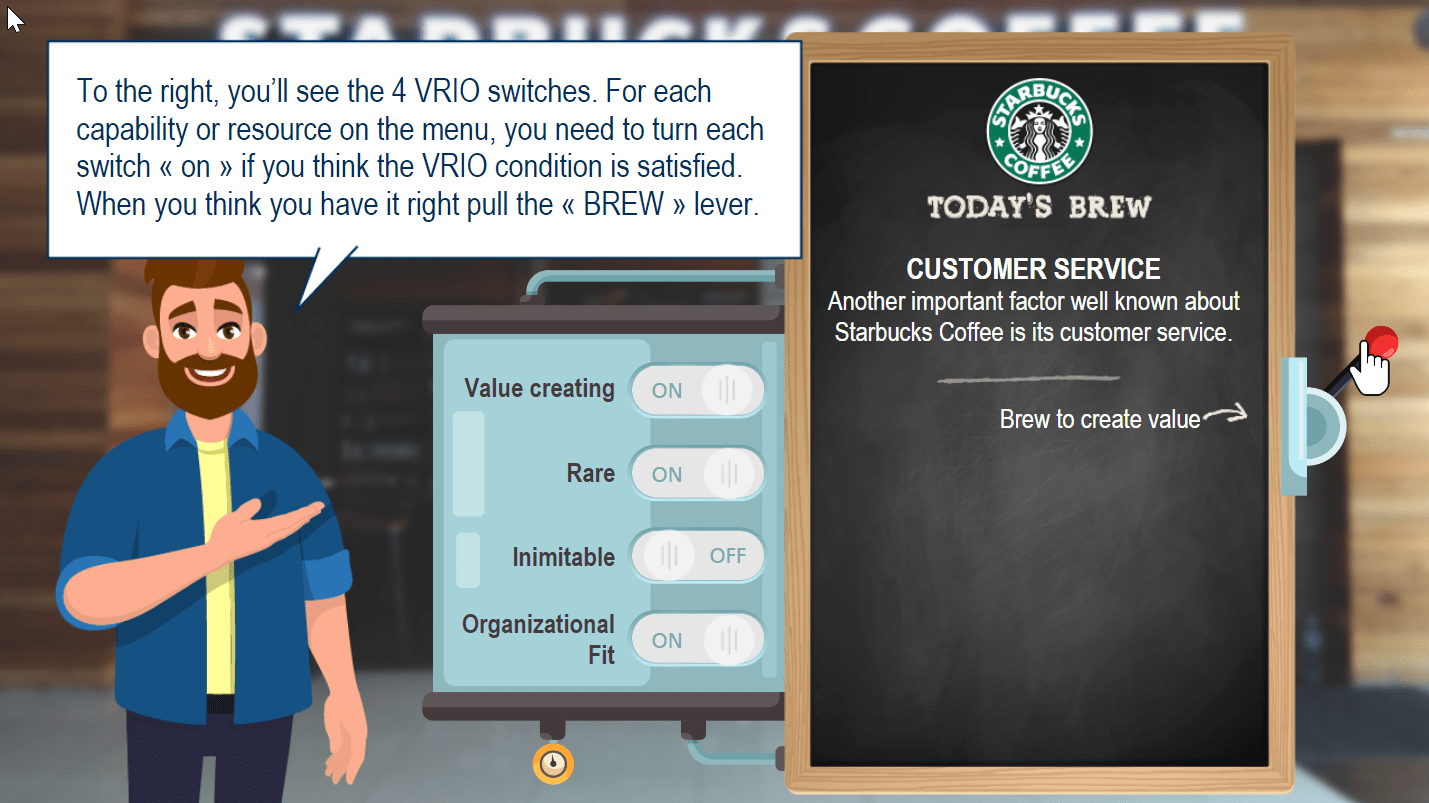
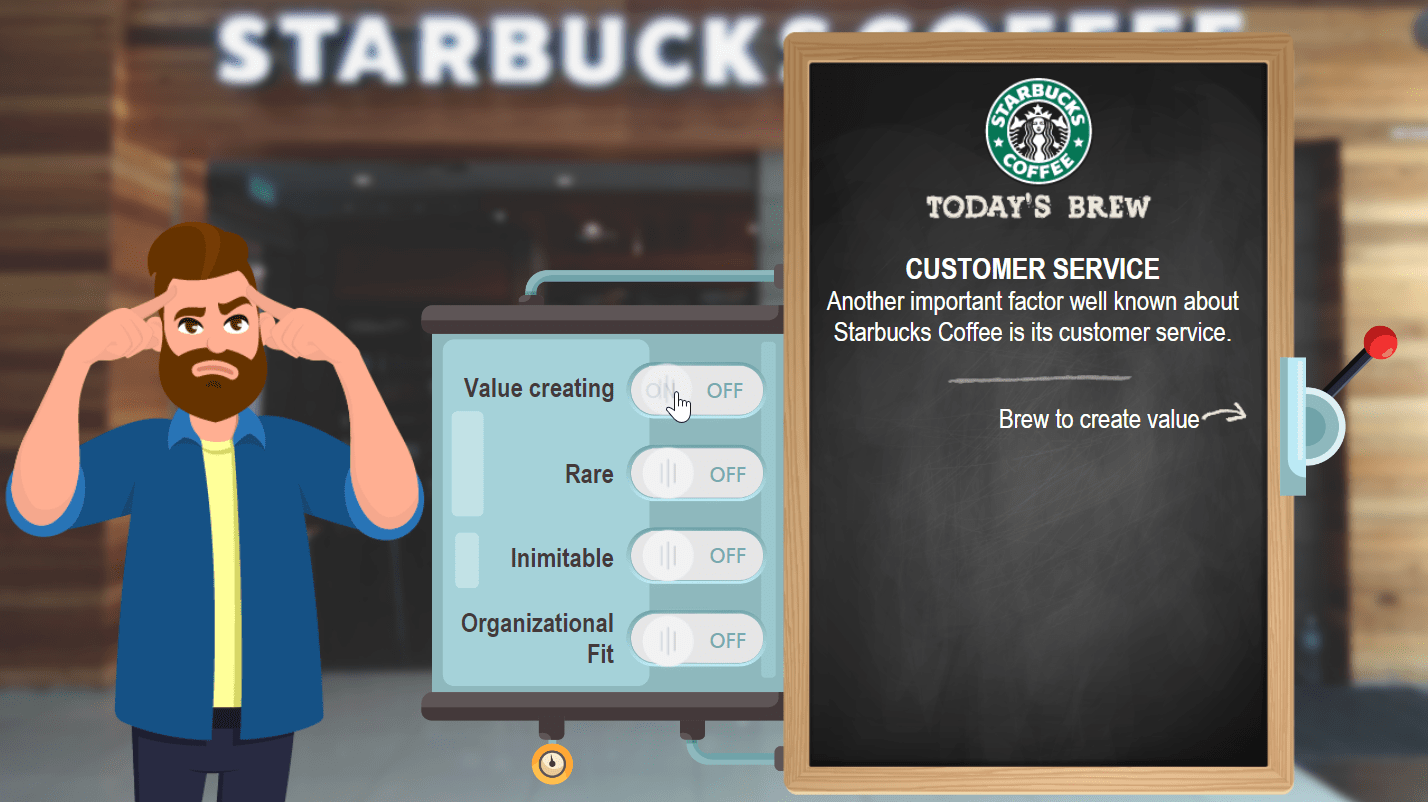
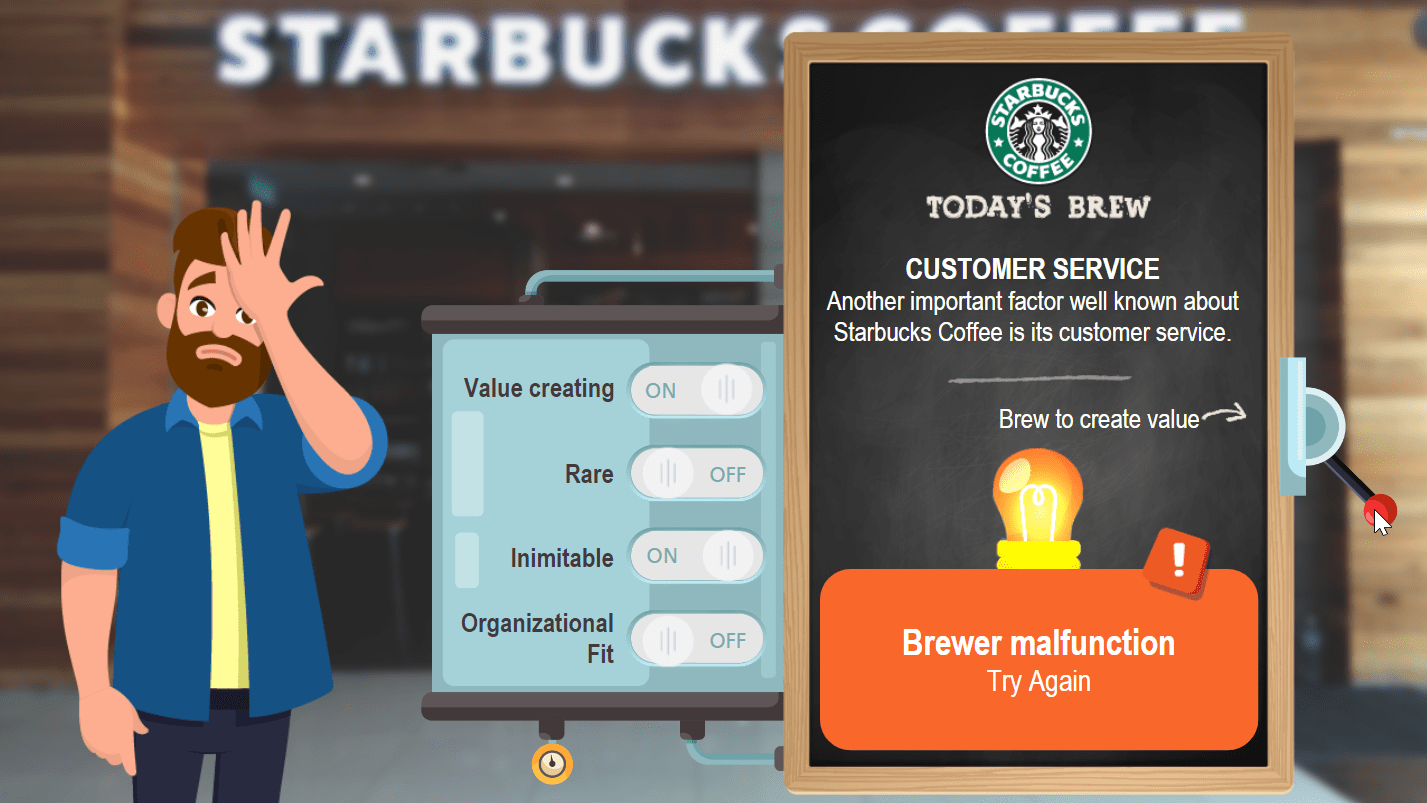
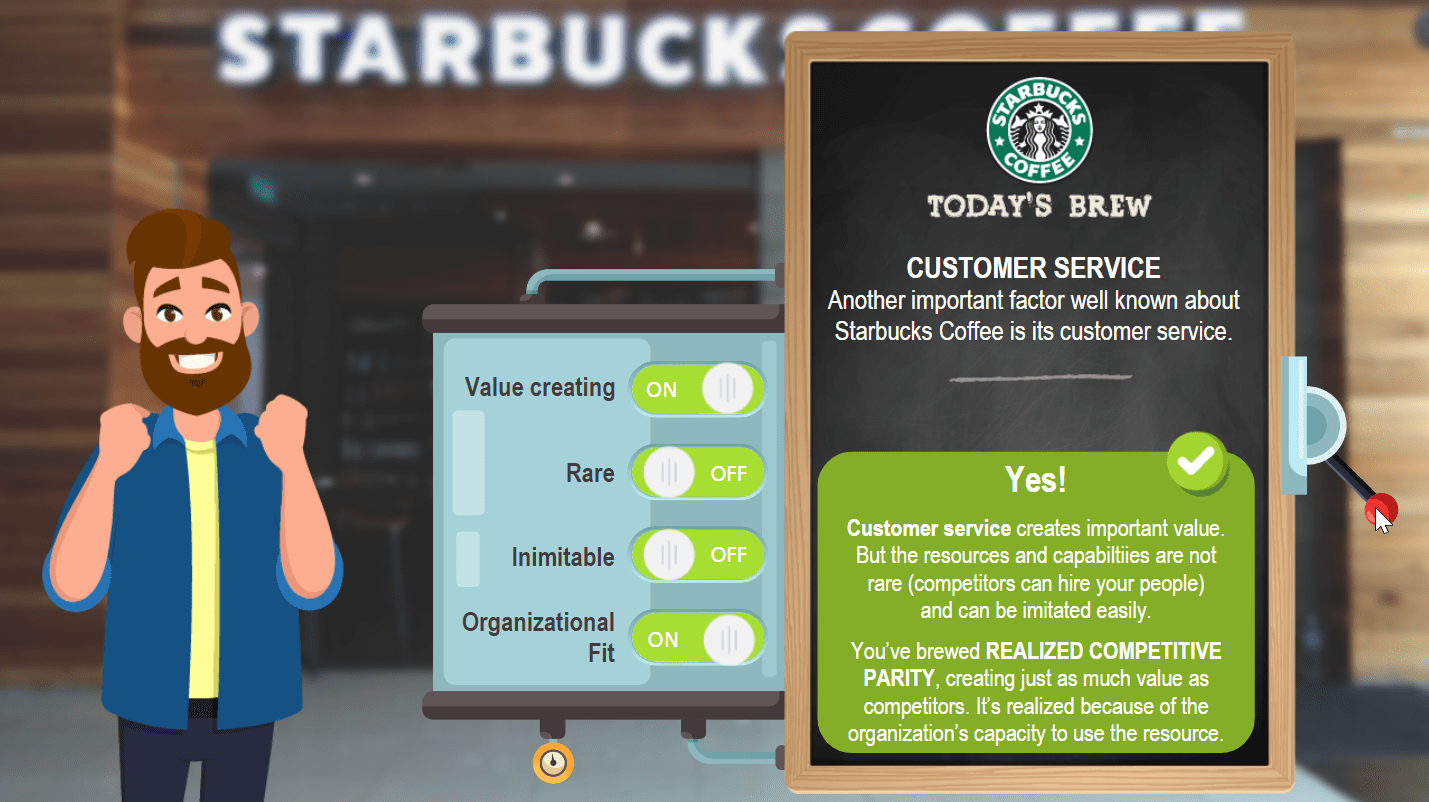
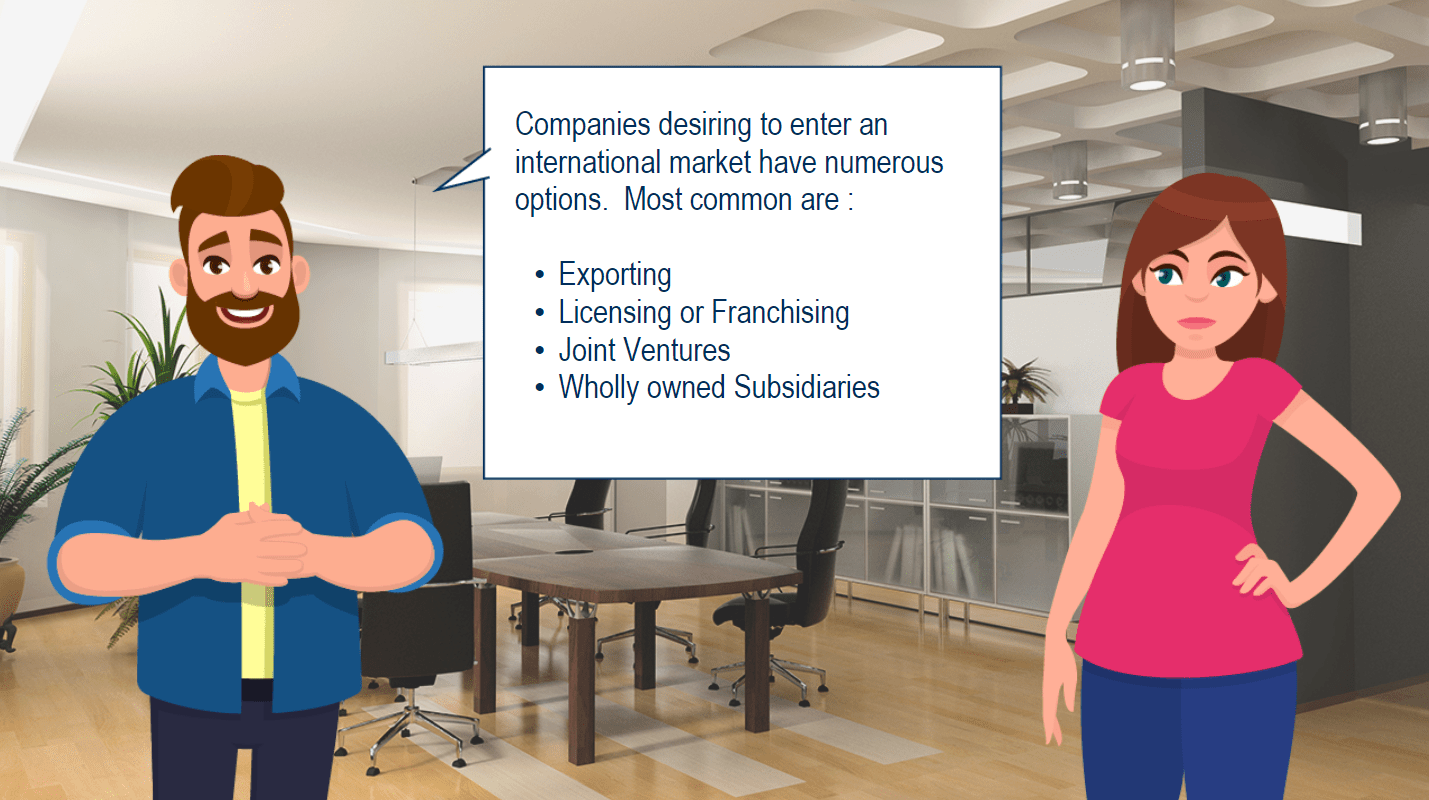
Immersive story involving the learner familiarizing themselves with the concepts of the course
Course: Management Control
Duration: 5 to 20 min (excluding theoretical content of videos)
Particularity:
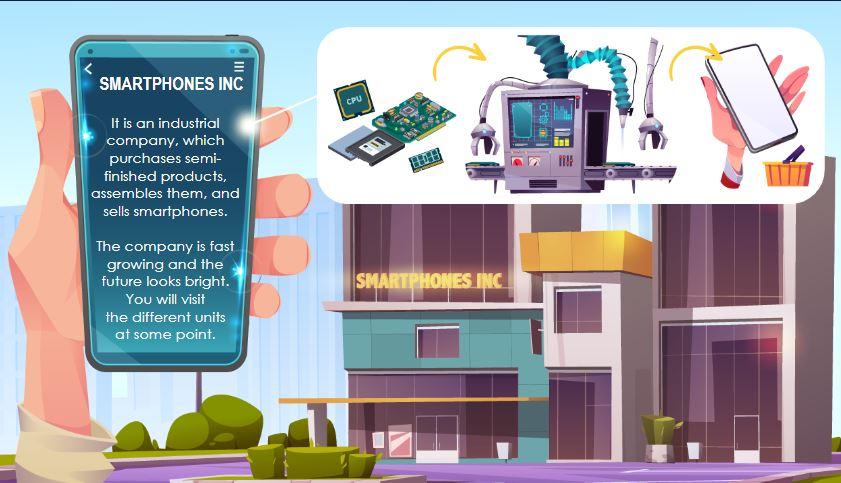
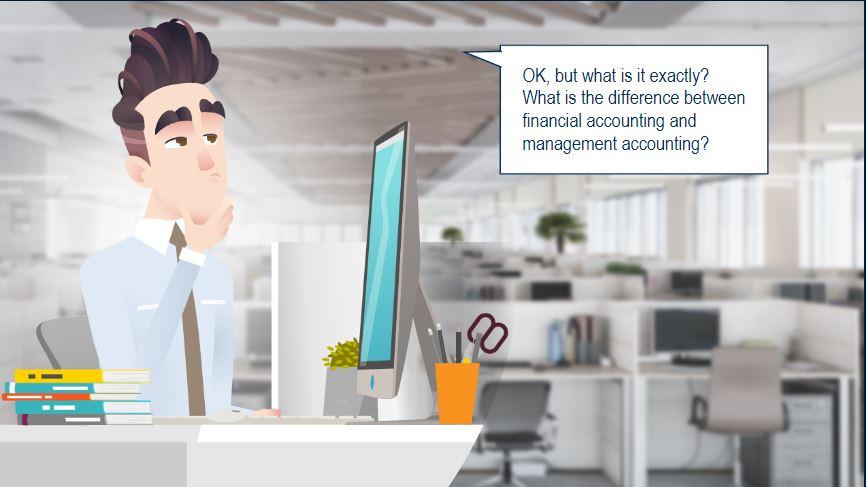
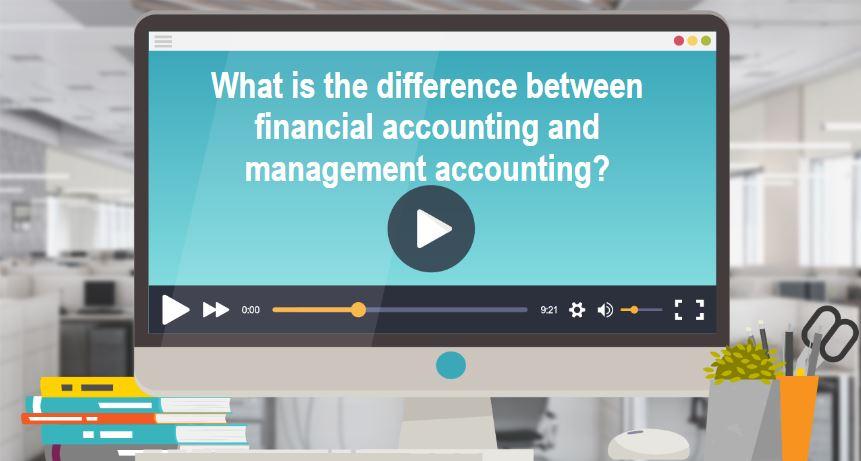
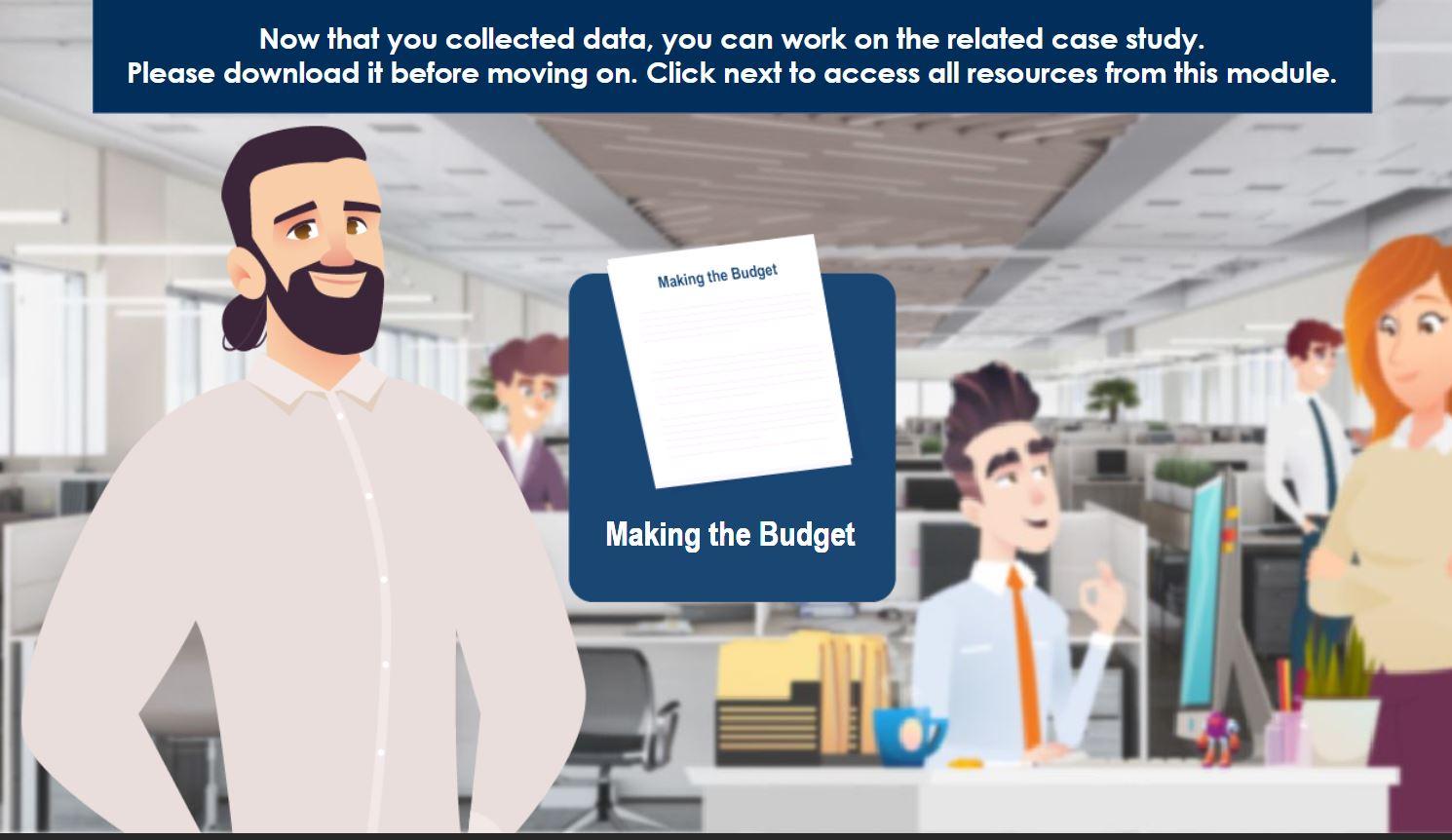
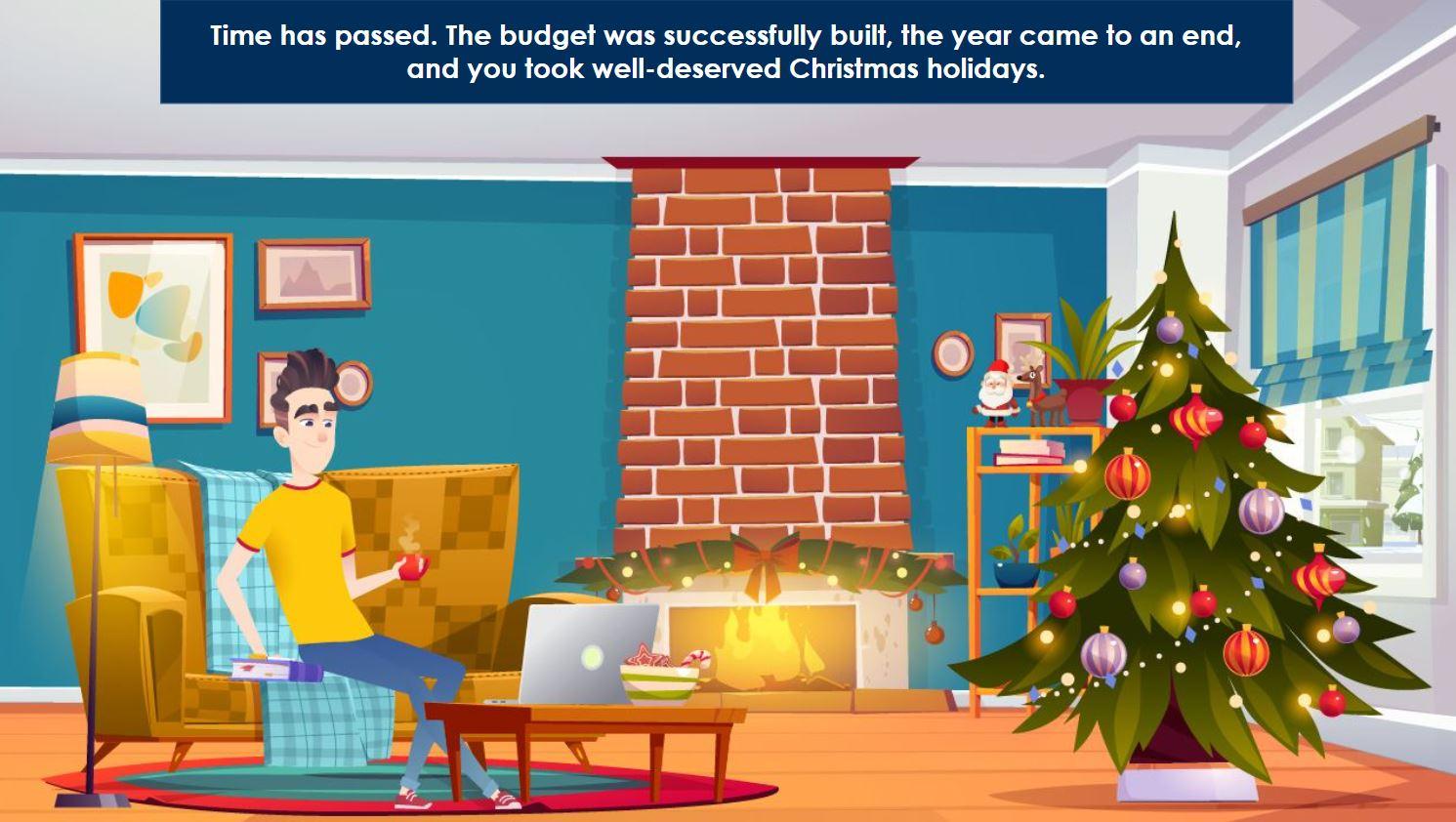
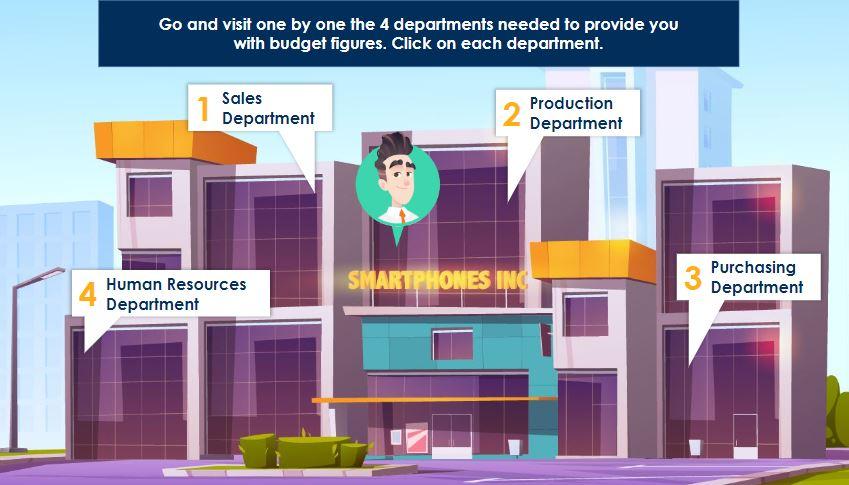
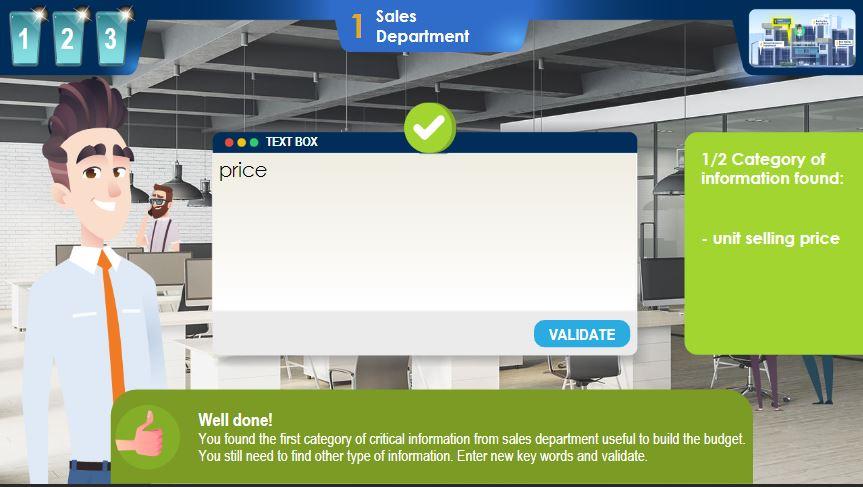
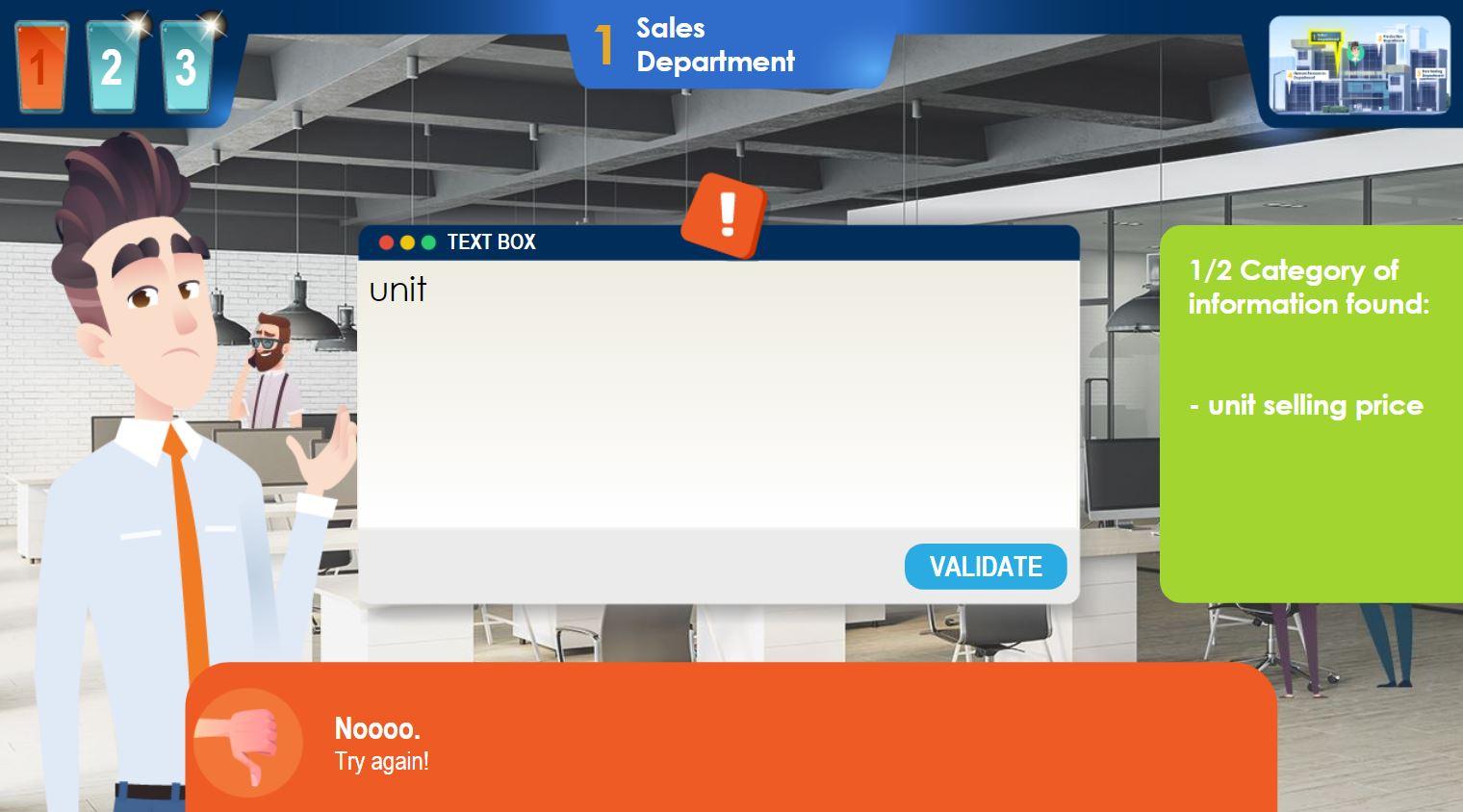
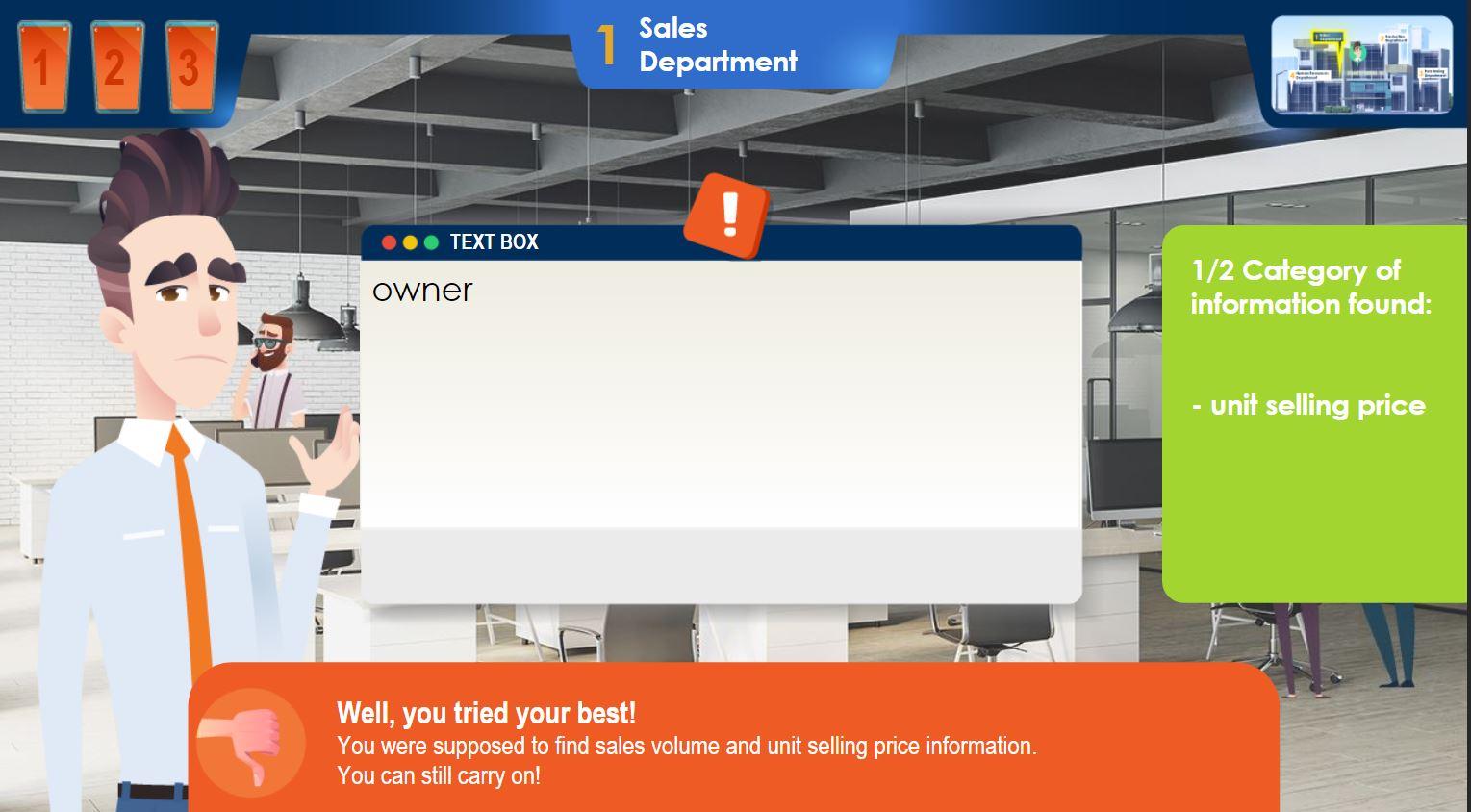
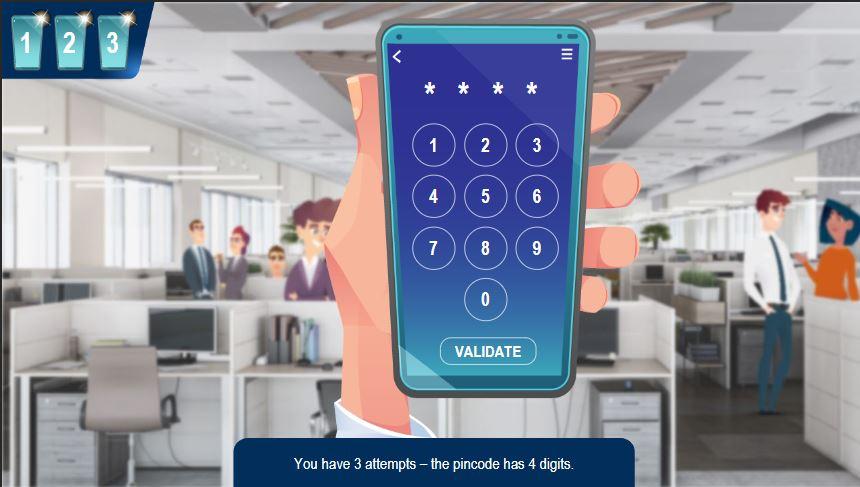
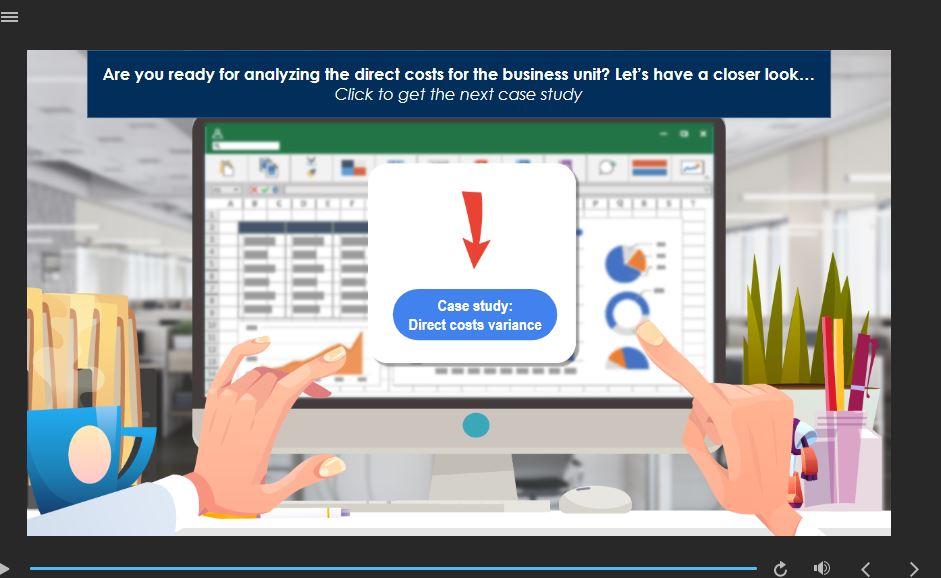
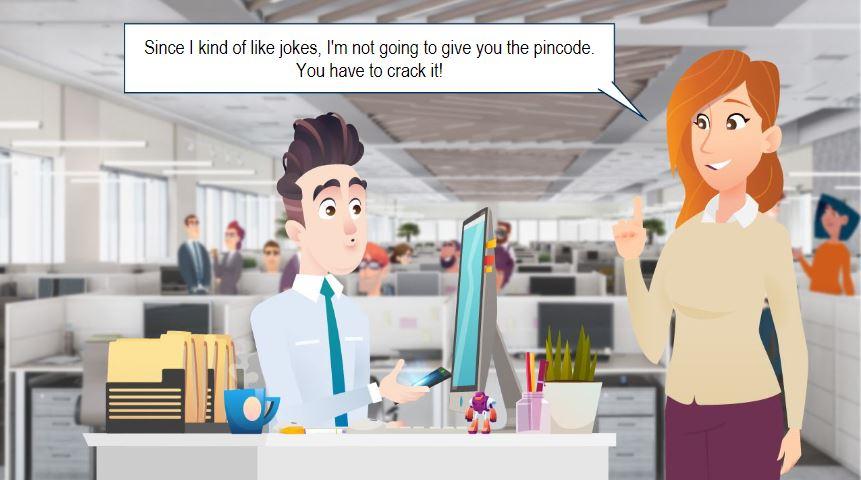
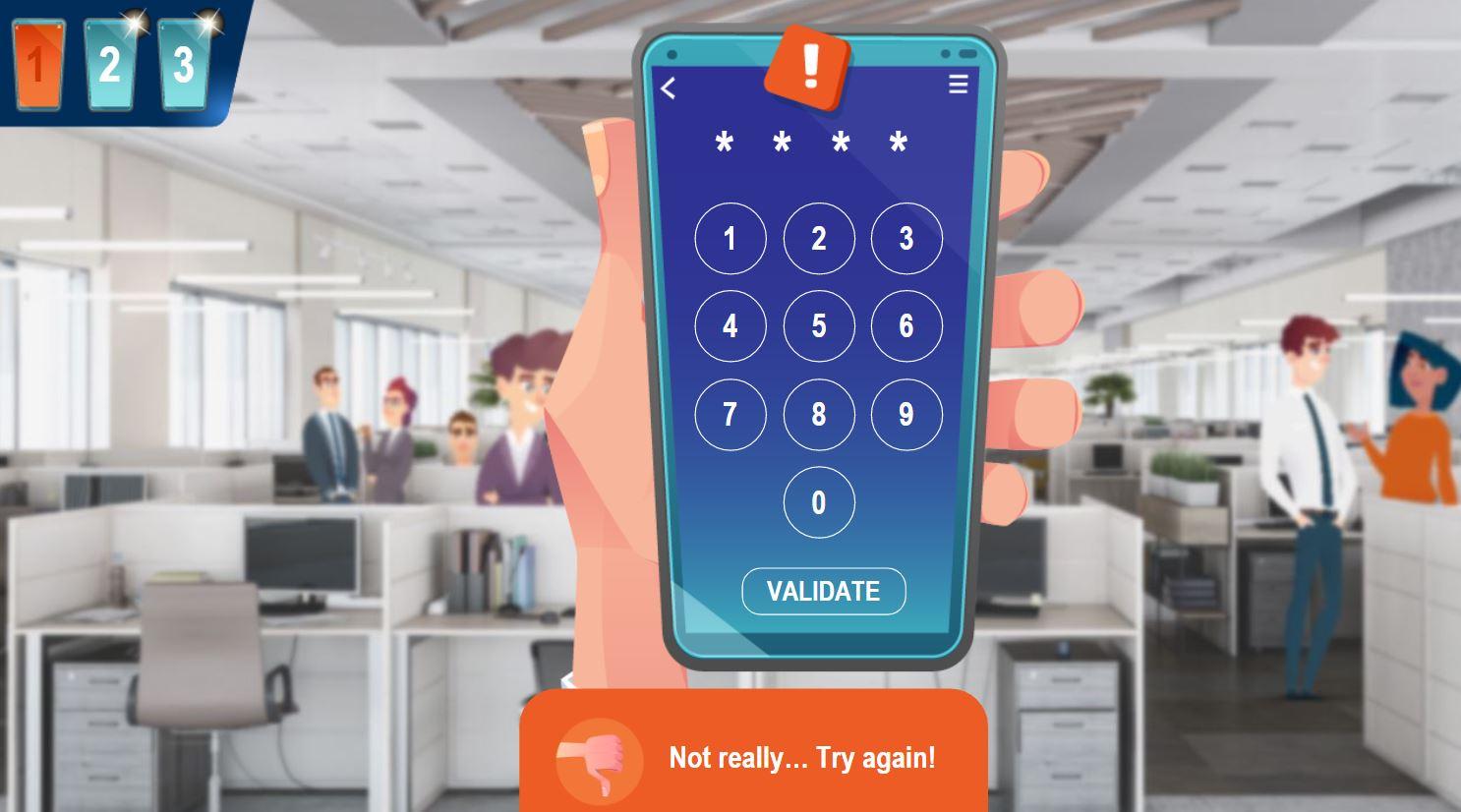
The learner plays a young graduate who has just obtained a position within Smartphones Inc. Accompanied by his manager, he familiarizes himself with the concepts of the course through videos that it provides and activities that require it to handle the concepts addressed.
The graphic environment, character attitudes and activities contribute to the feeling of immersion and the pleasure of learning. There is little or no rupture between the theoretical contents and the history in which we take part.
Some examples
Transversal content
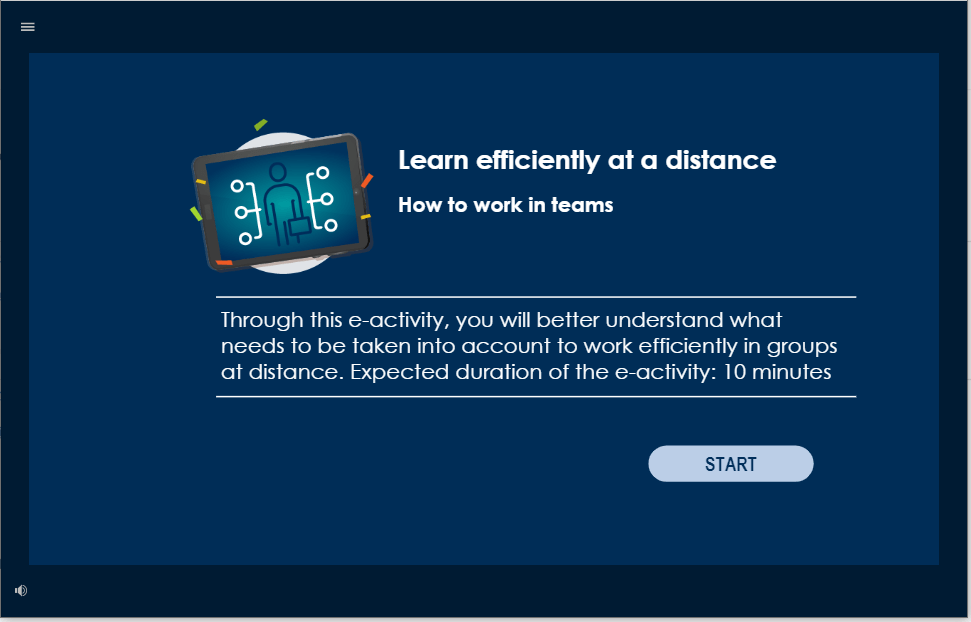
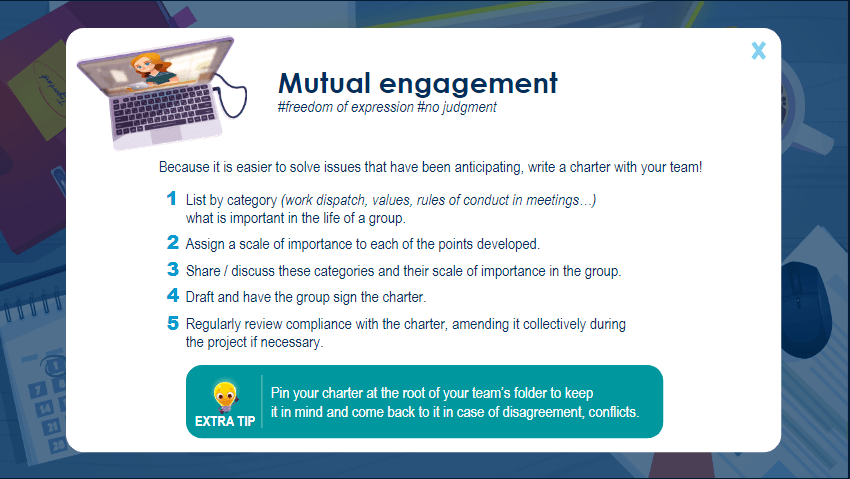
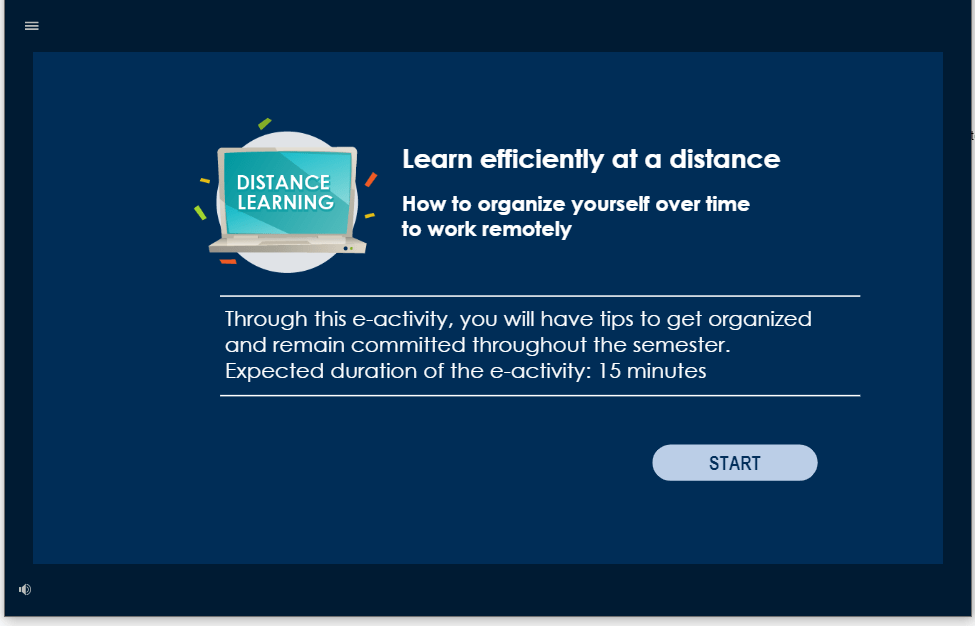
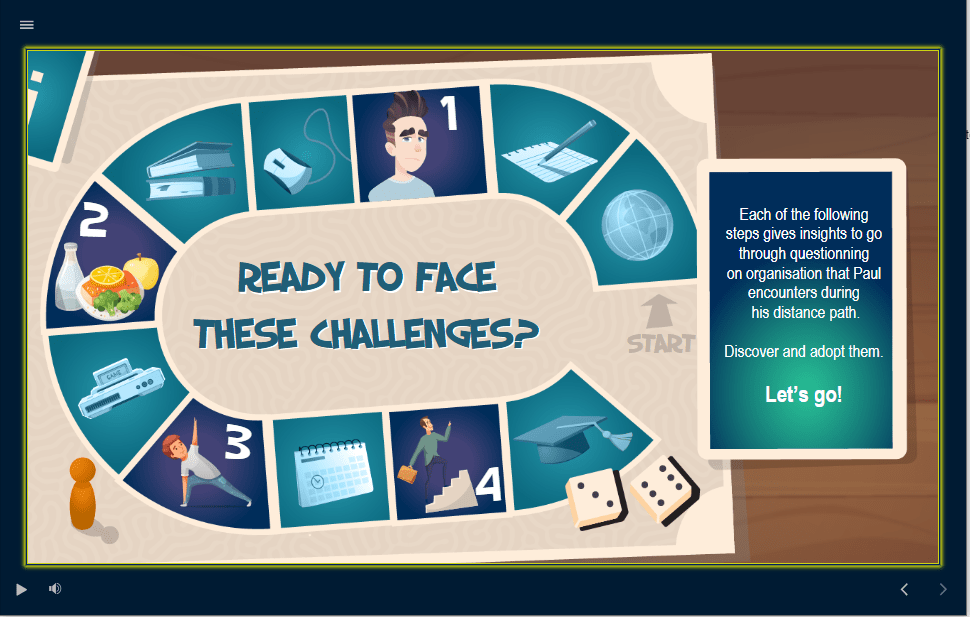
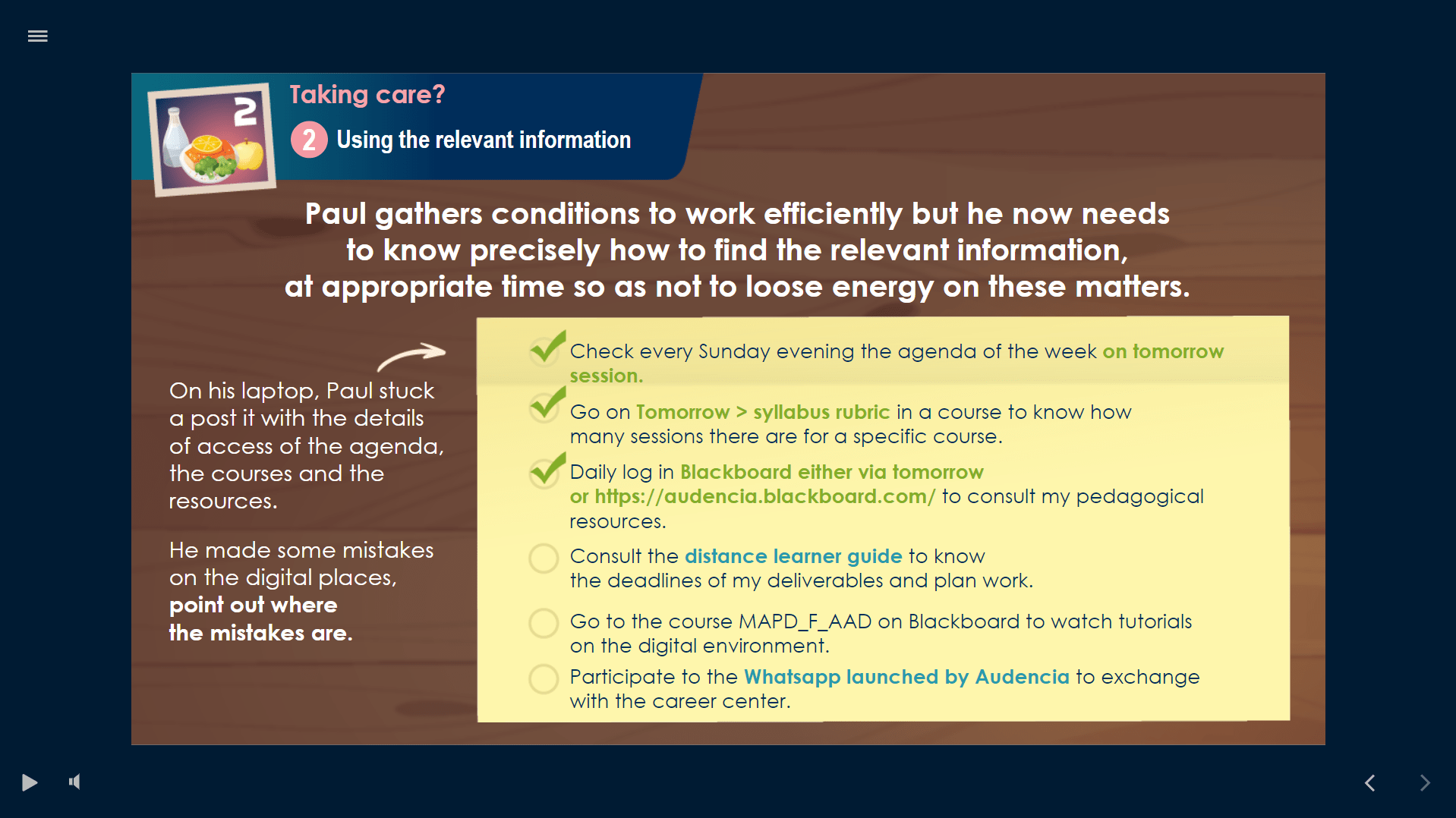
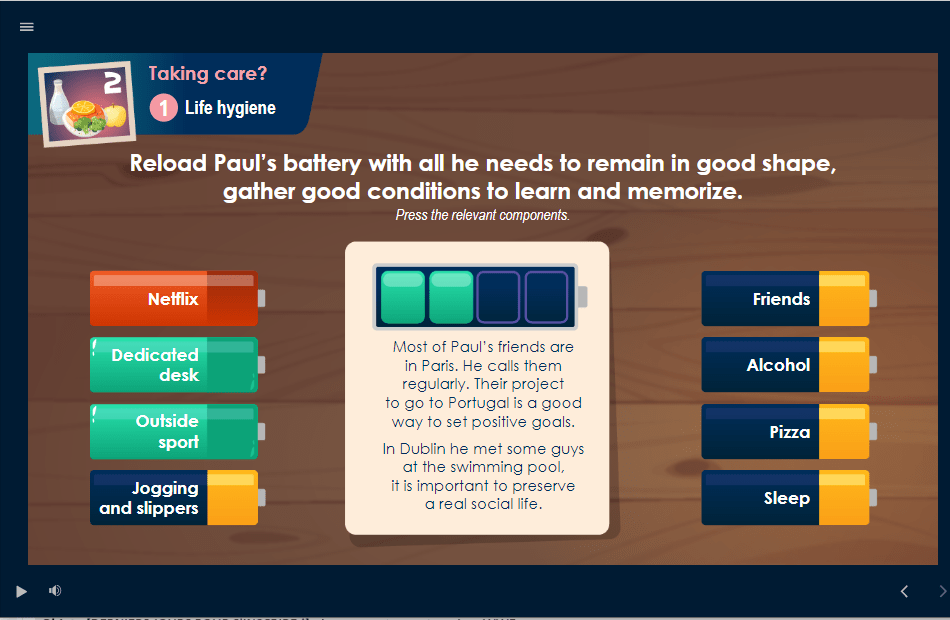
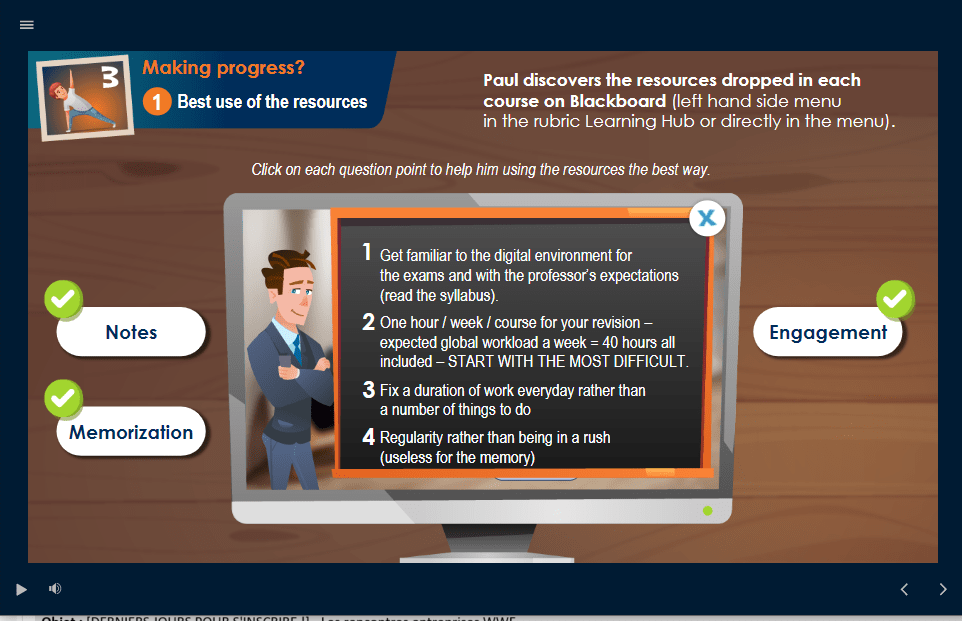
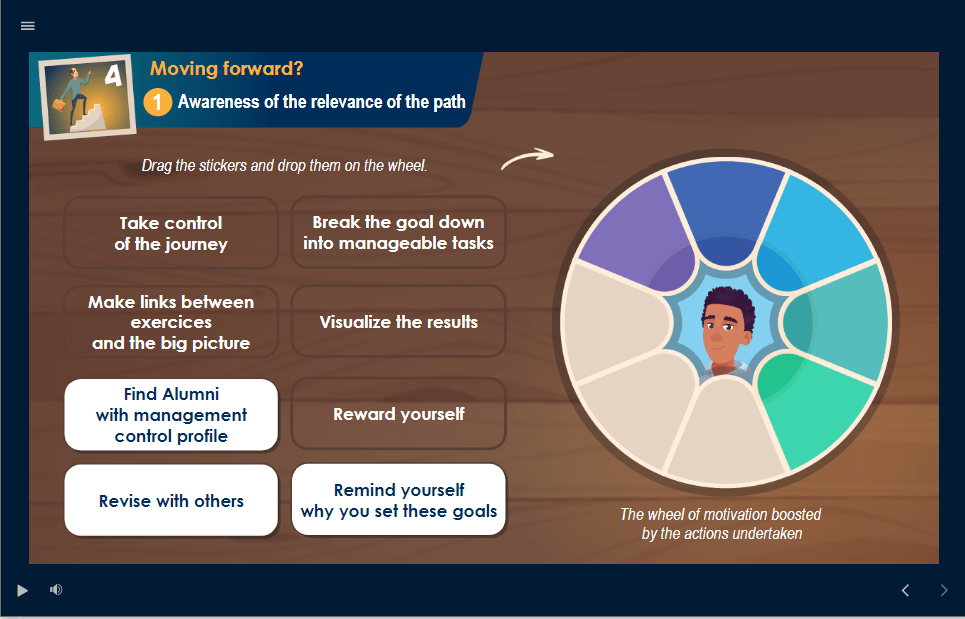
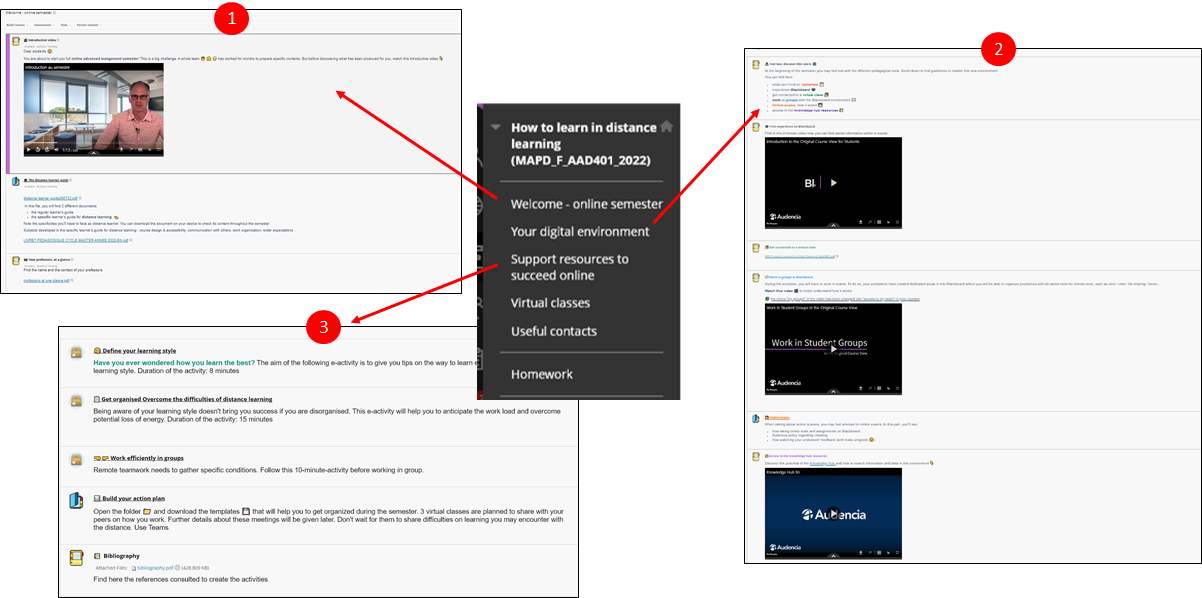
3 immersive modules transmitting to the learner work methods adapted to distance learning
Course: How to learn at a distance
Duration: 10 to 15 min
Transposable resources and/or adaptable to other projects
Particularity:
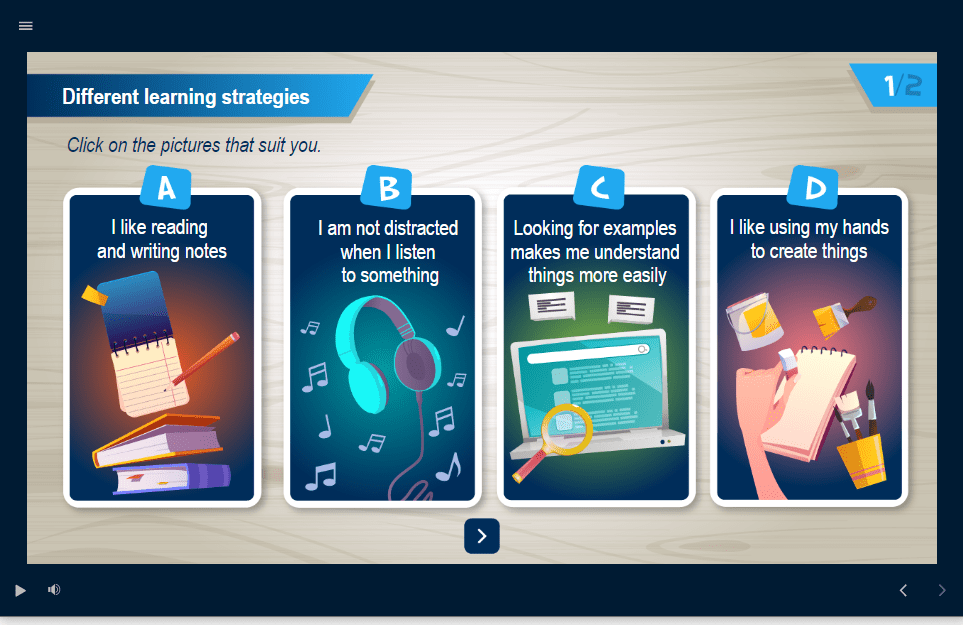
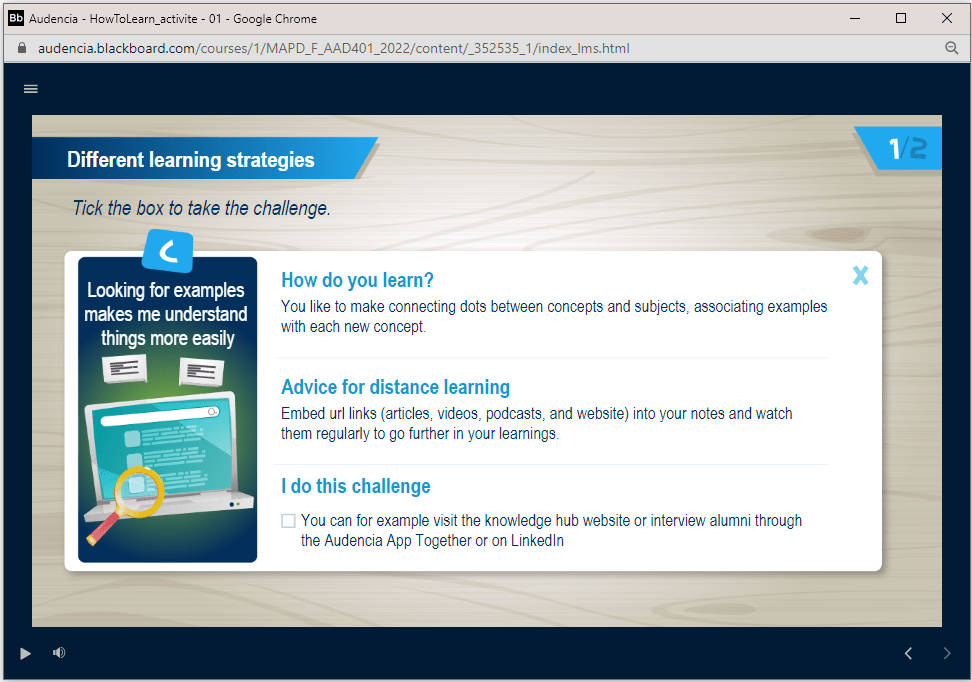
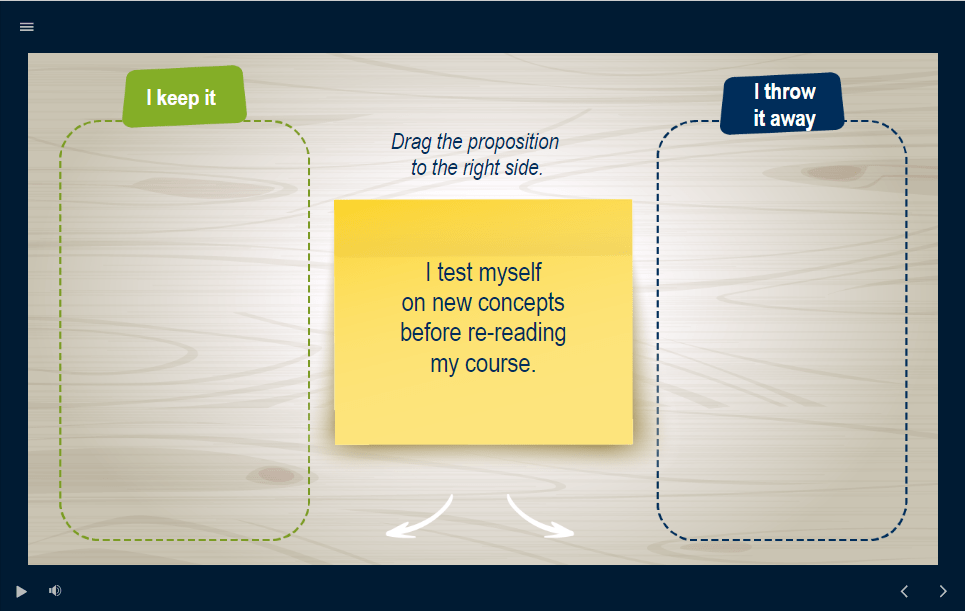
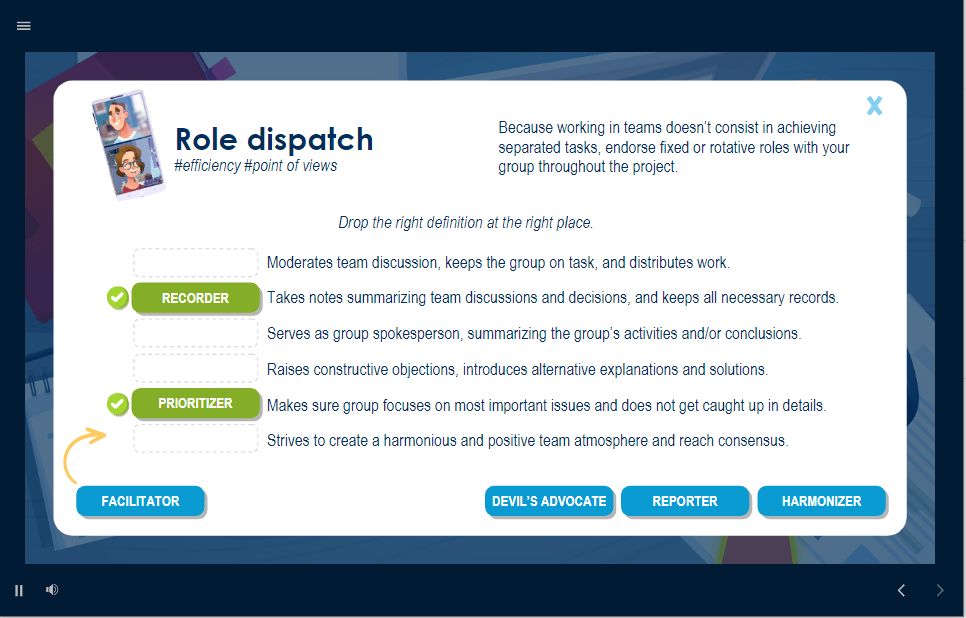
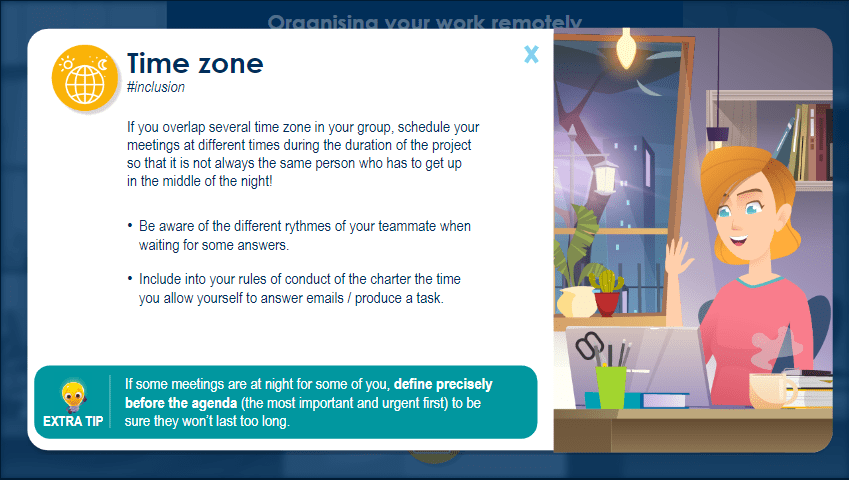
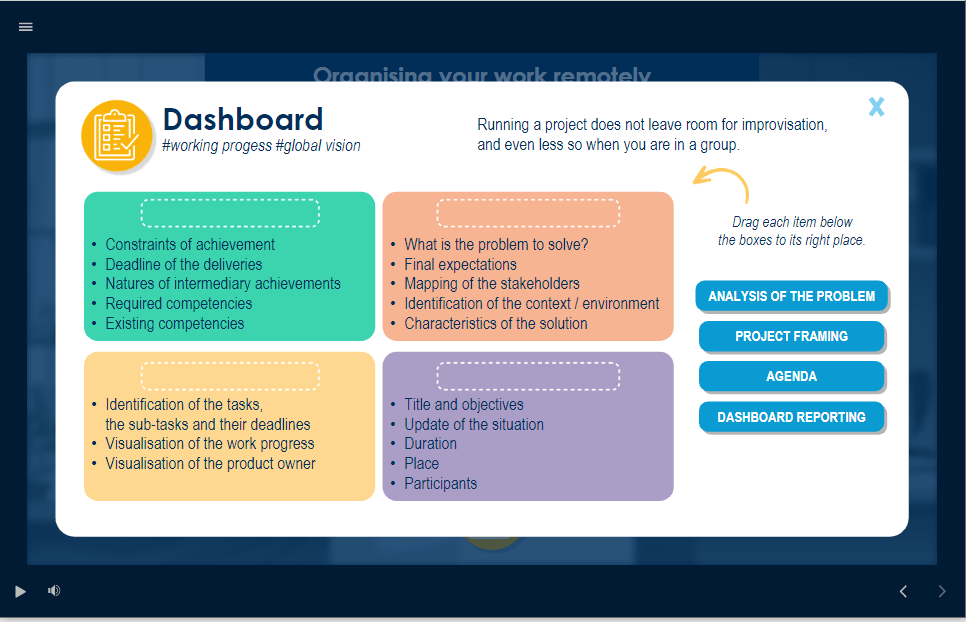
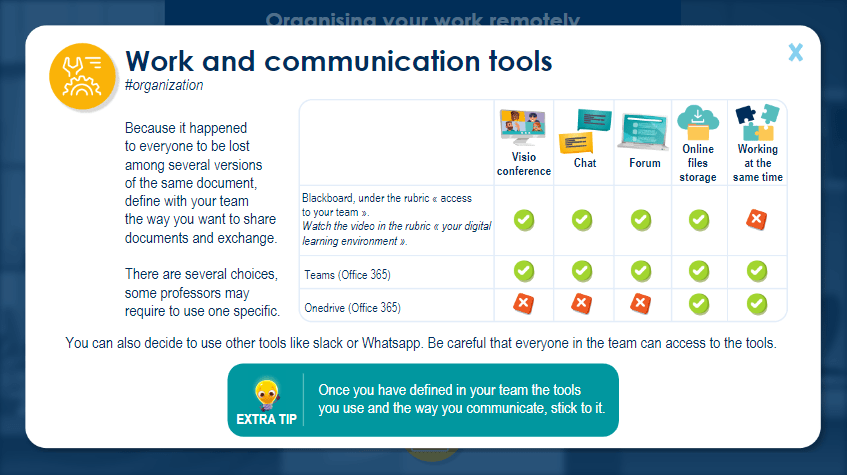
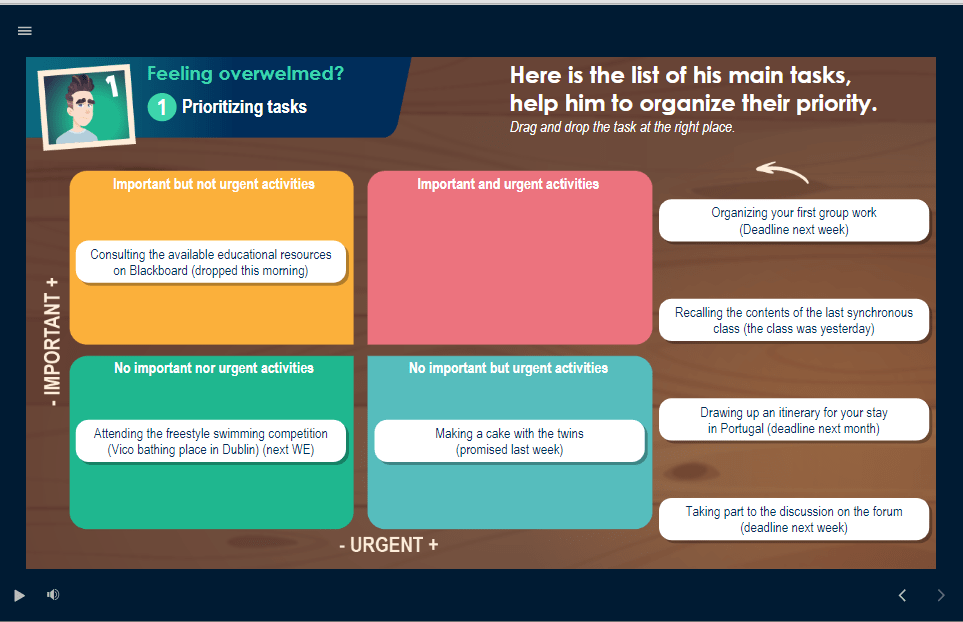
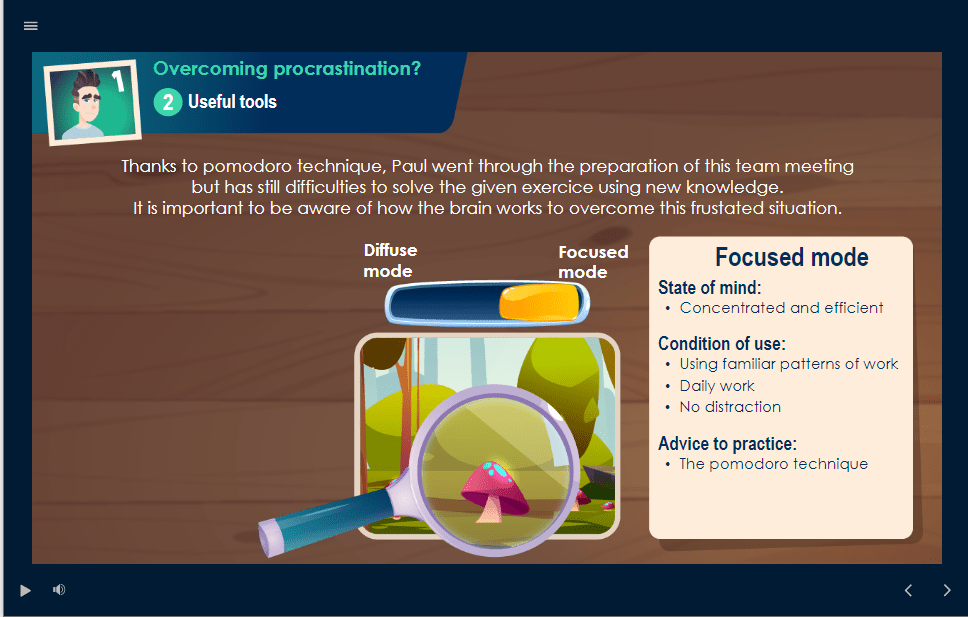
These 3 methodological modules give the learner the keys to distance learning. In fact, they act as prerequisite to other course content.
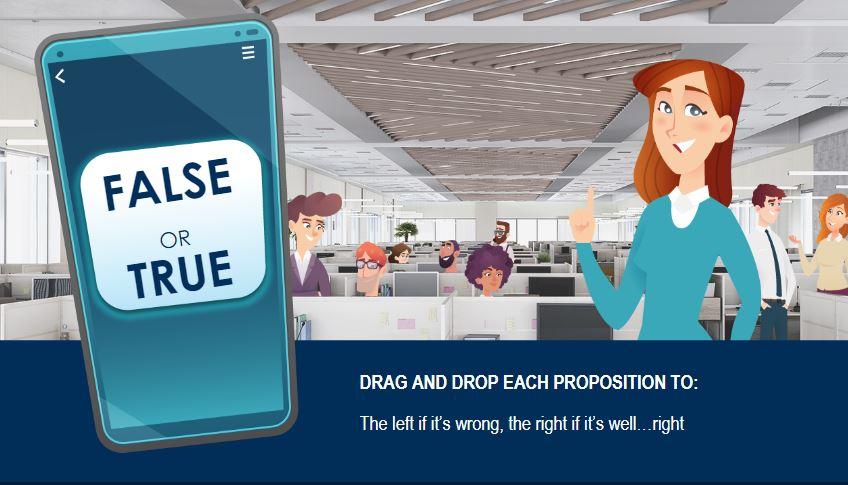
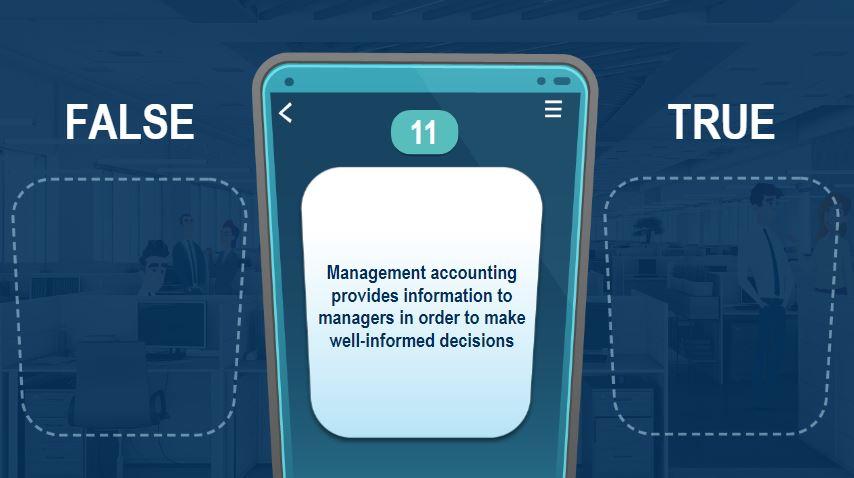
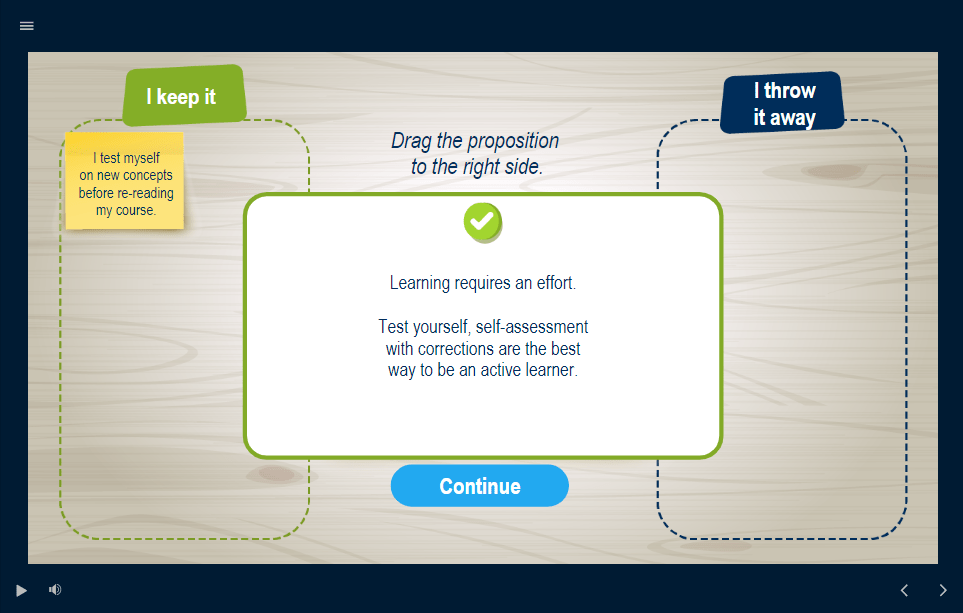
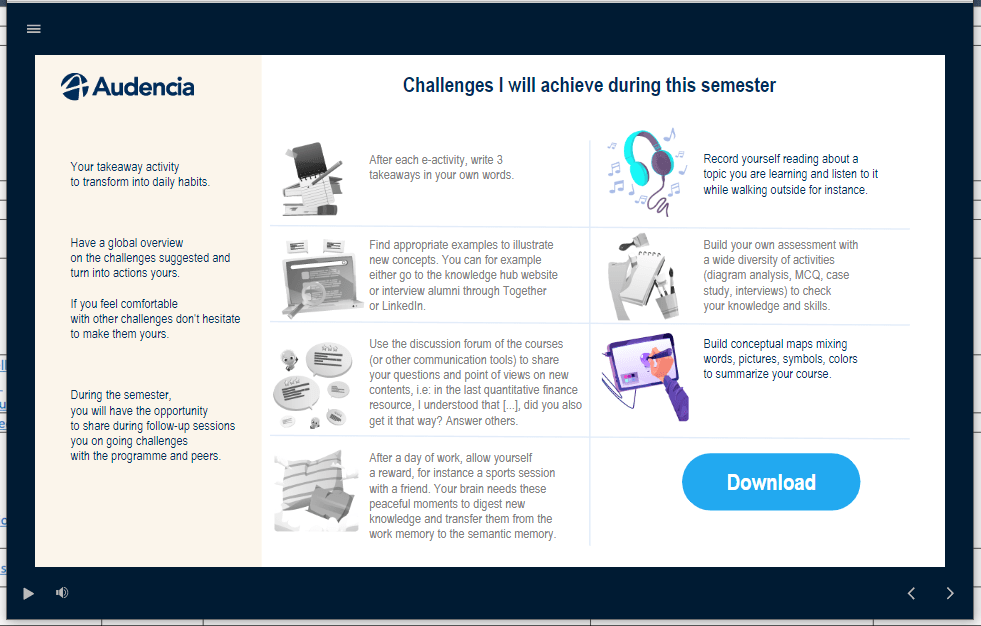
The content is visual, playful and interactive and is based on various activities: content “discovery activities”, matching exercises and other types of categorization (e.g., true/false), memorization through flashcards, choice of challenges to perform having the possibility to download them.
These resources can be used or adapted for other projects of the same type.
Some examples
Short practical cases on specific course concepts
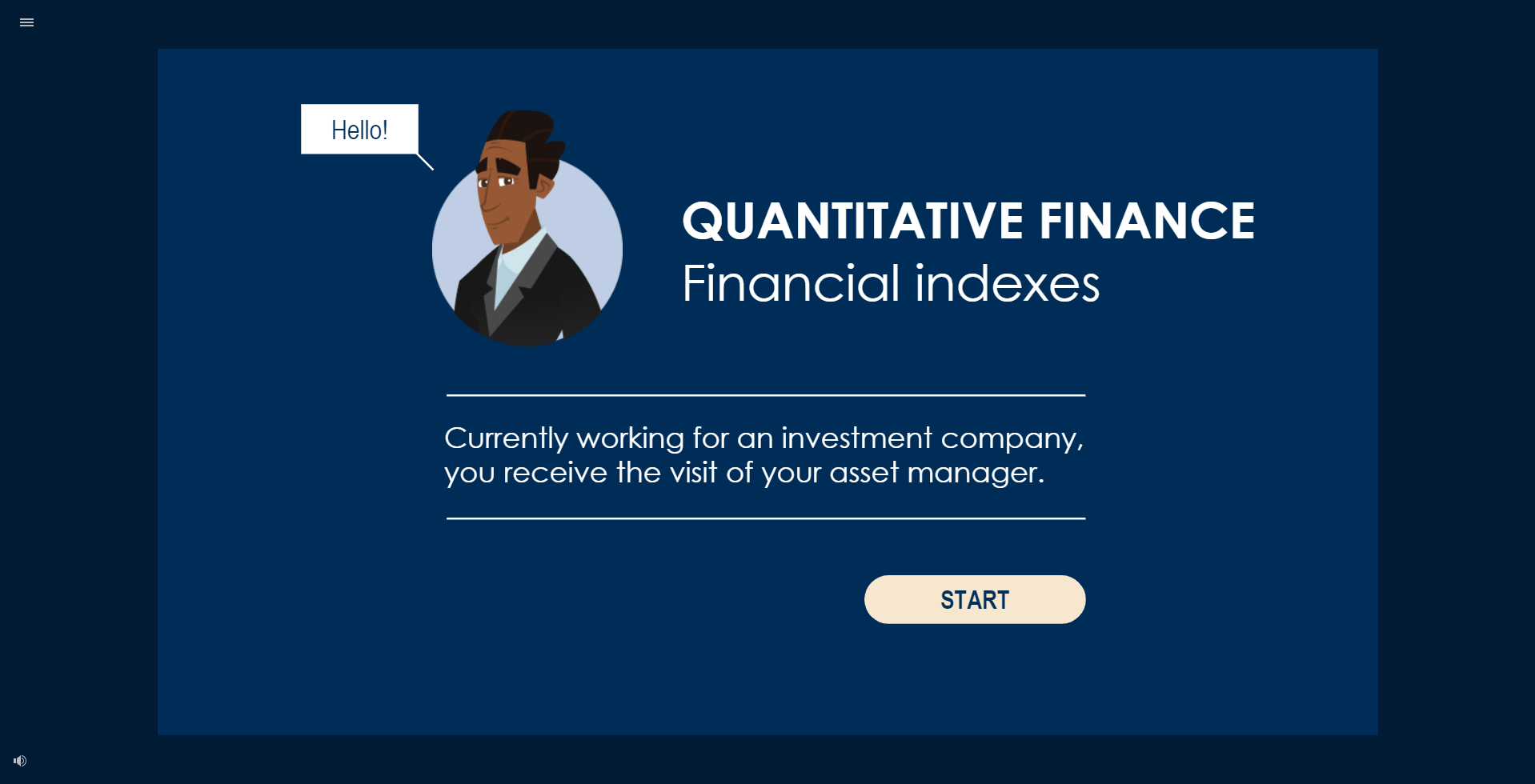
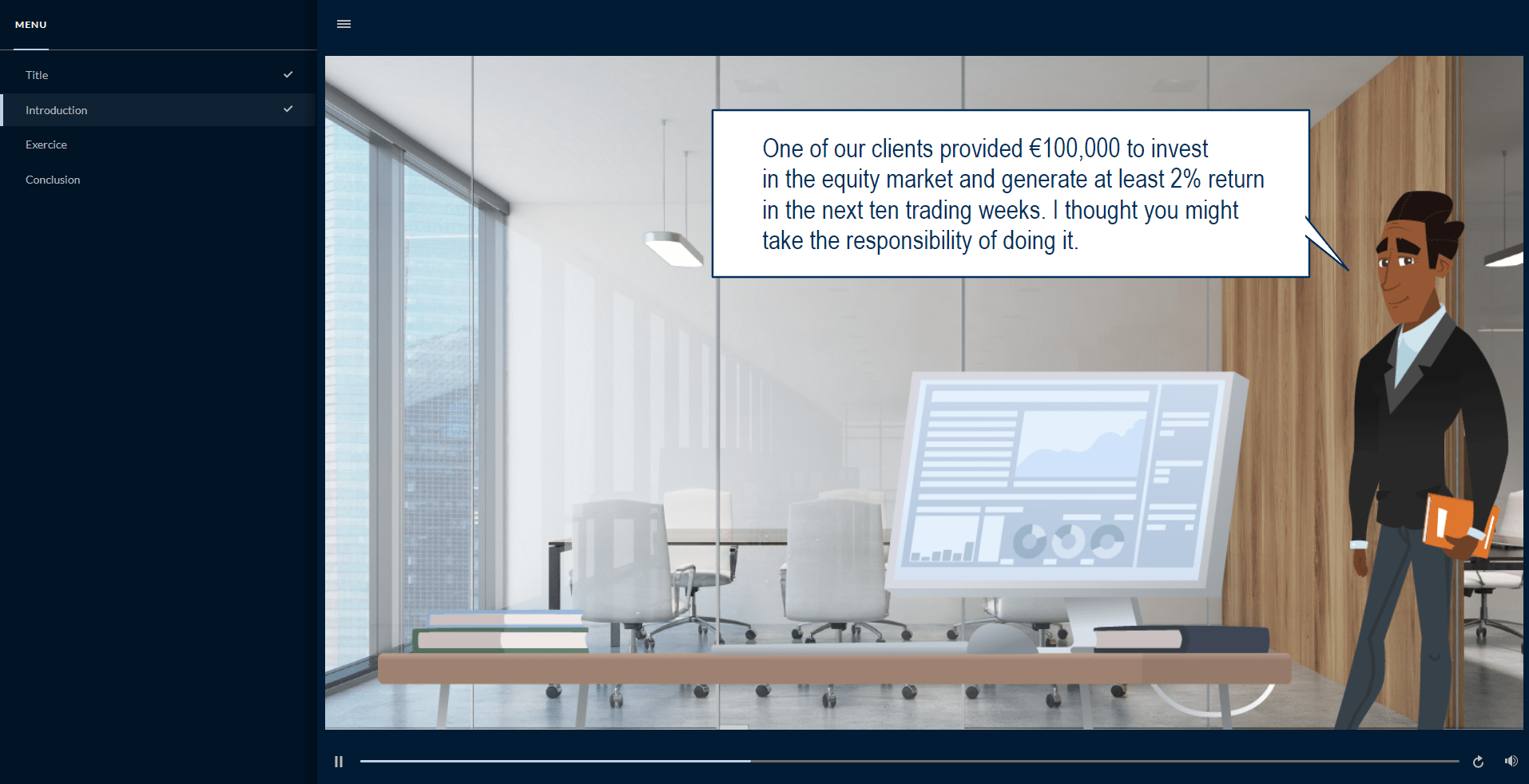
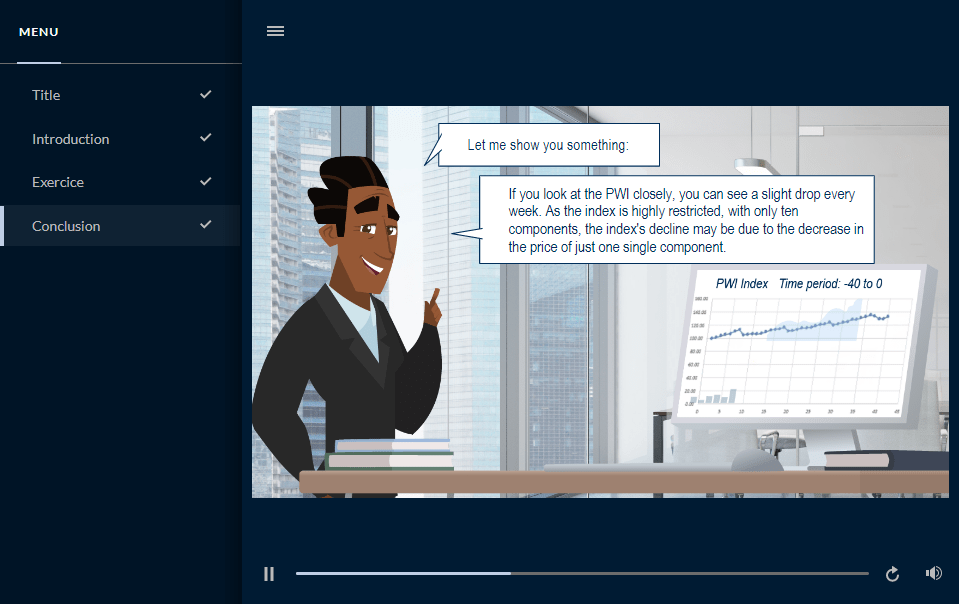
Course: Quantitative Finance
Duration: 5 min
Replayability: yes
Case data are selected or randomly generated
Particularity:
- The characters staged include students and Prof.
- Activities are replayable with, in general, a random selection of game data among 5 alternatives.
Some examples

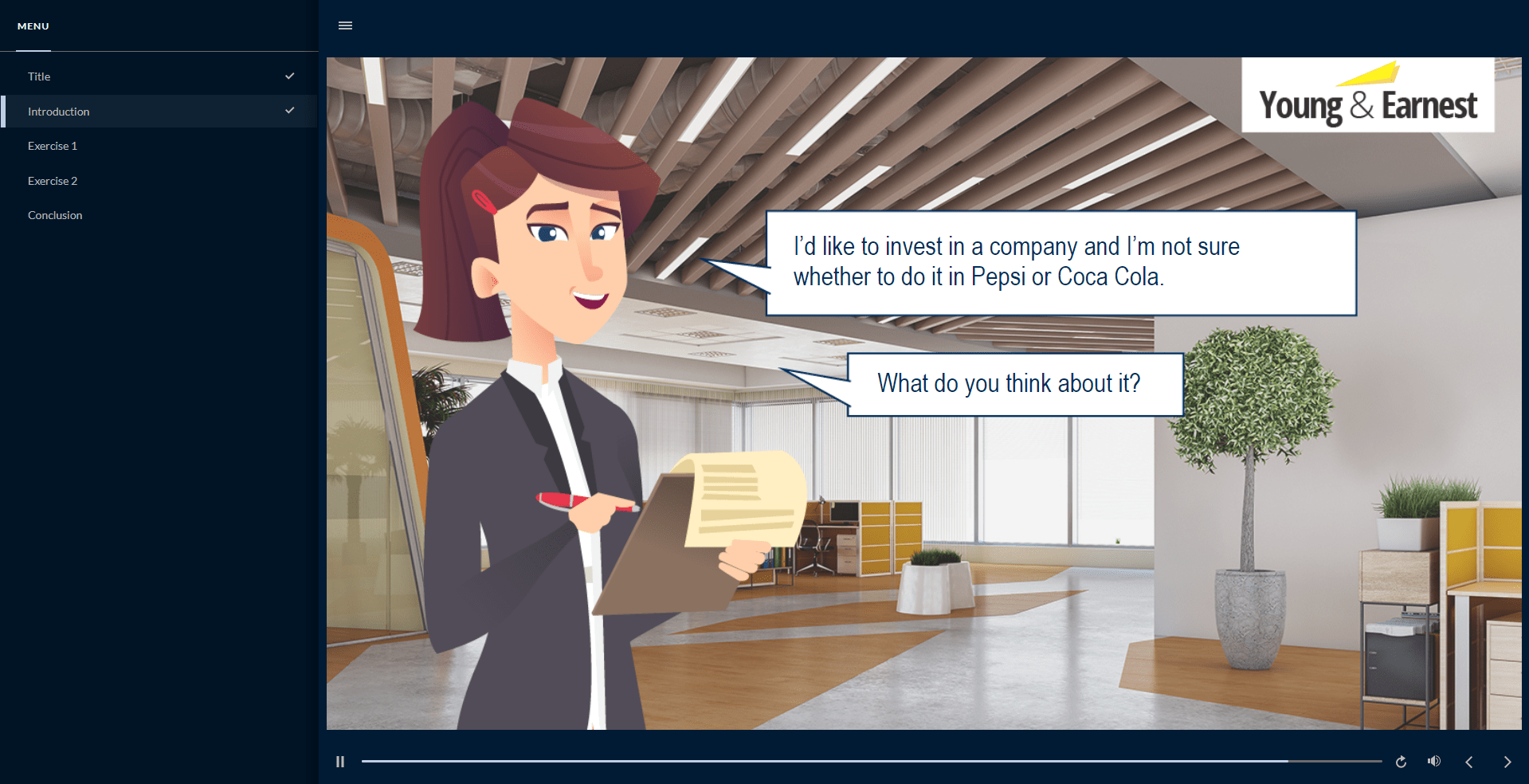
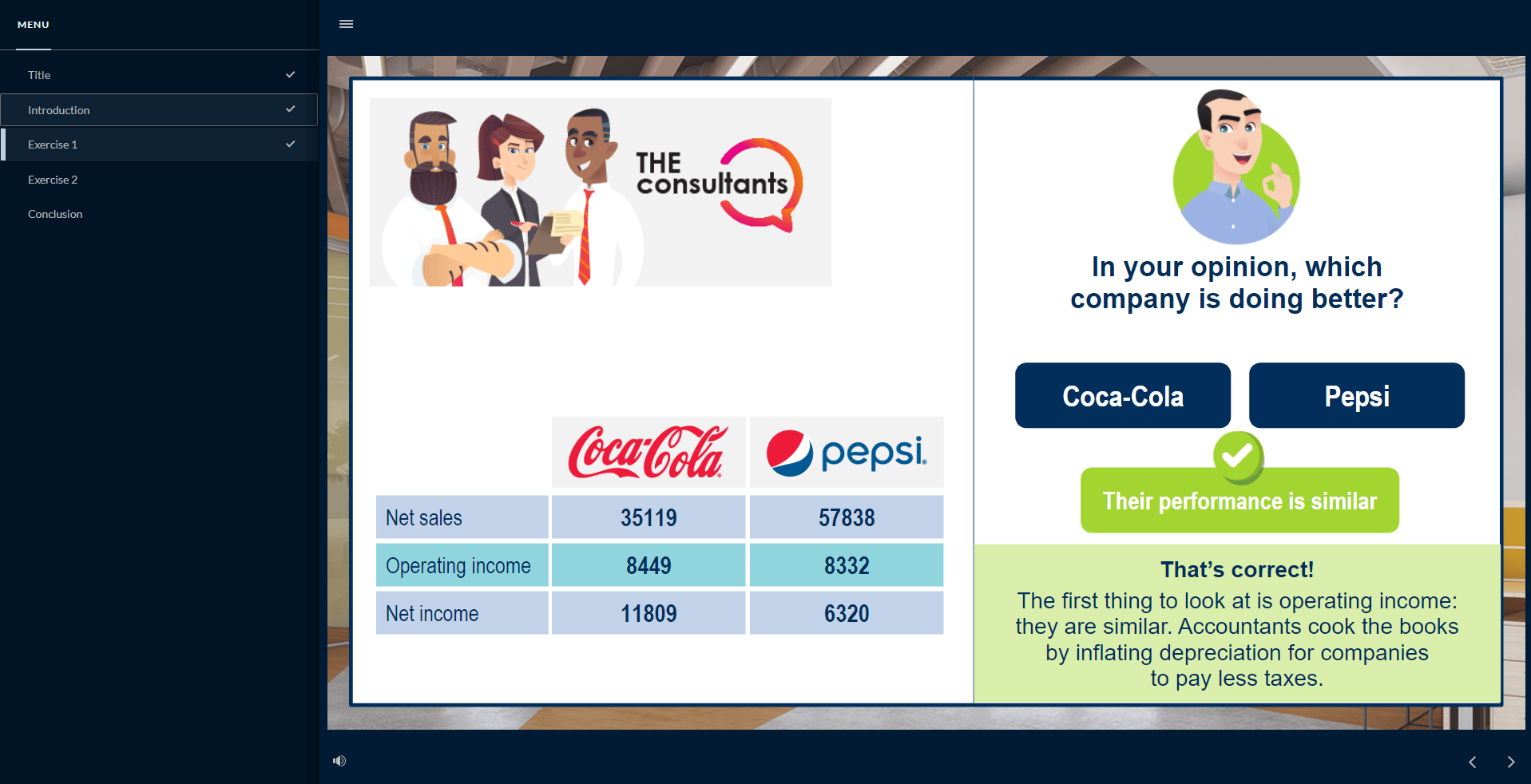
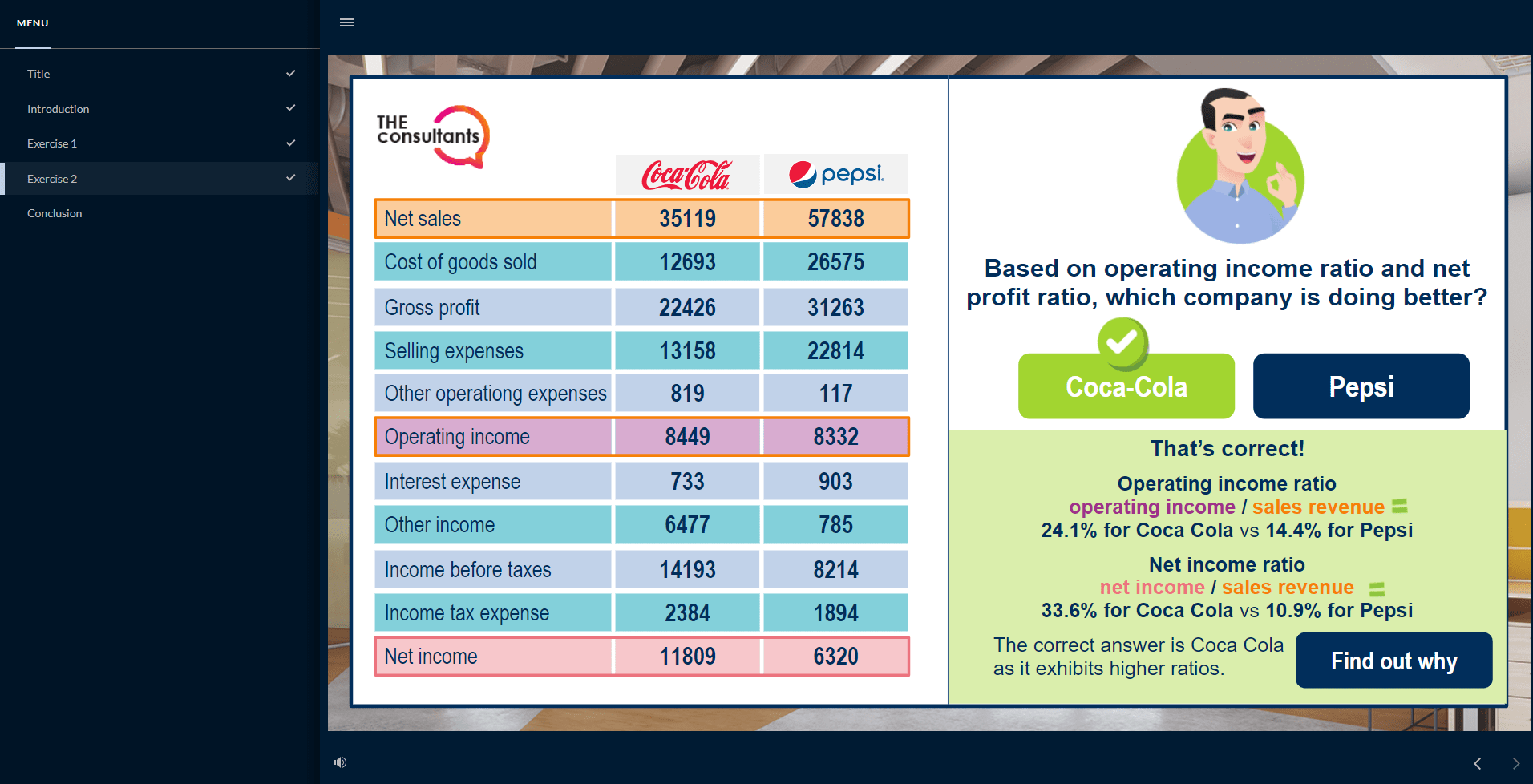
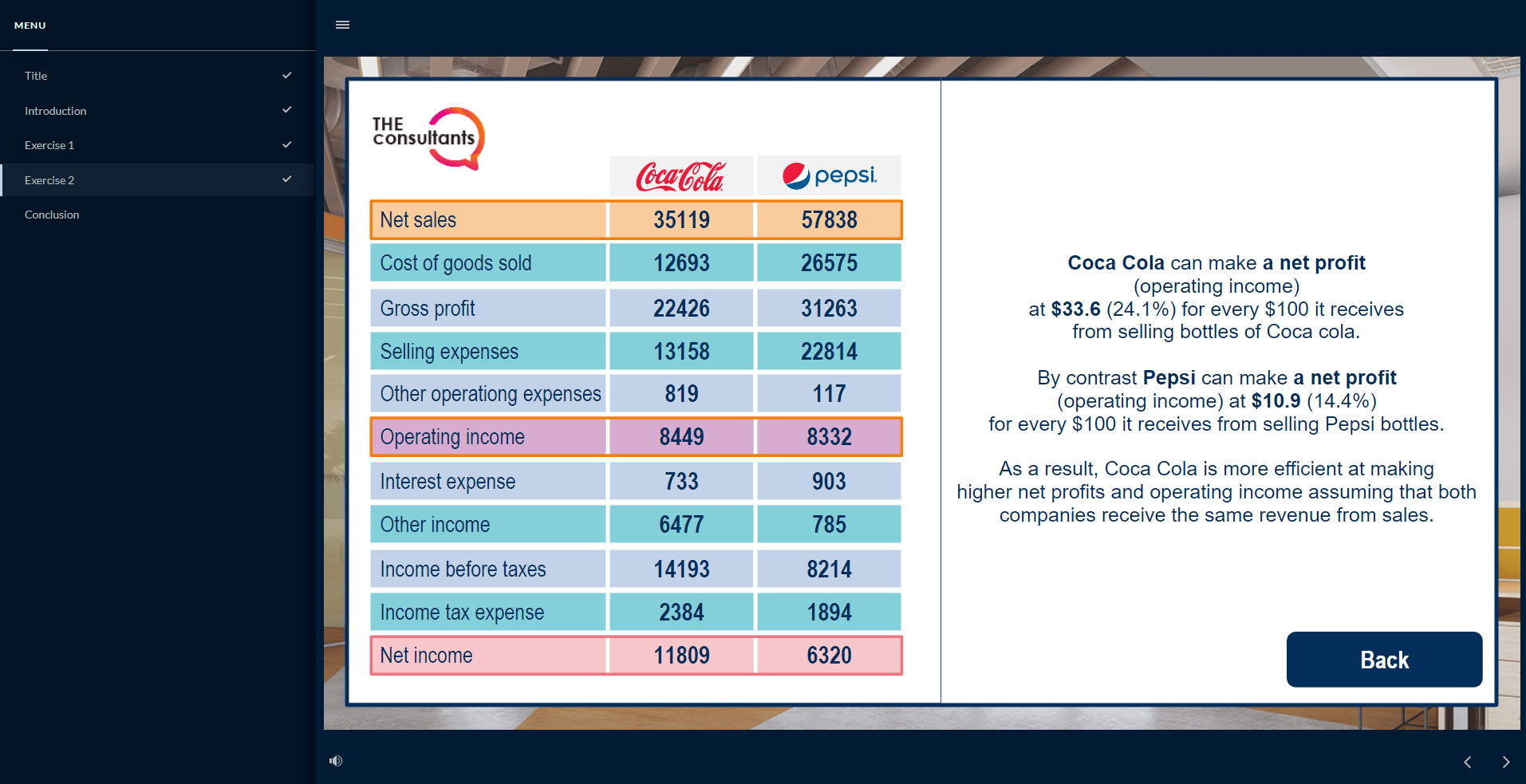
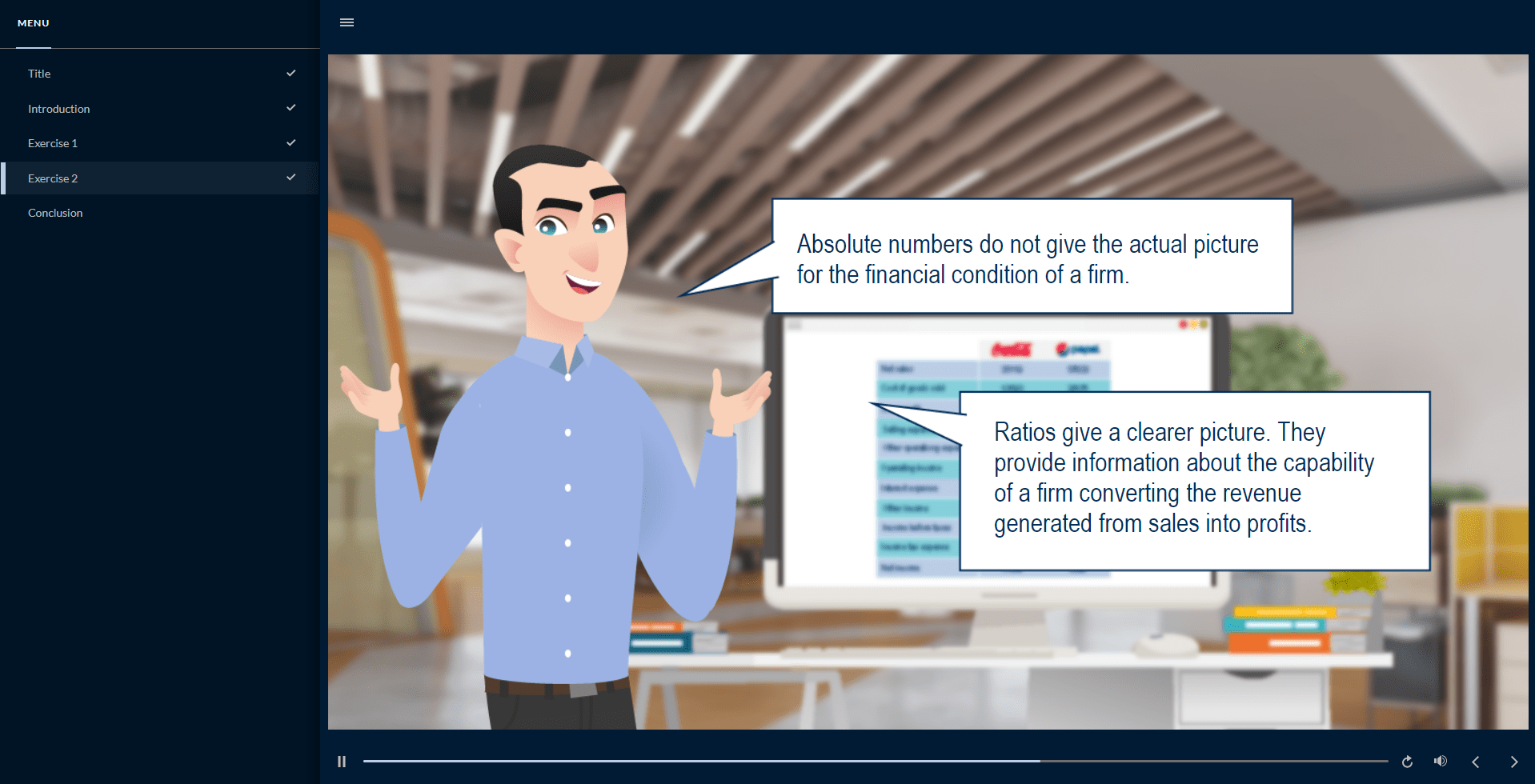
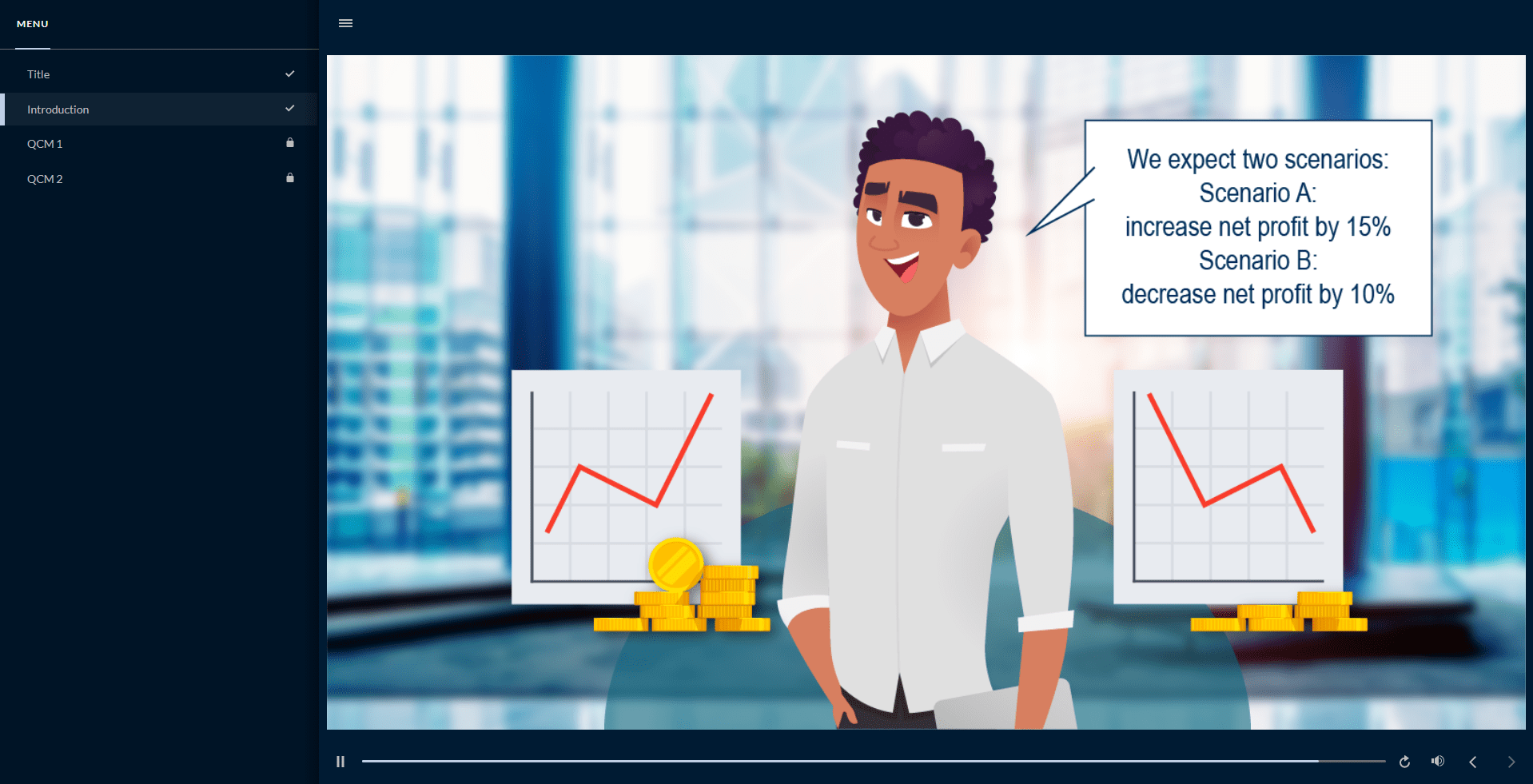
Course: Financial analysis
Duration: 5 min
Replayability: no
Case data are selected or randomly generated
Particularity:
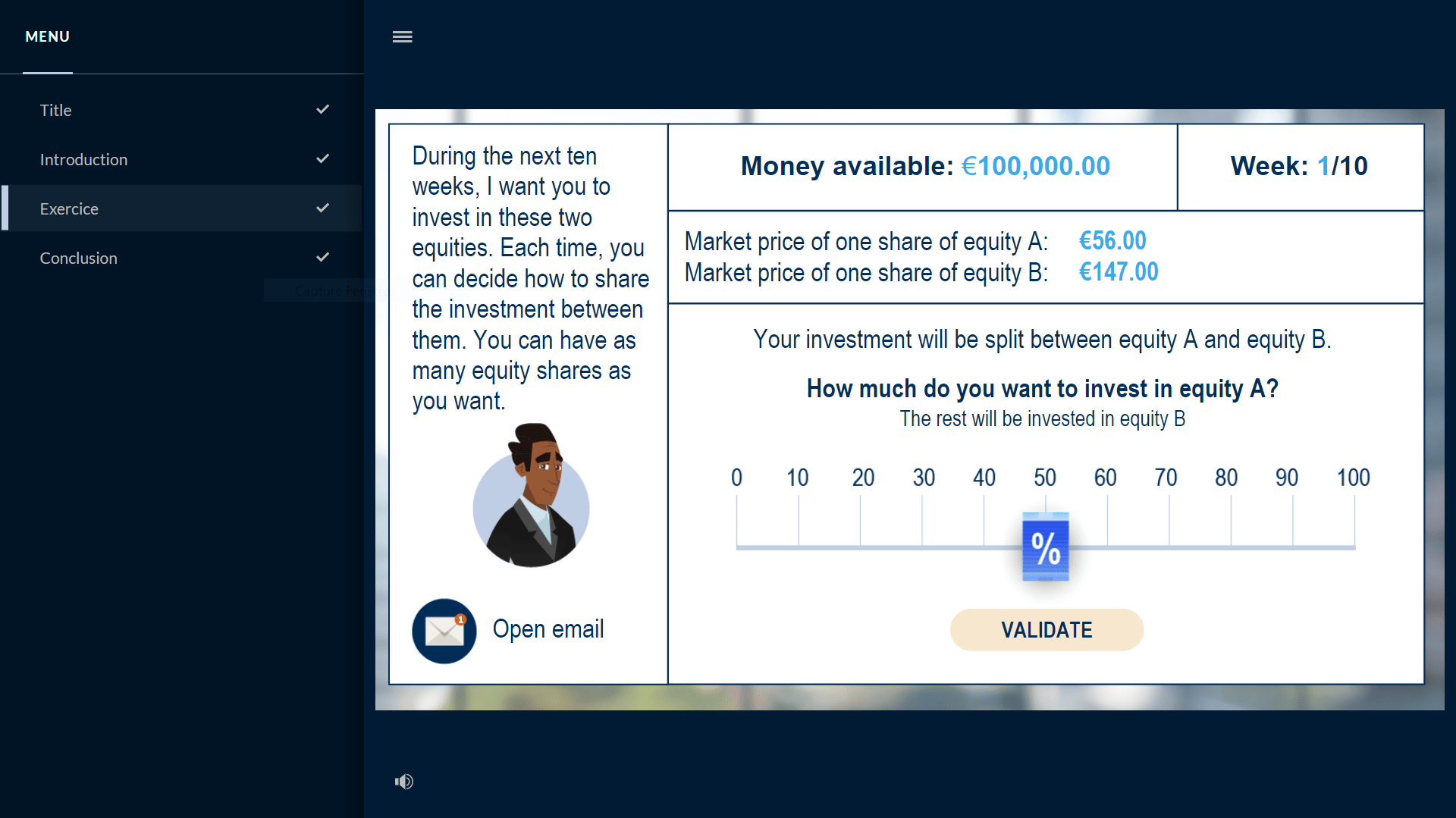
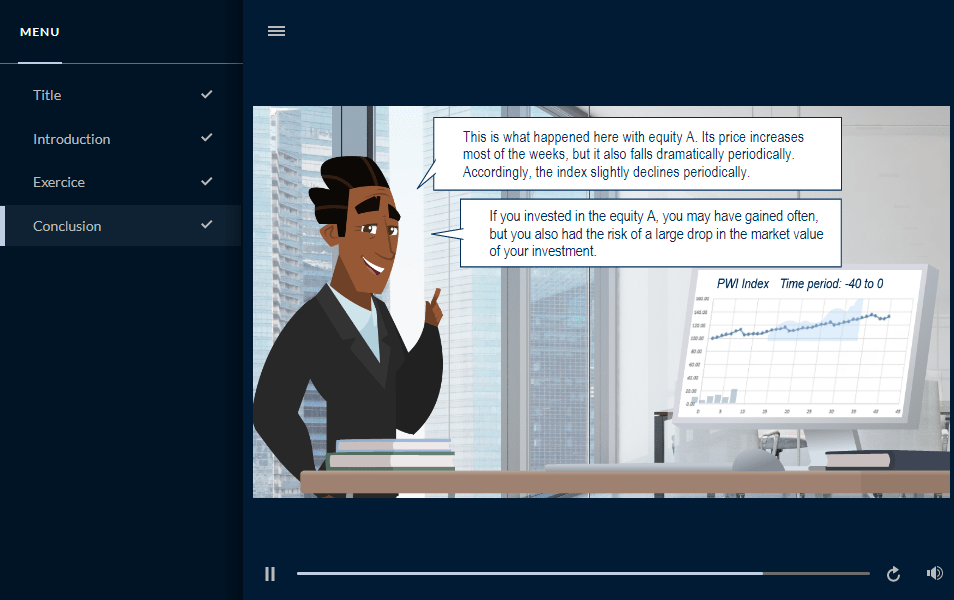
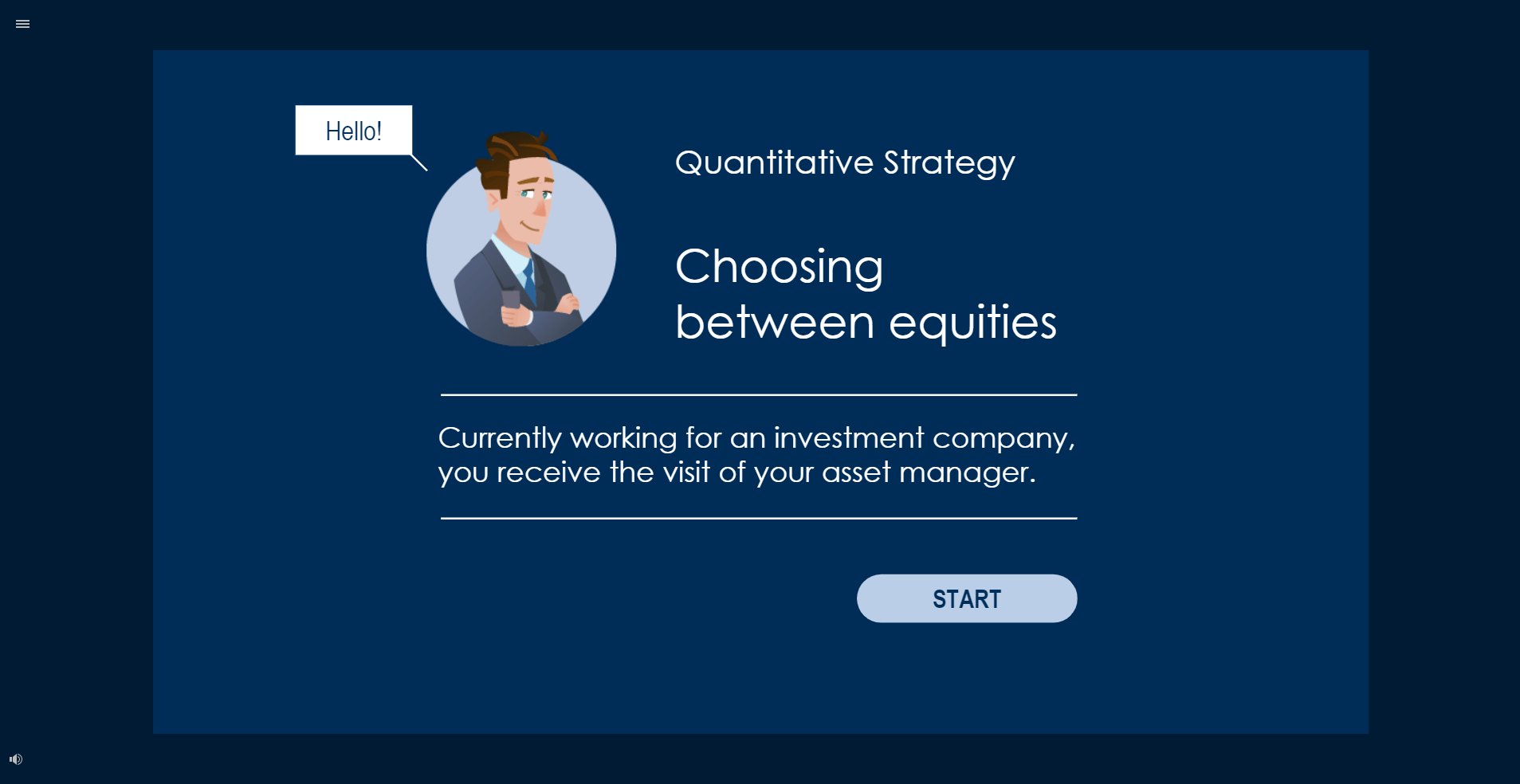
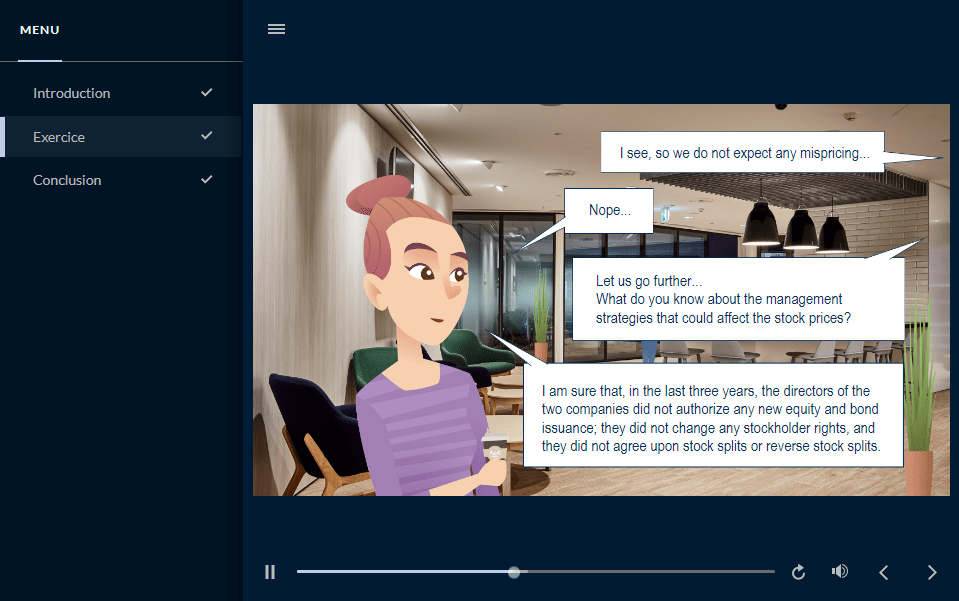
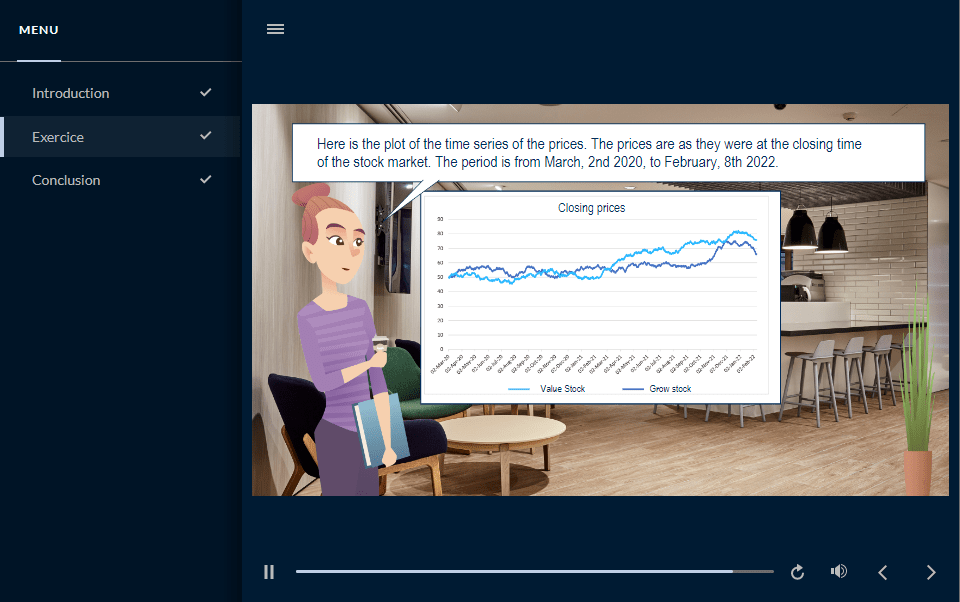
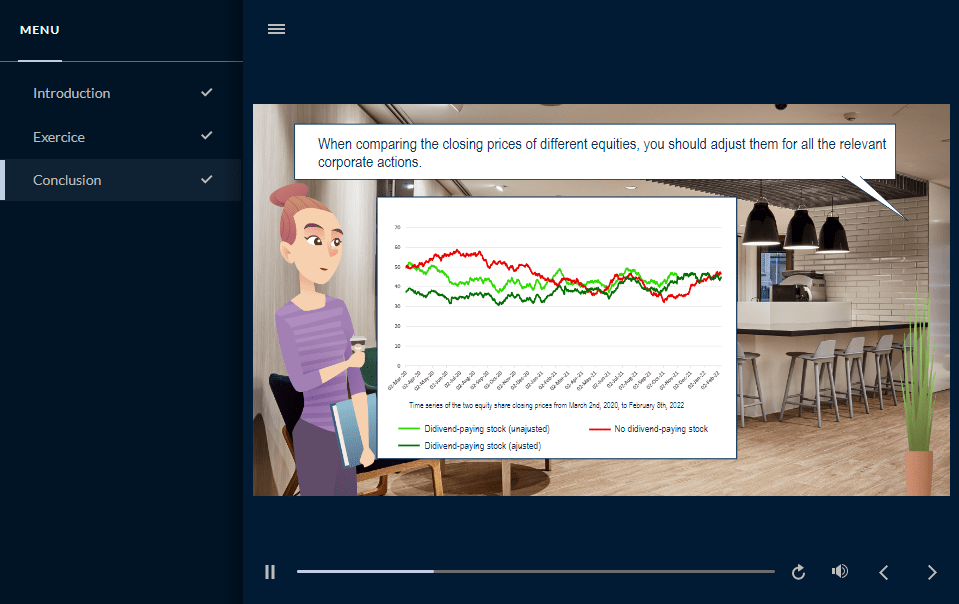
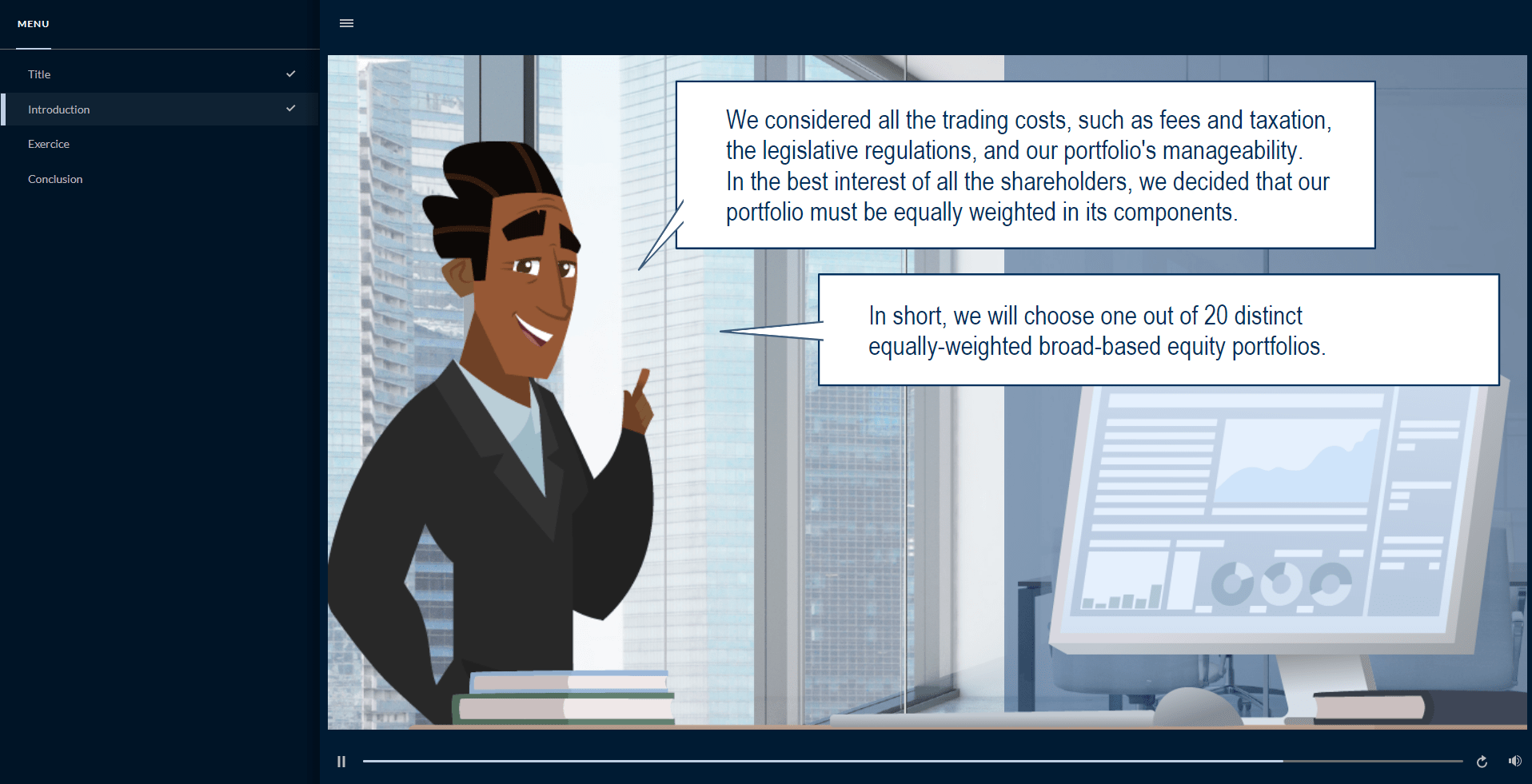
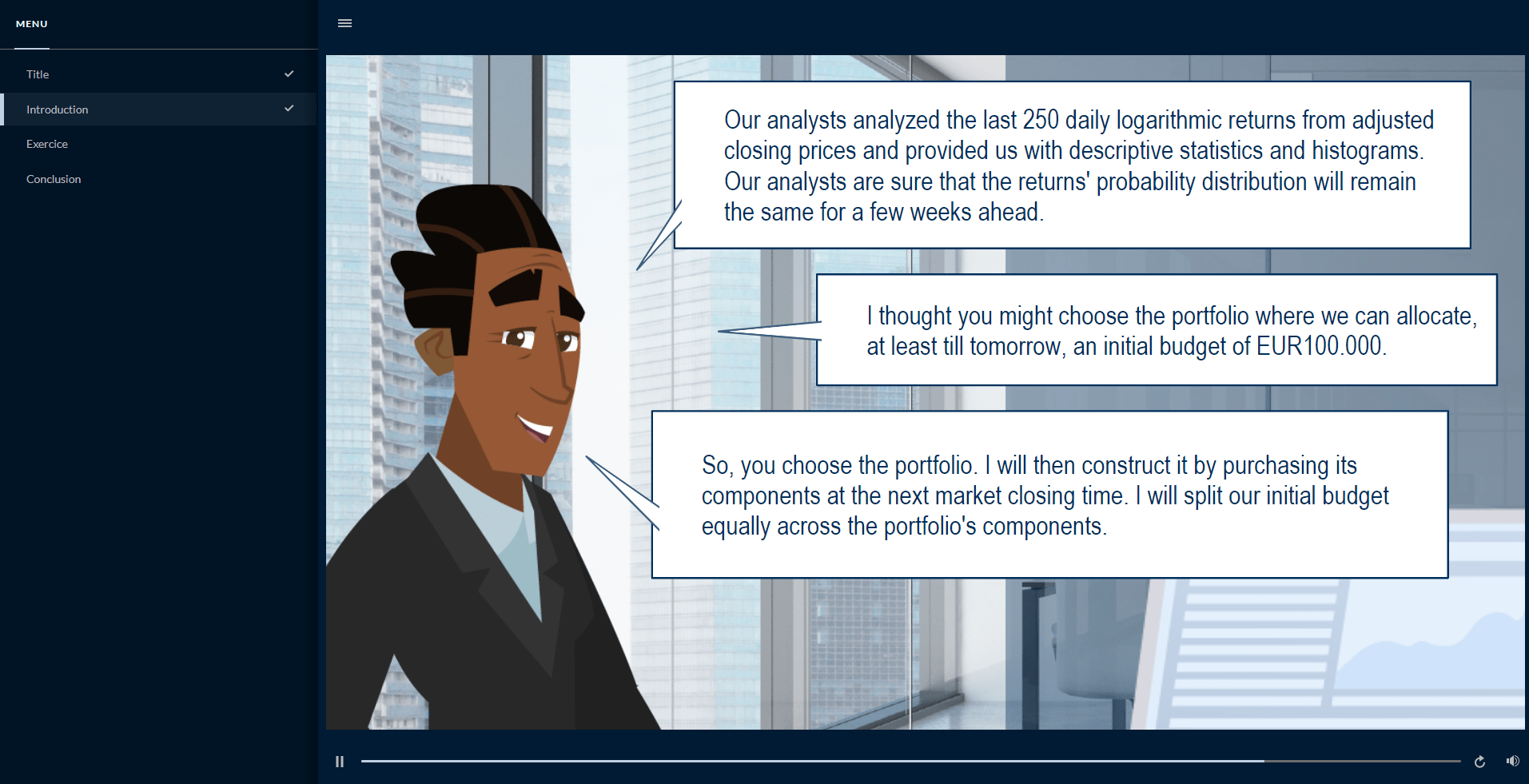
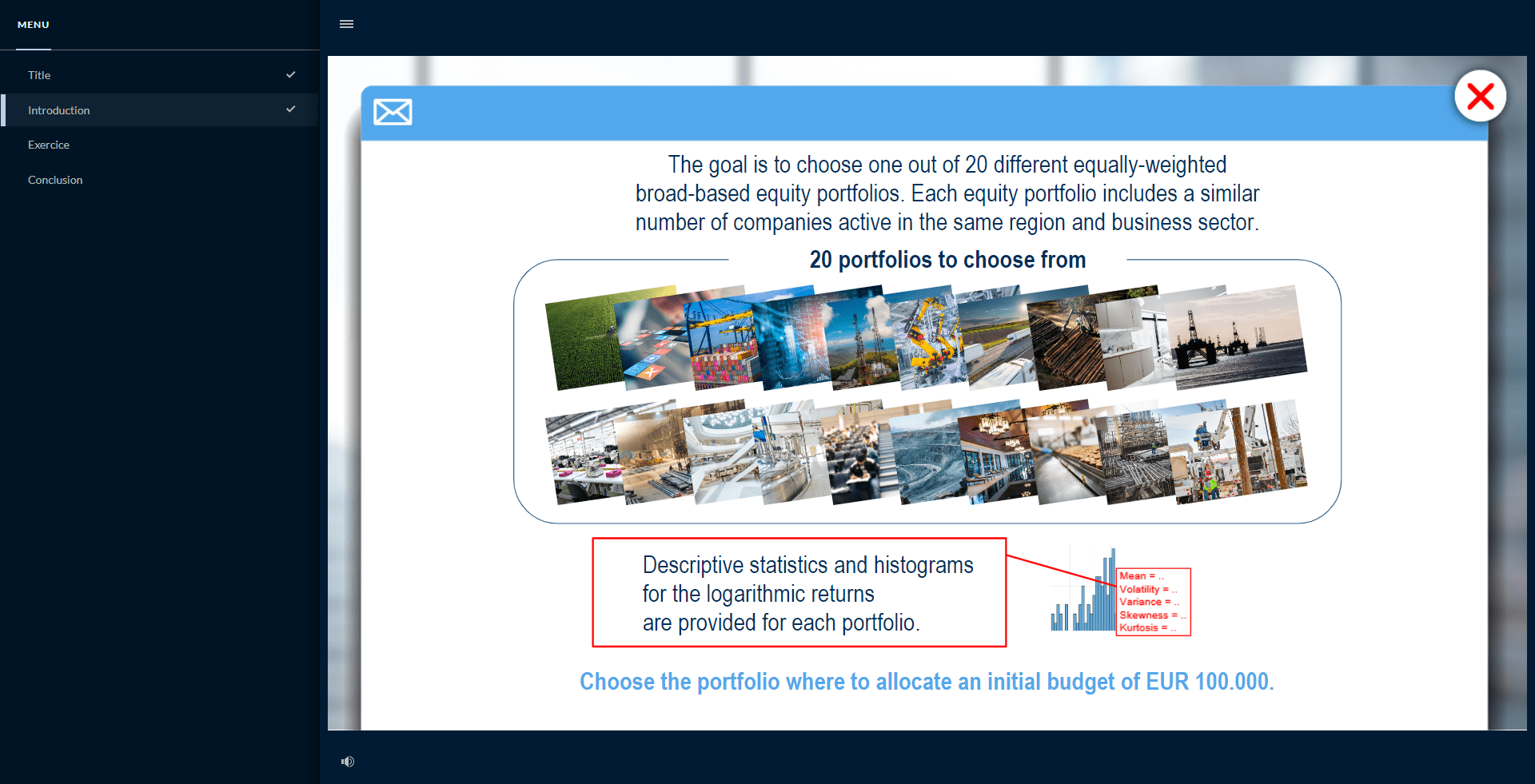
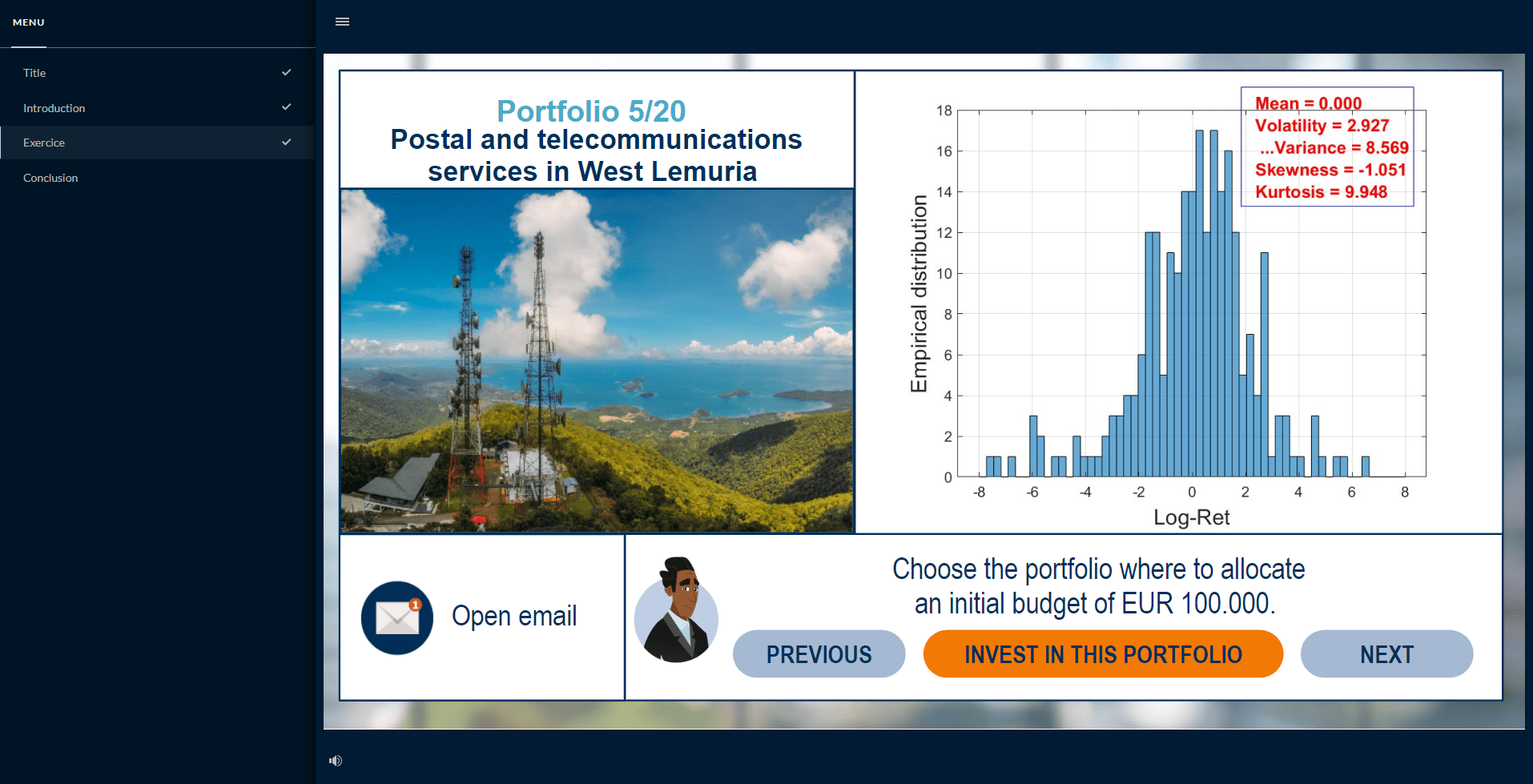
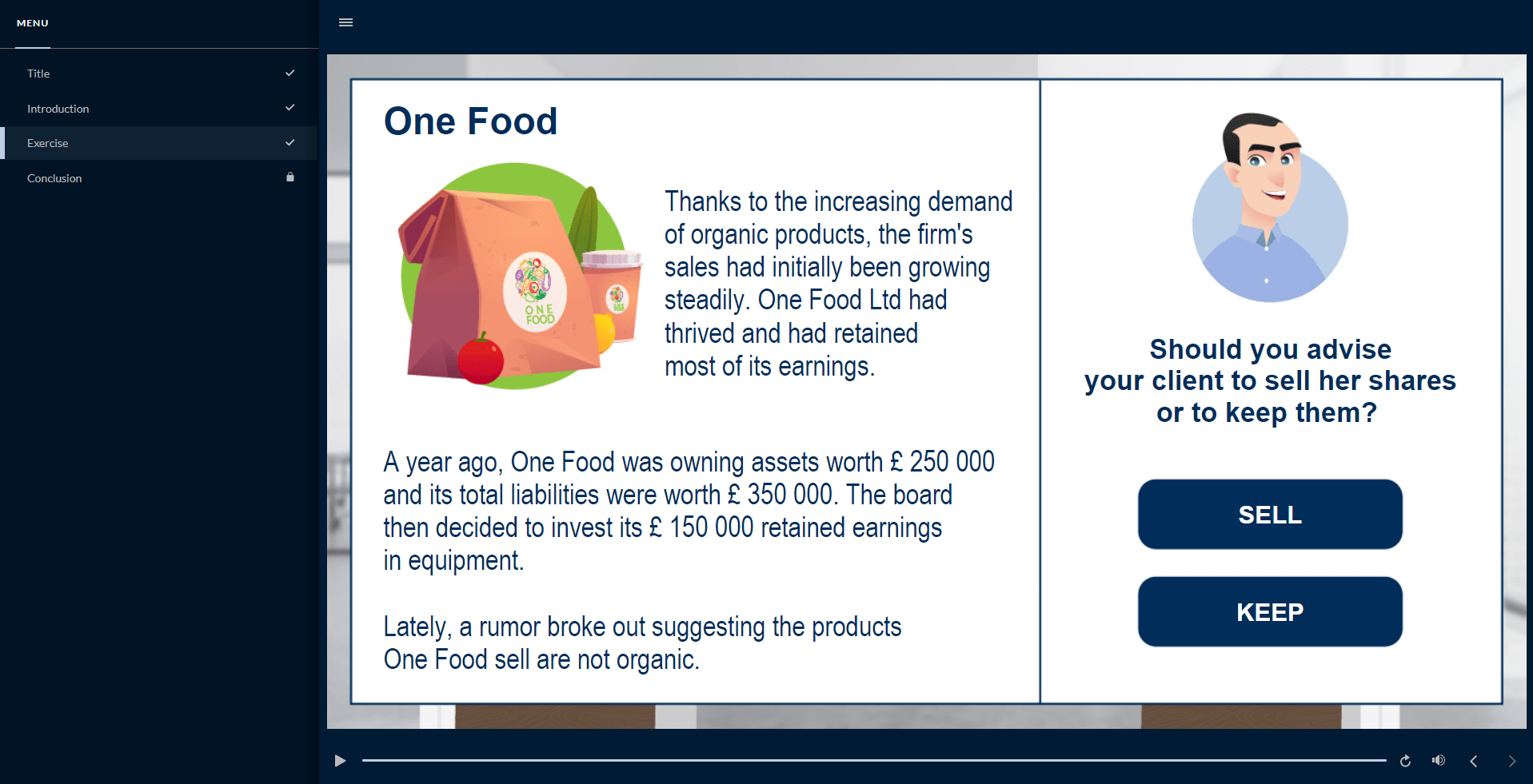
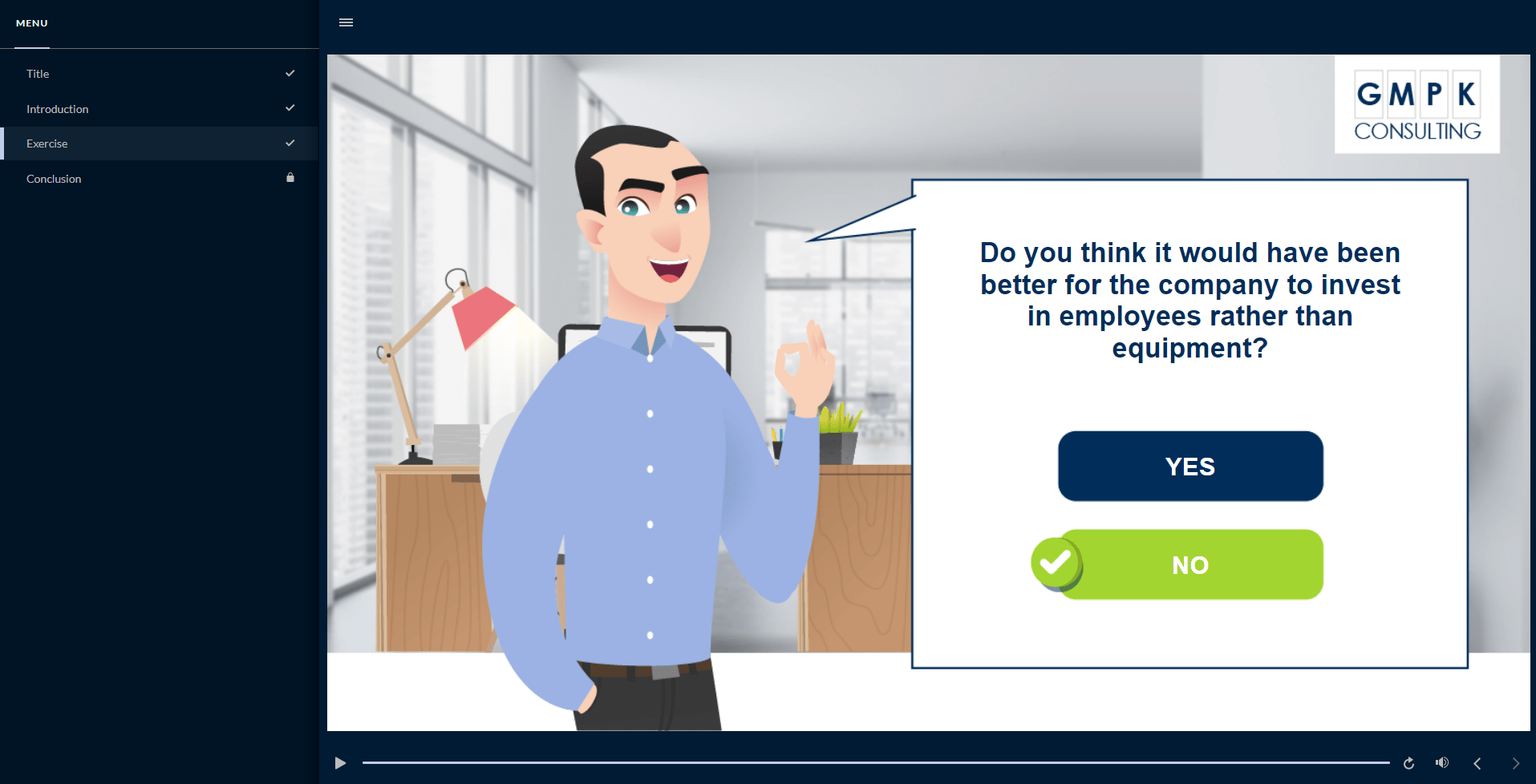
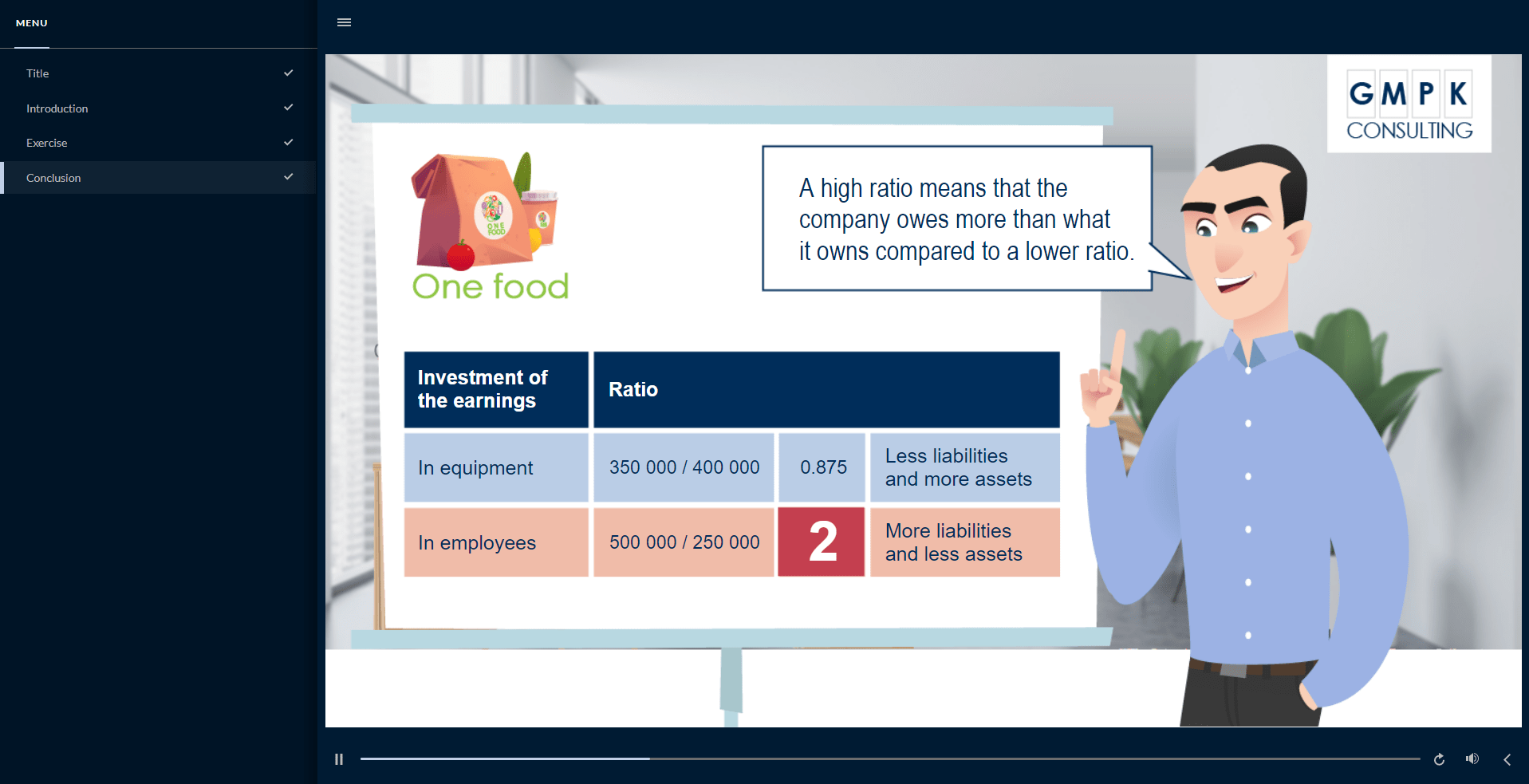
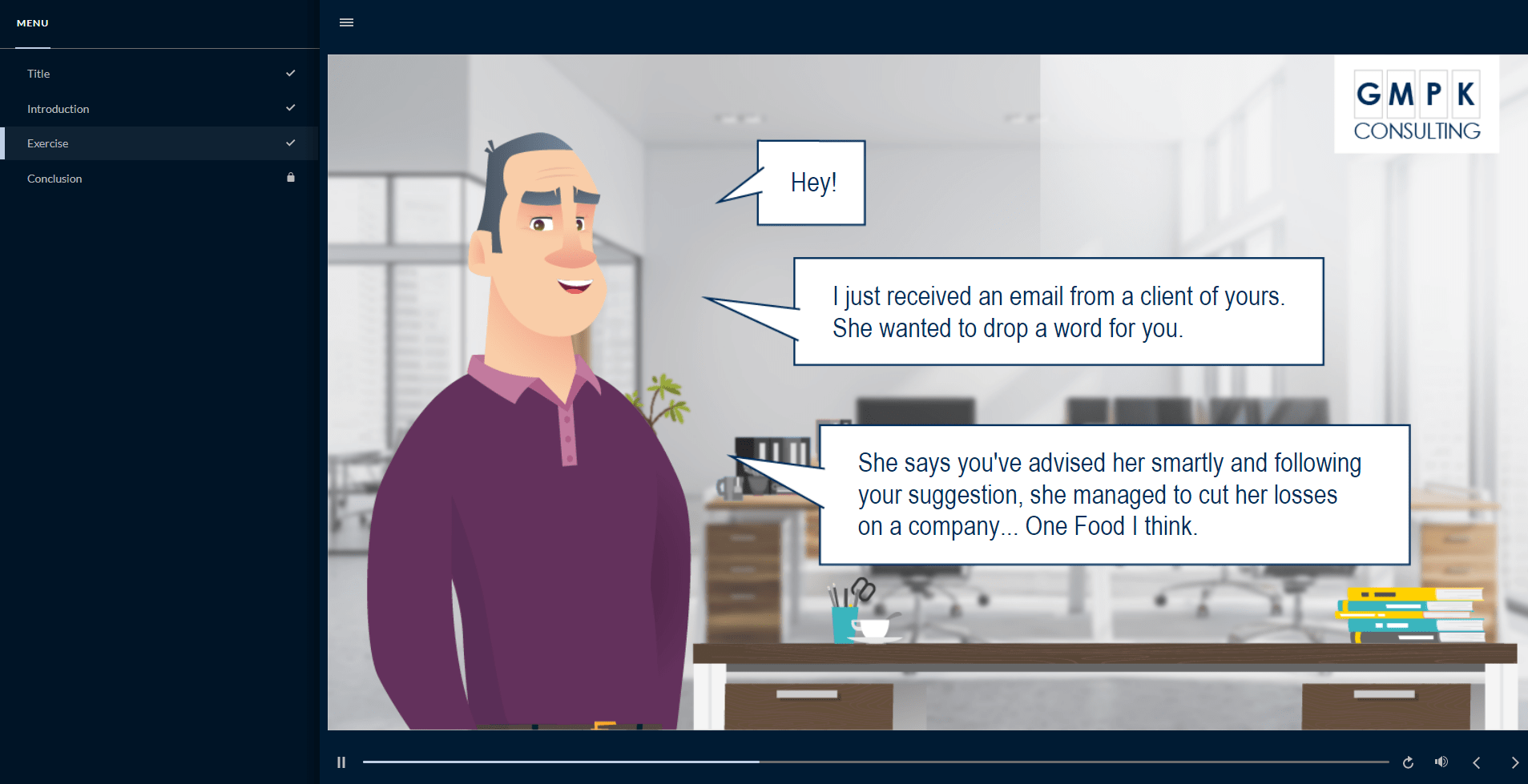
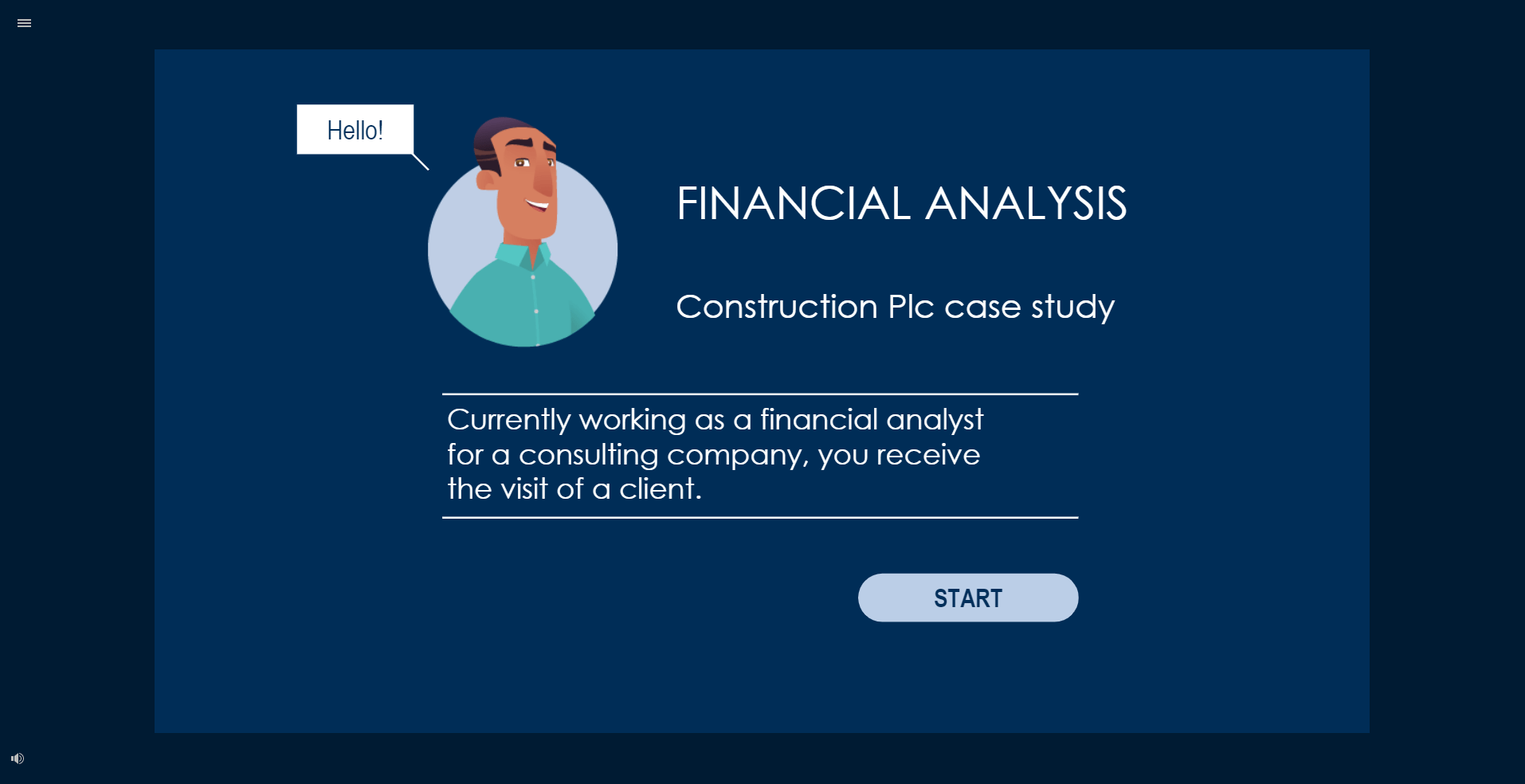
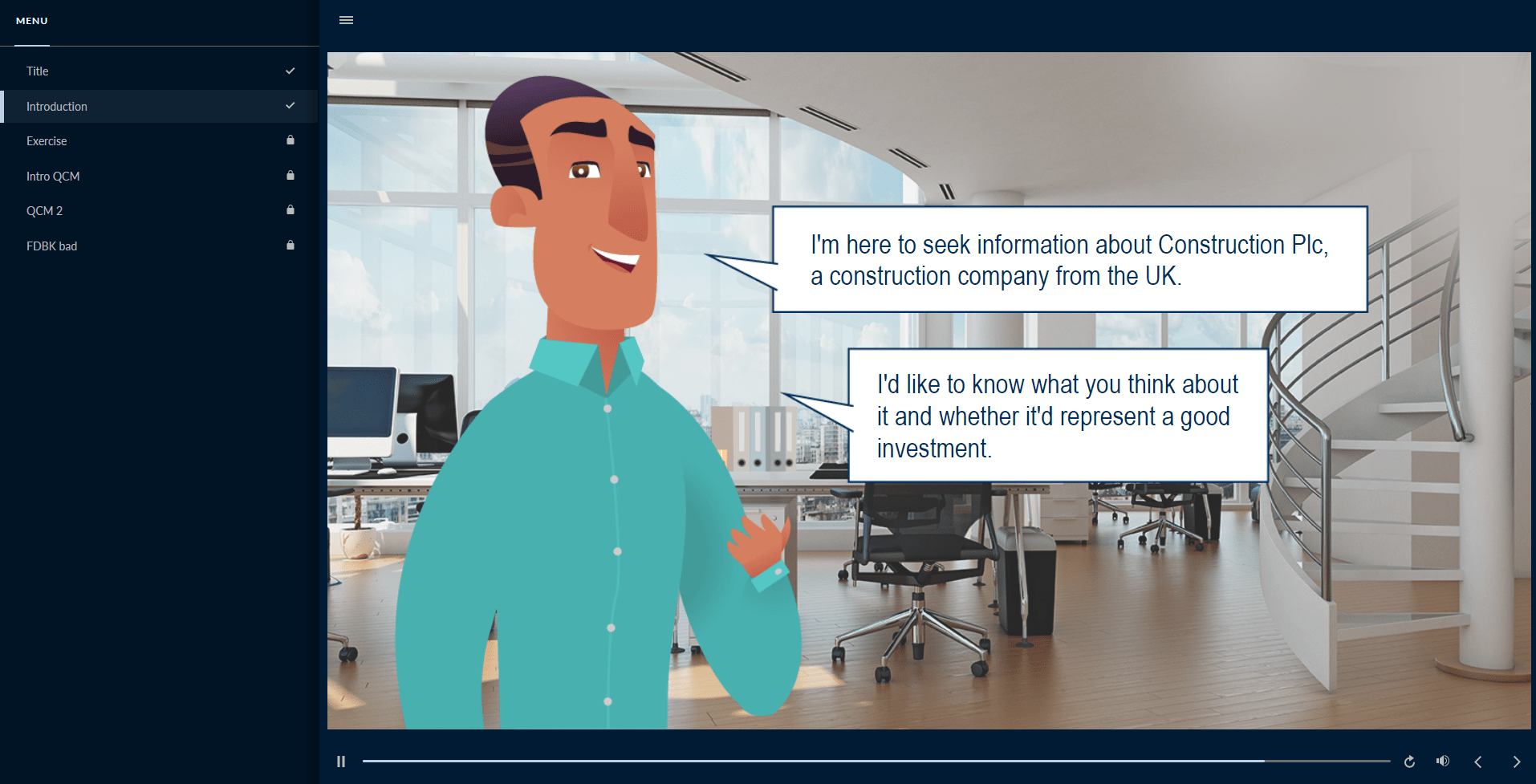
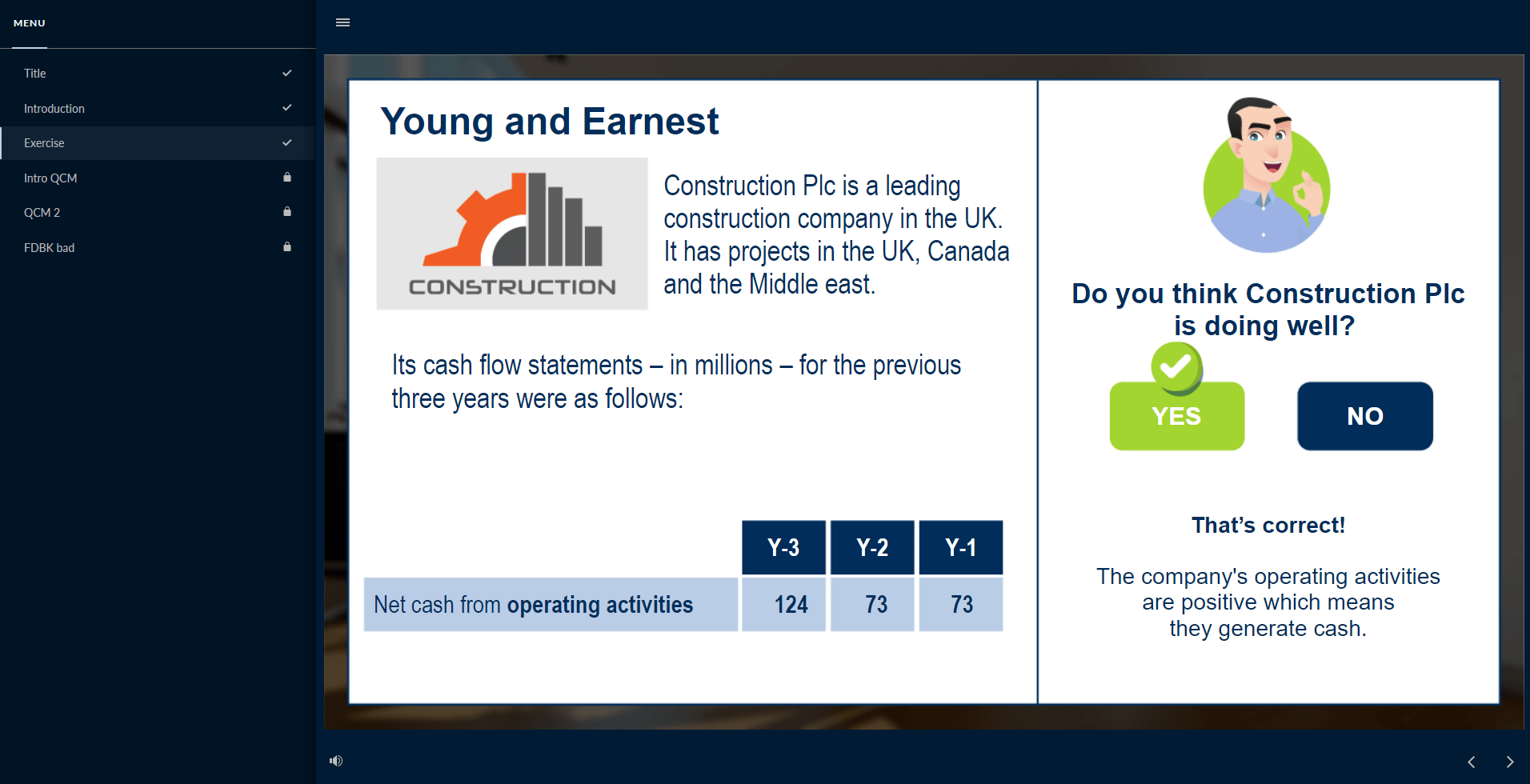
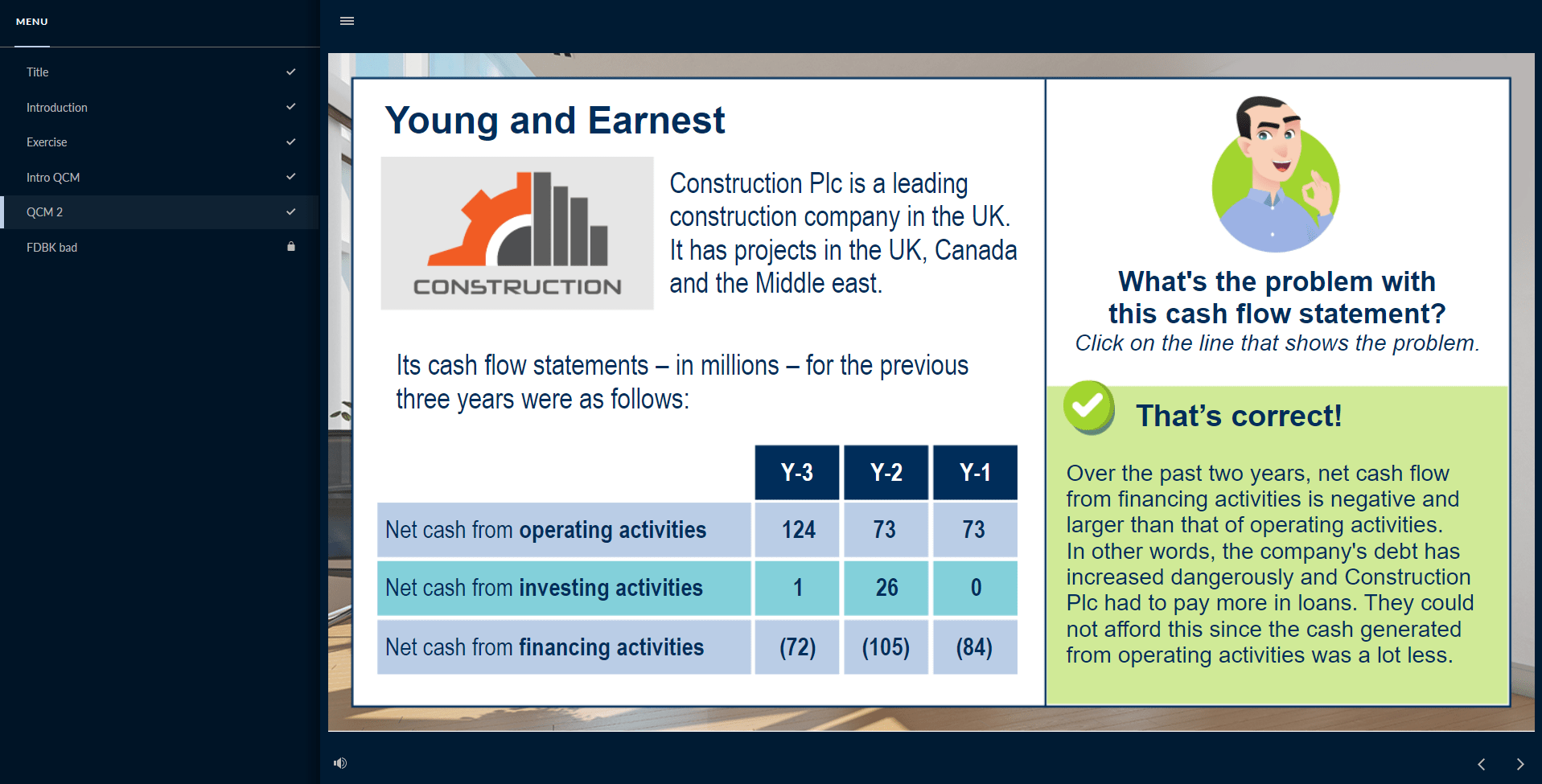
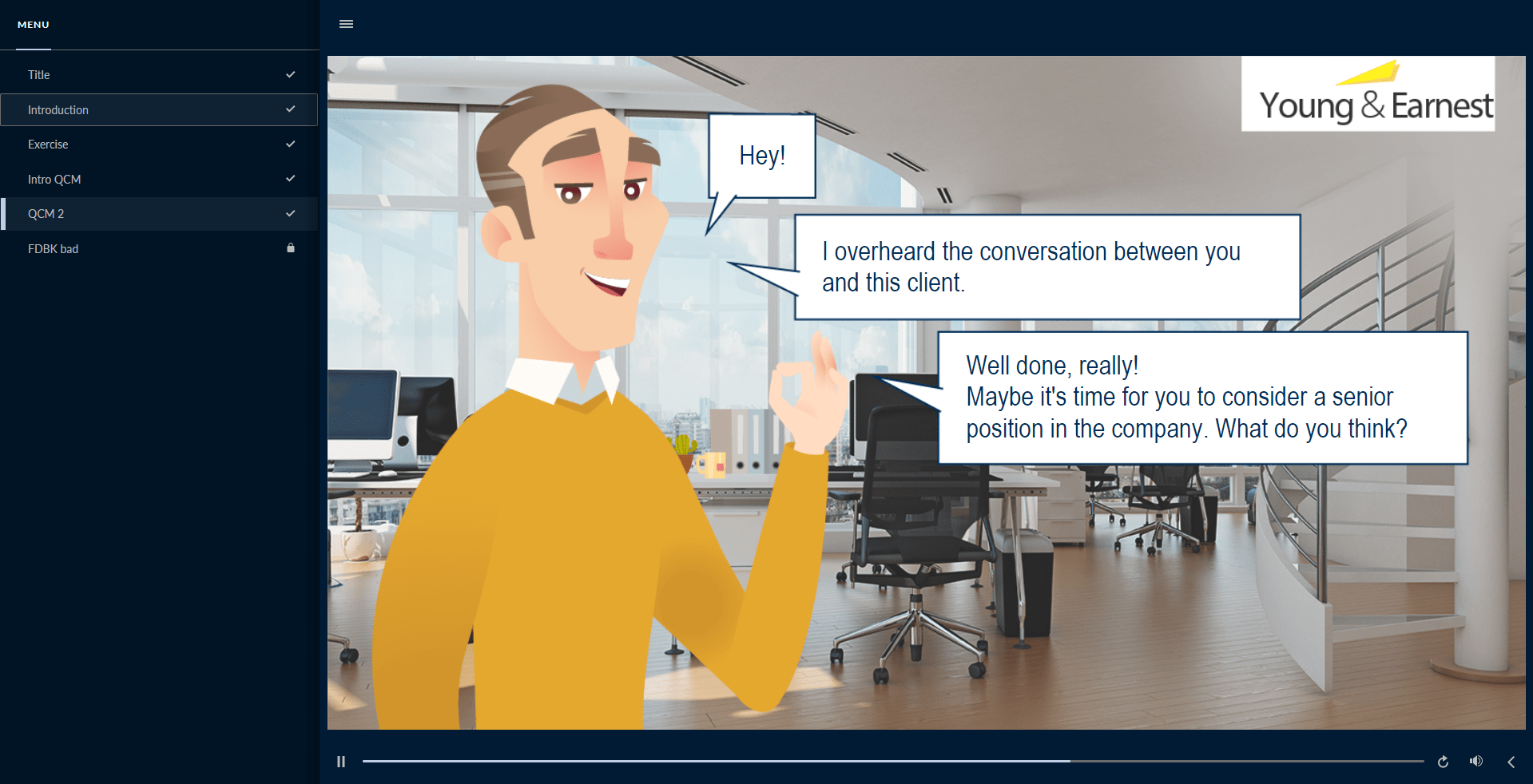
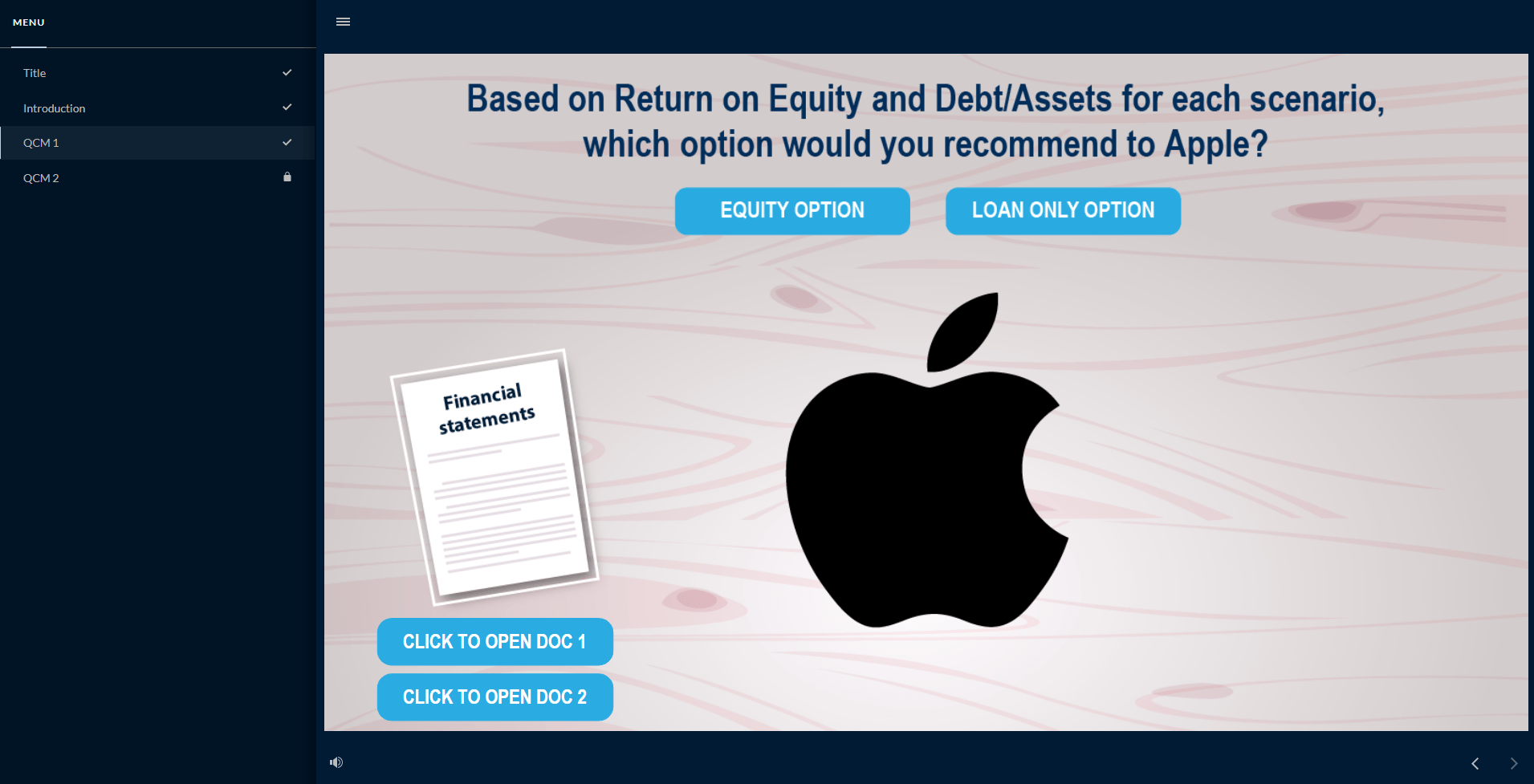
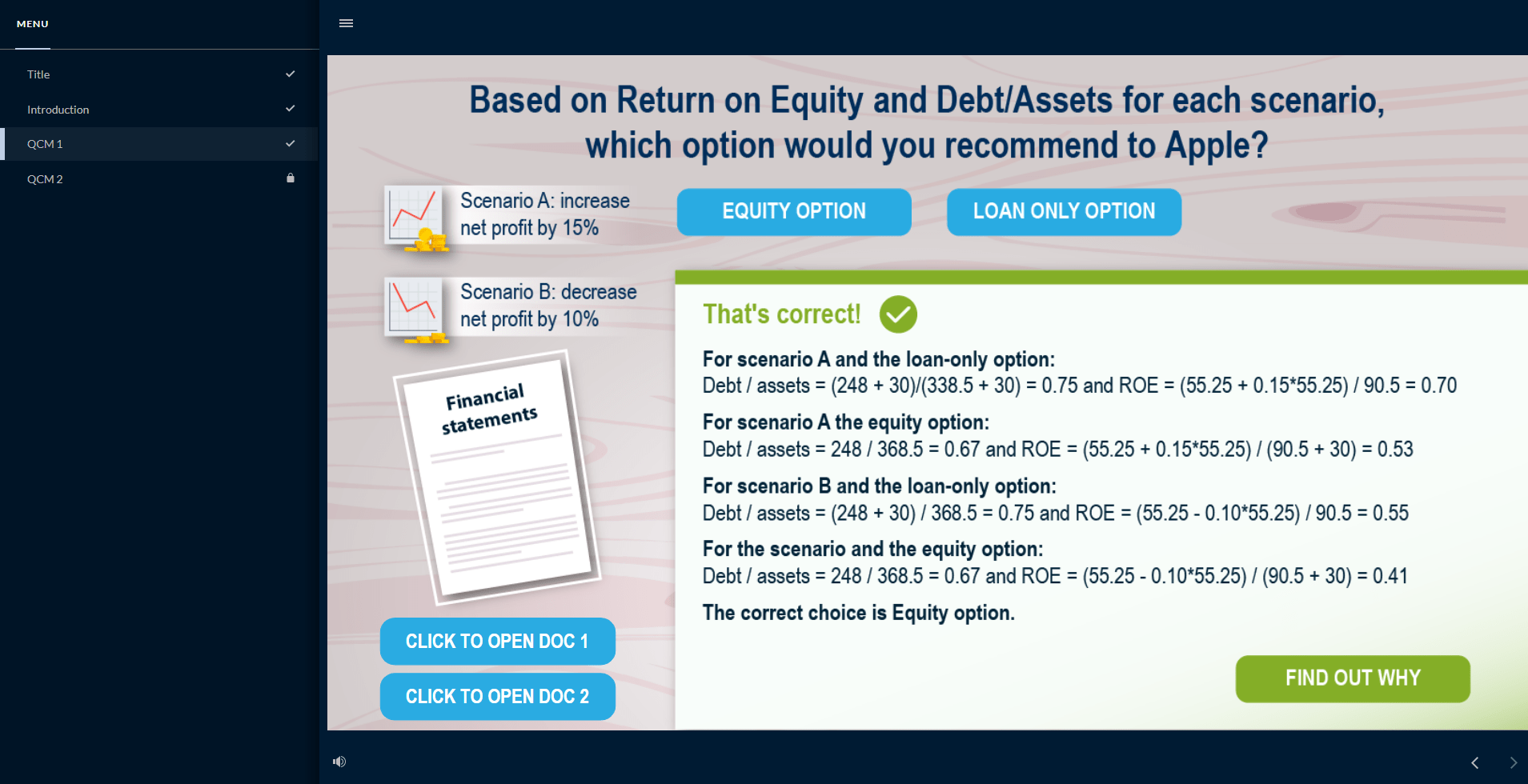
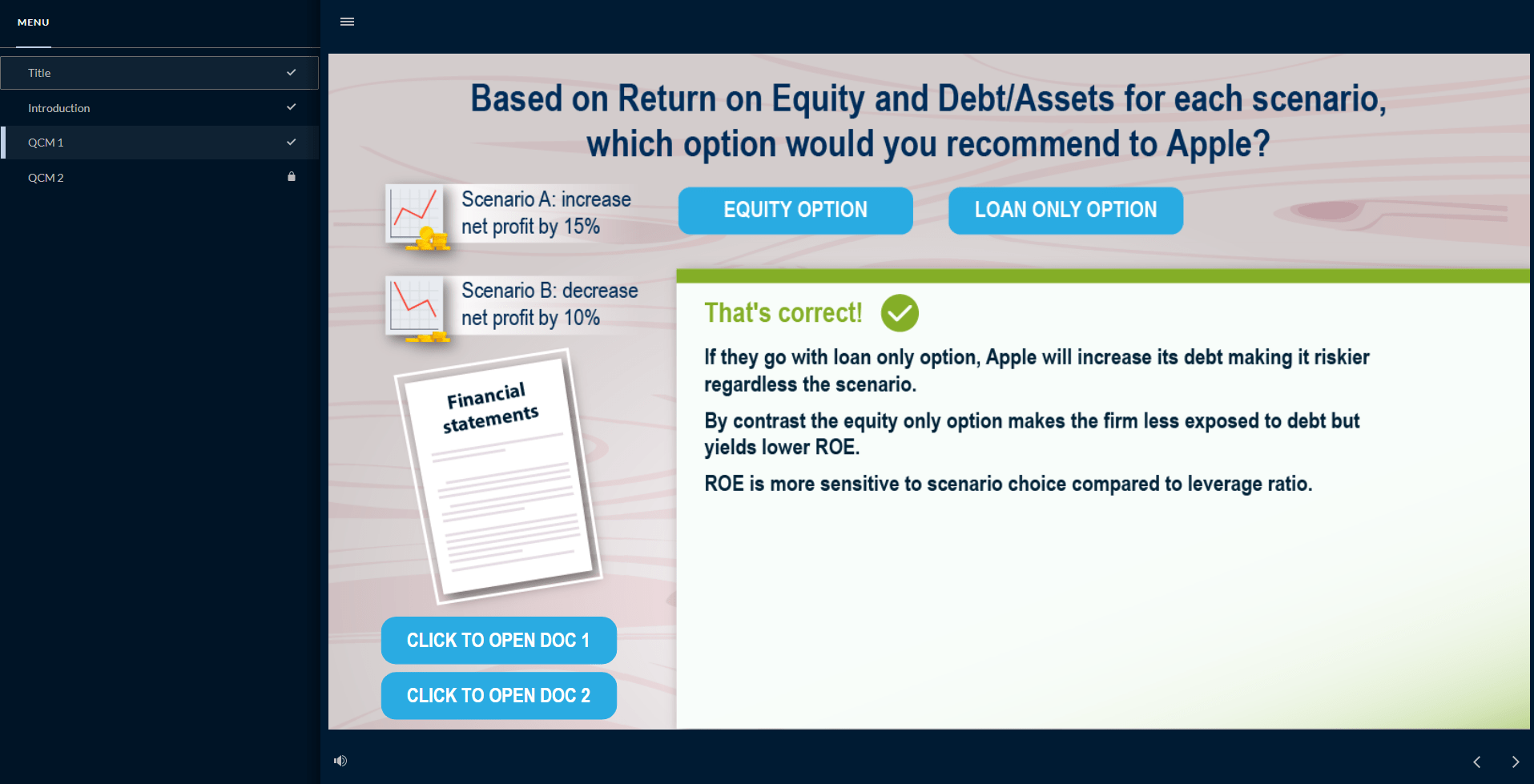
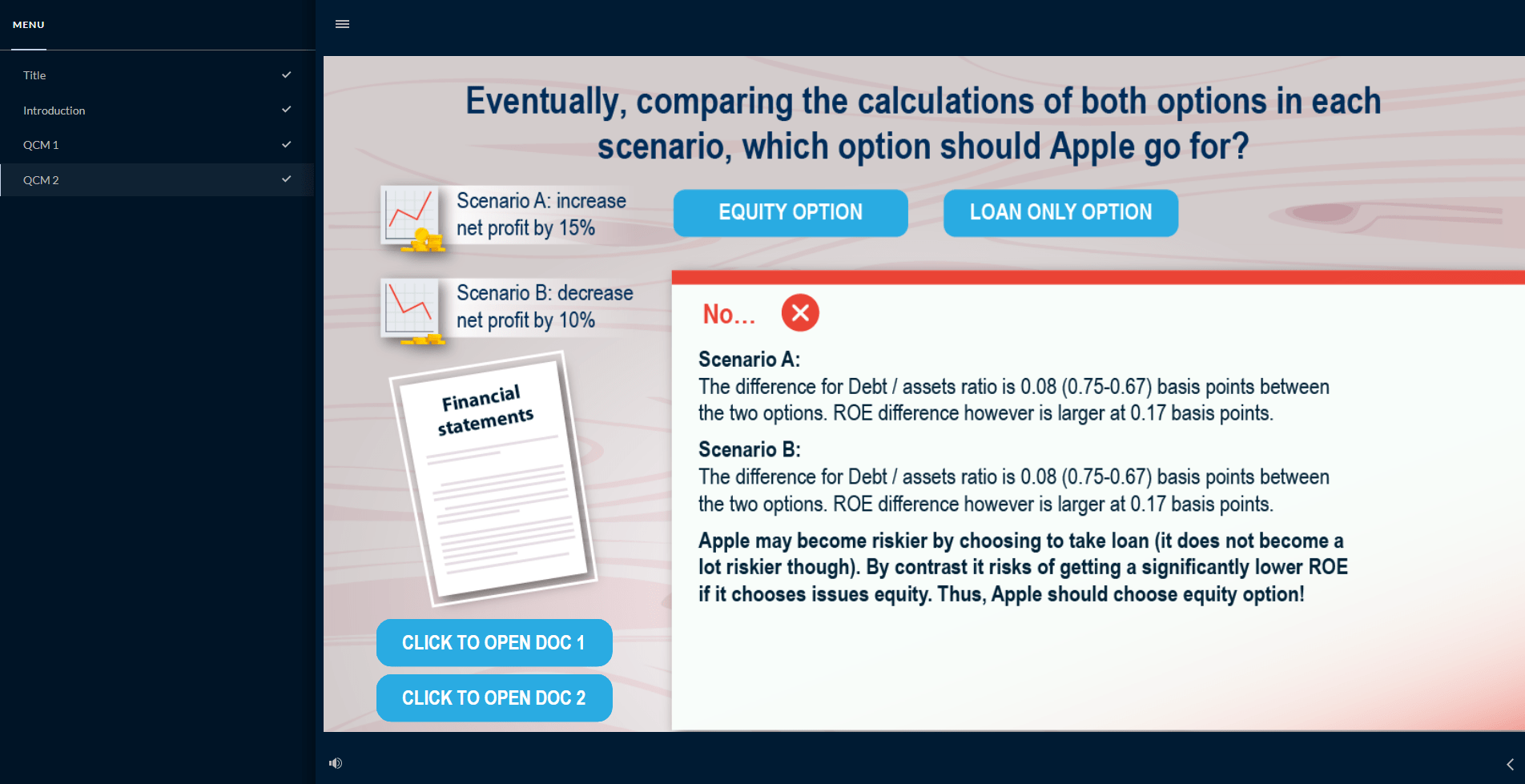
The learner embodies a consultant of an investment firm and advises different customers on their choice of investment/sale of shares in various companies.
Depending on his choices, a remedy is provided back to him. Satisfaction or dissatisfaction of the customers and his manager are then revealed.
Some examples
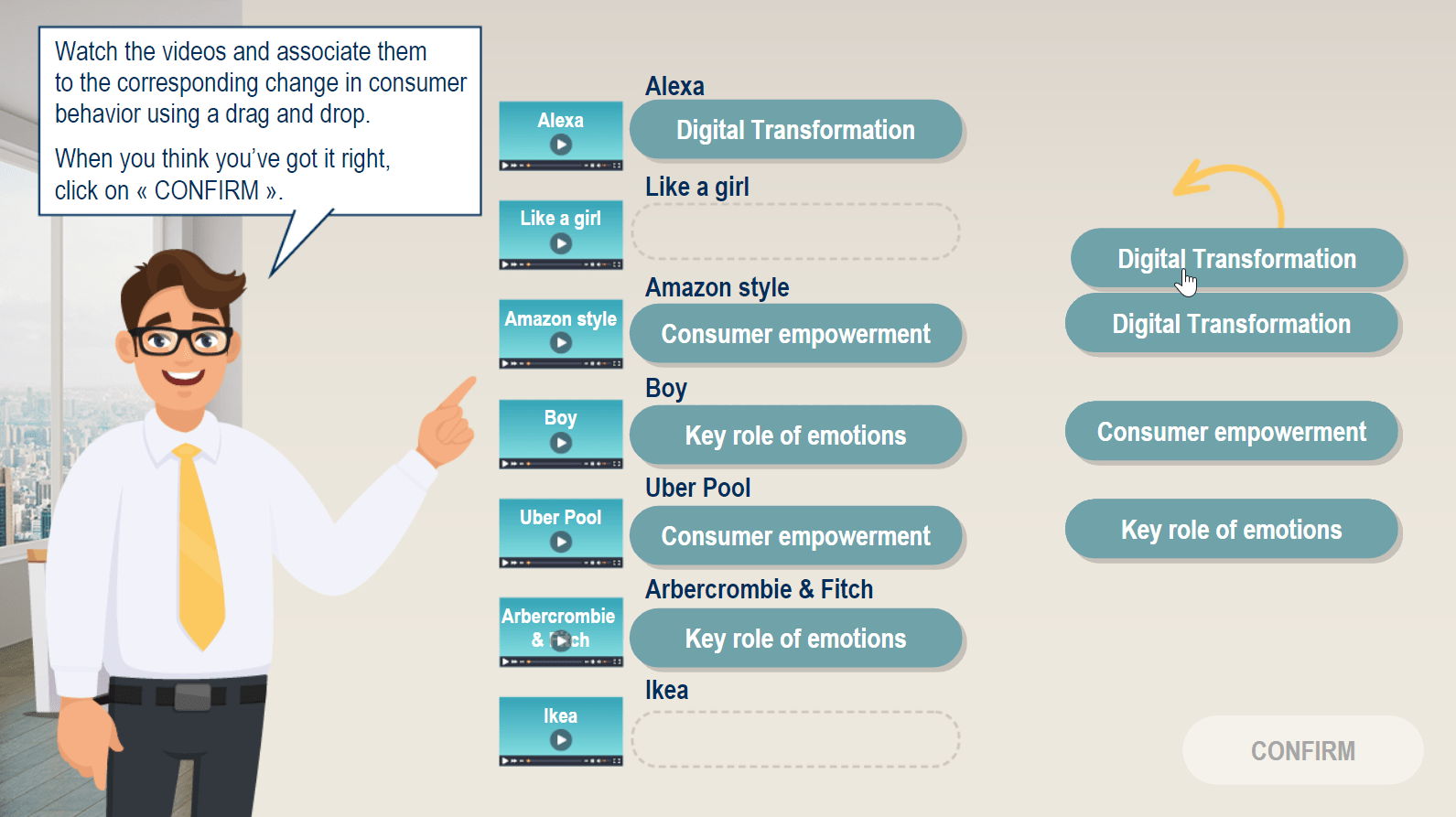
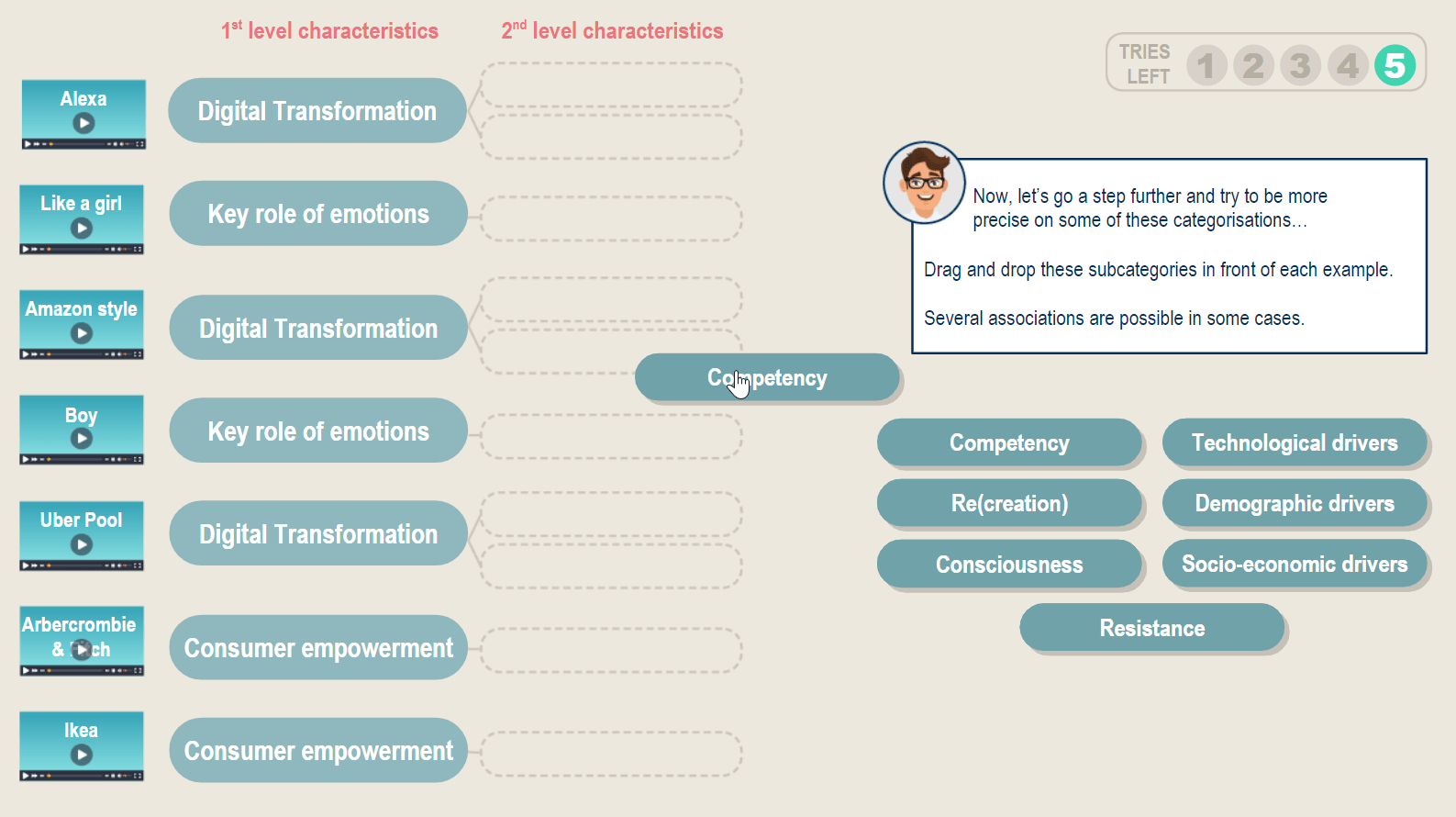
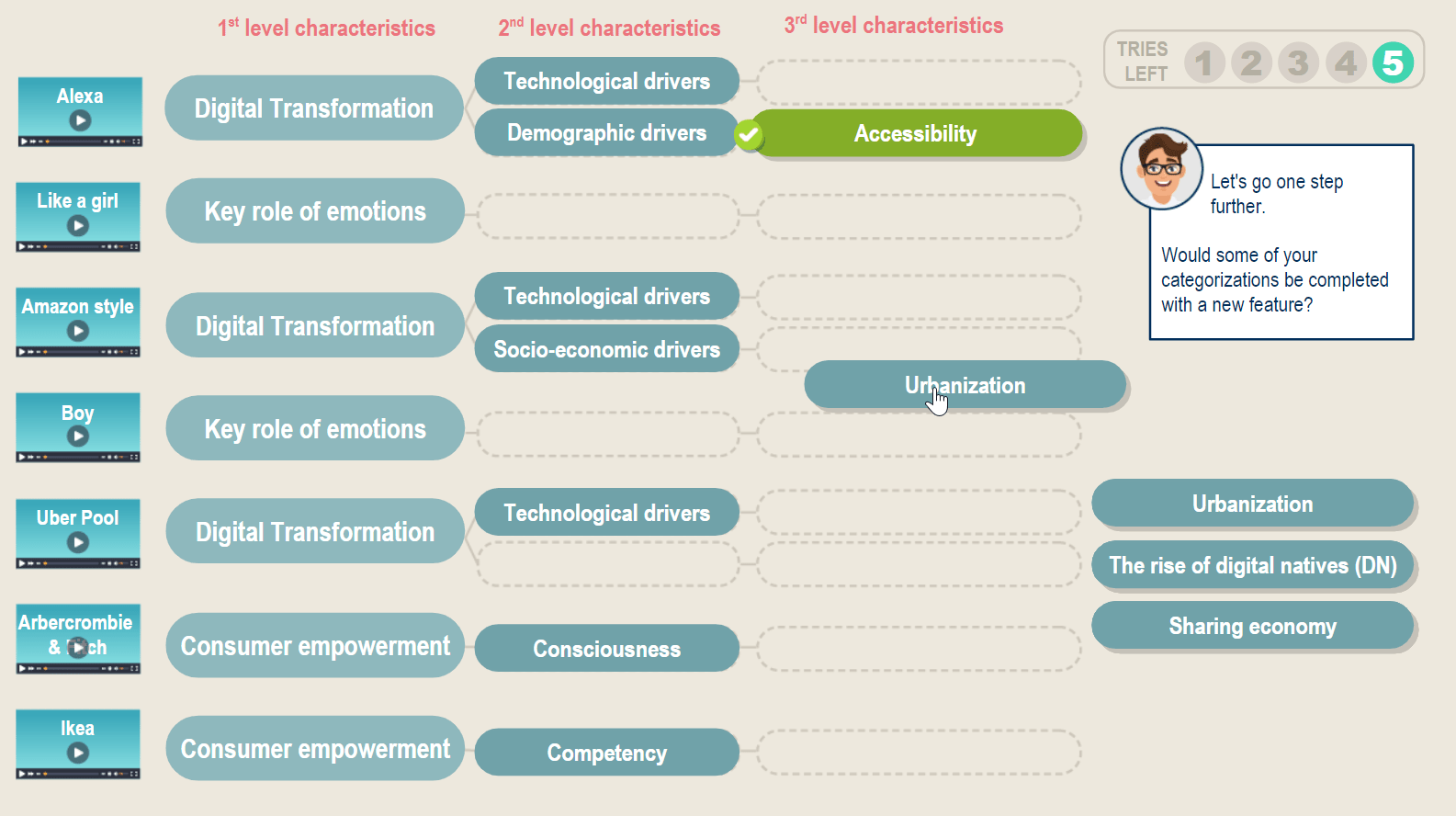
Categorization activity with multi-level
Course: Customer experience and branding
Duration: 5 min
Replayability: no
Particularity:
The learner watches video excerpts and then associates the corresponding change factors with different levels of granularity.
Some examples
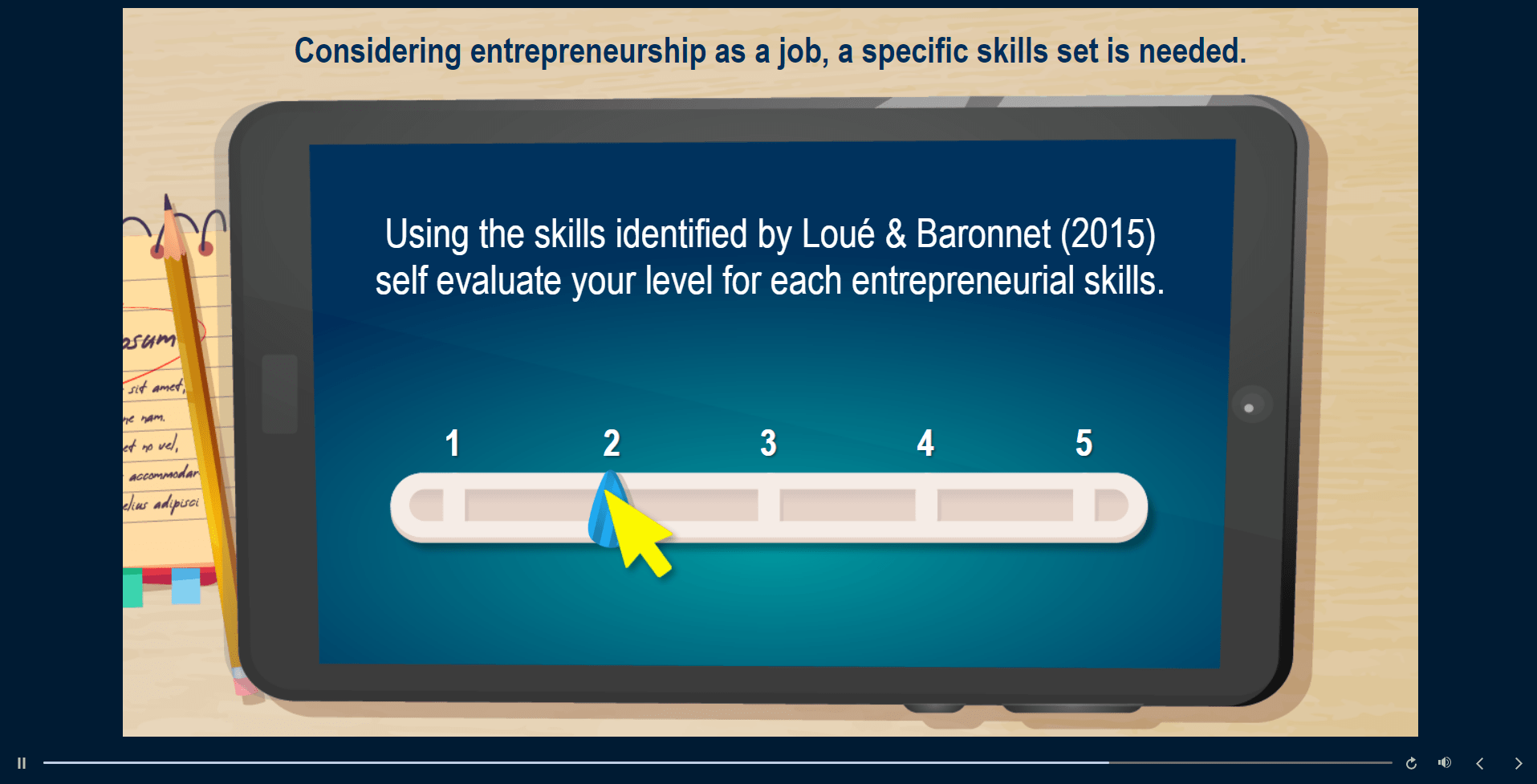
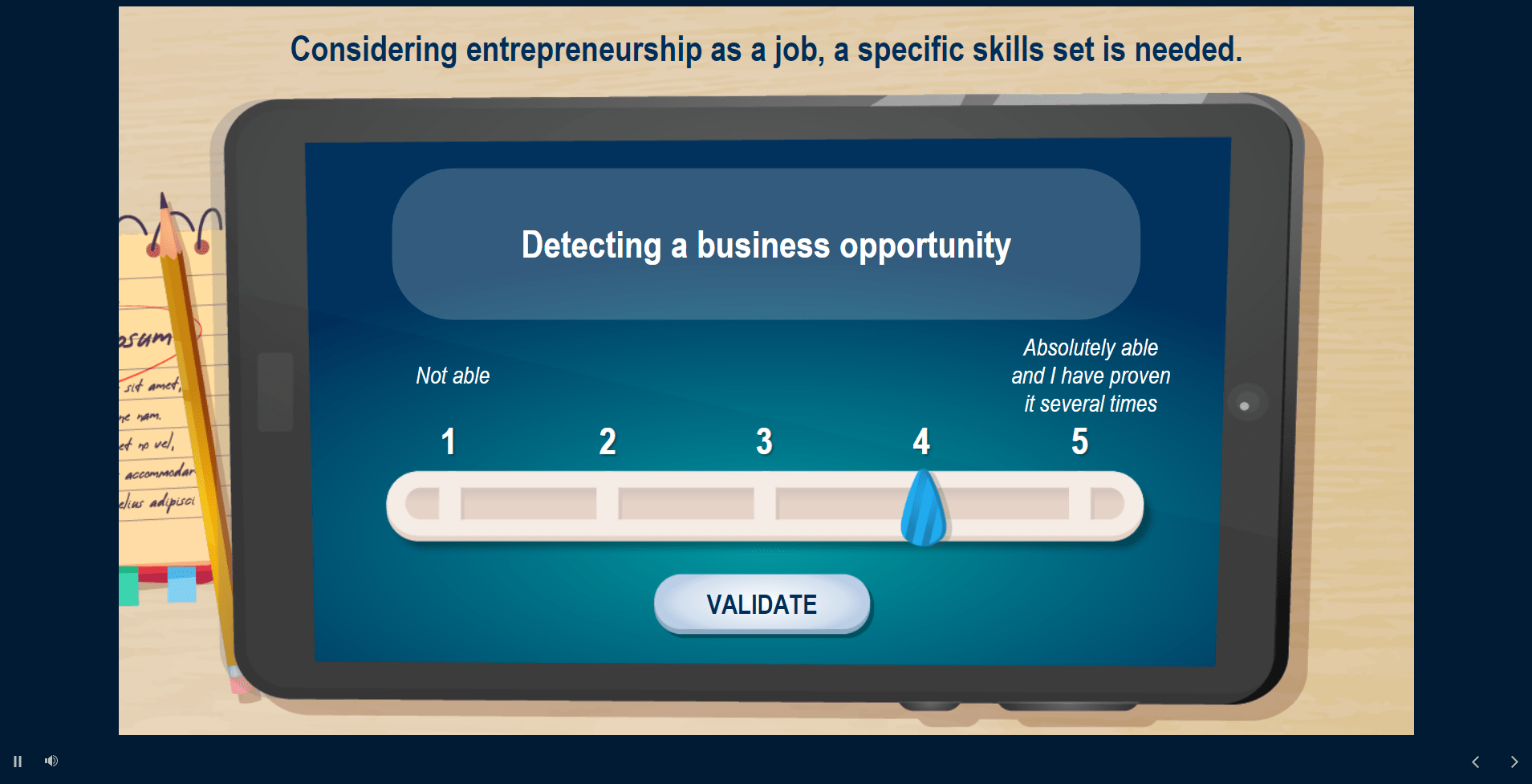
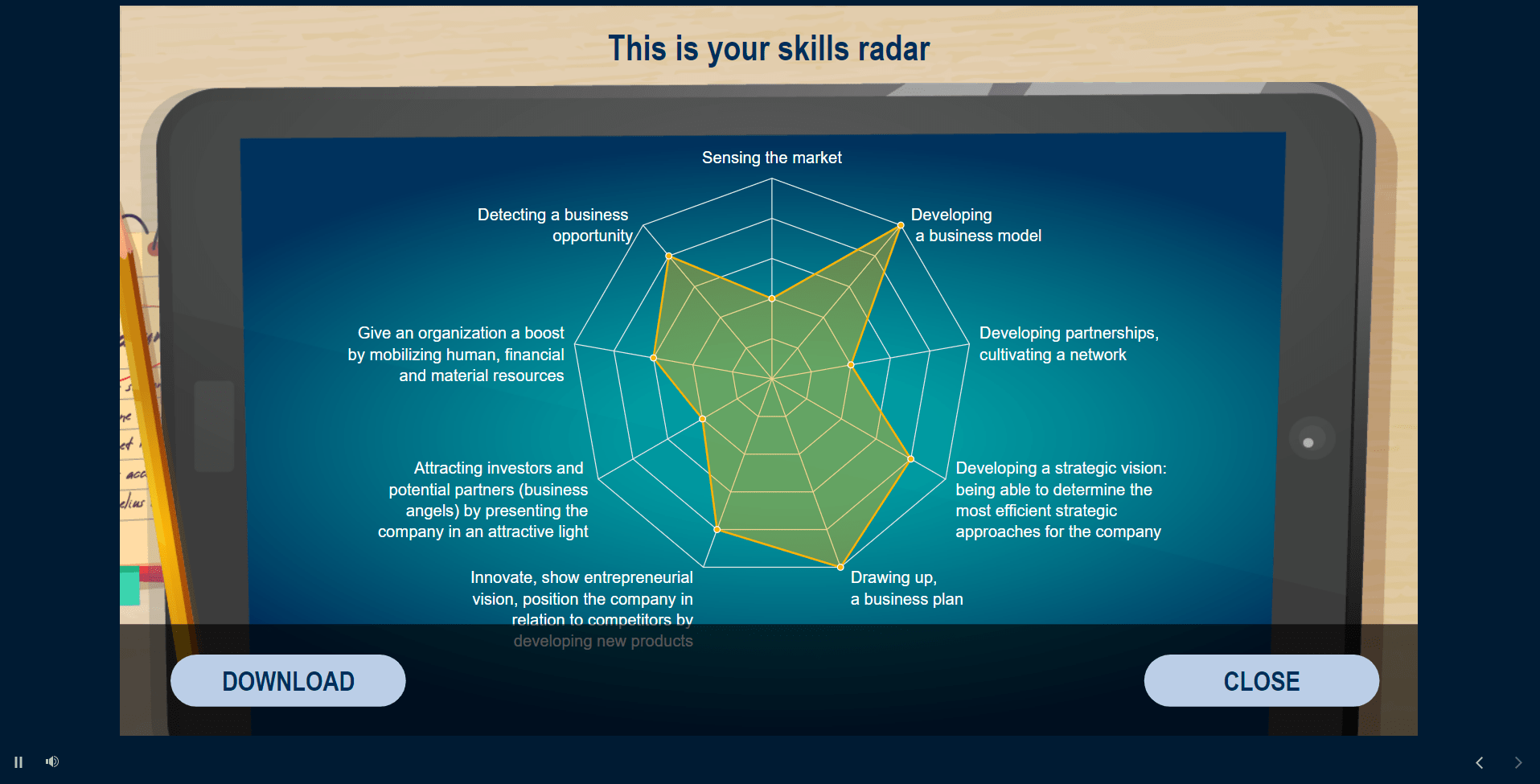
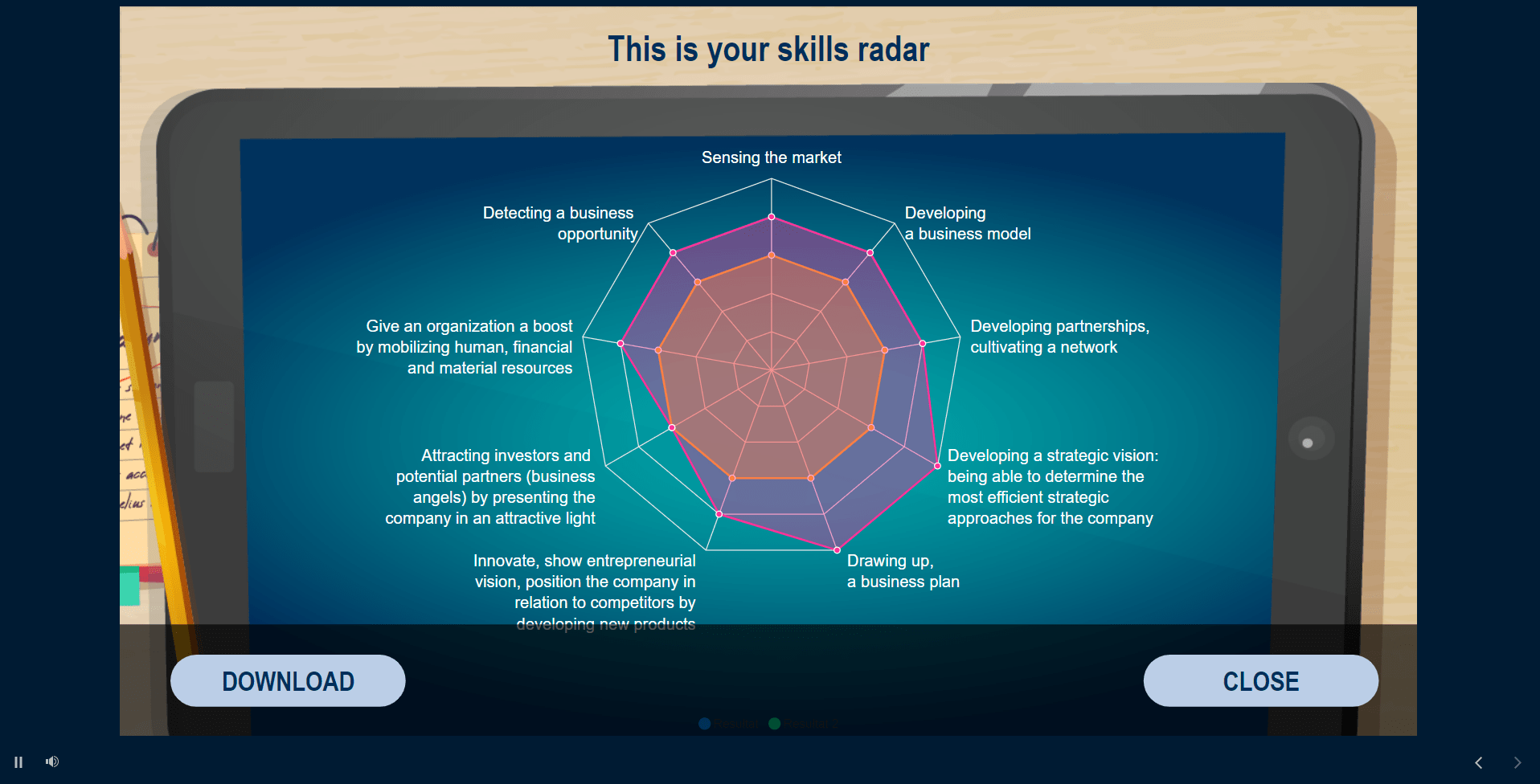
activity ofself-positioning before/after the course, generating a radar of skills
Course:Entrepreneurial project and business plan
Duration: 5 min
double positioning before/after class
Particularity:
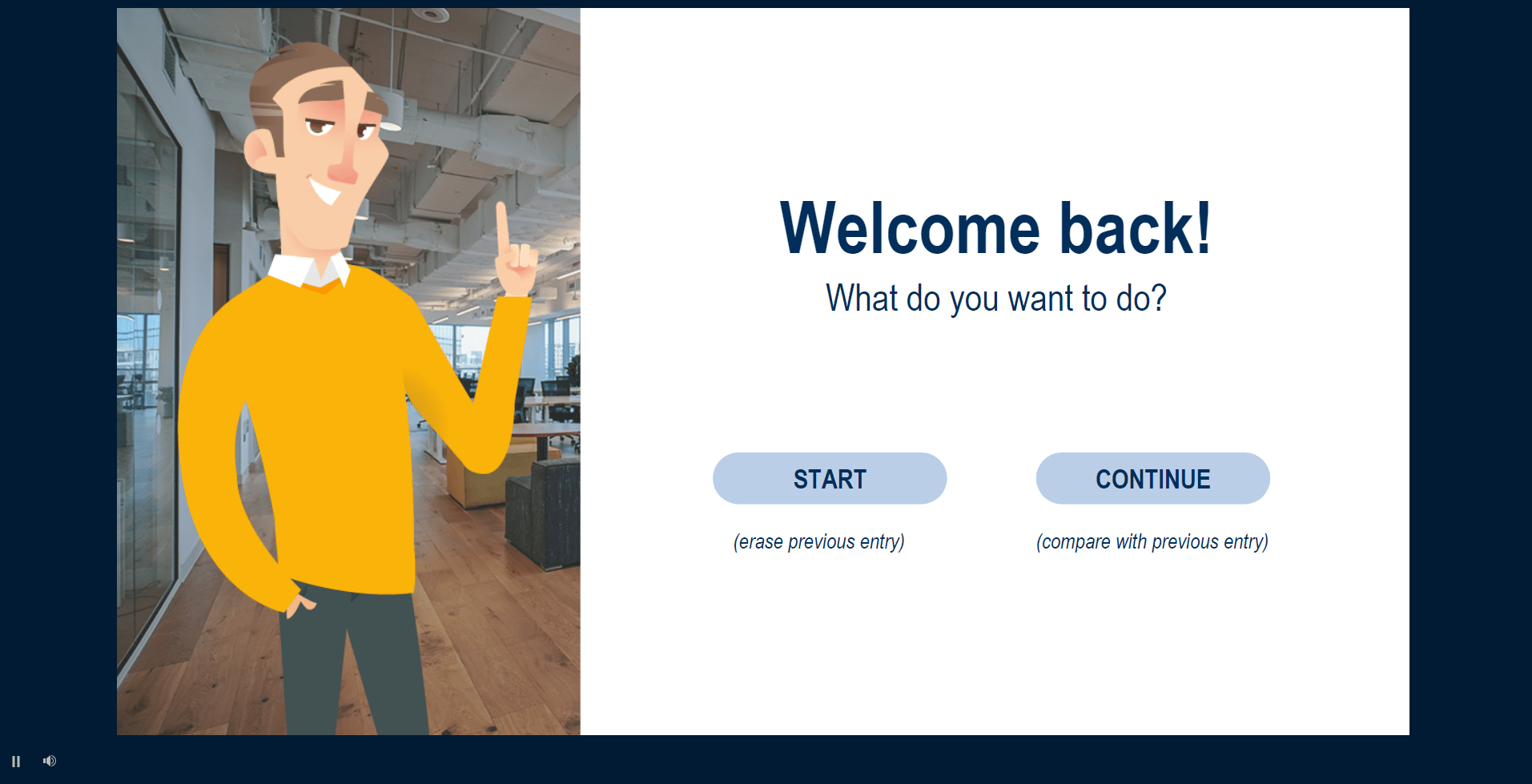
The learner positions himself on a number of skills specific to entrepreneurship and thus gets its skills radar. It can compare the radar it gets before taking the course to the one he gets after.
Some examples
Profiling activity
Course: Business simulation
Duration: 5 min
Setting up filters that refine a position
Particularity:
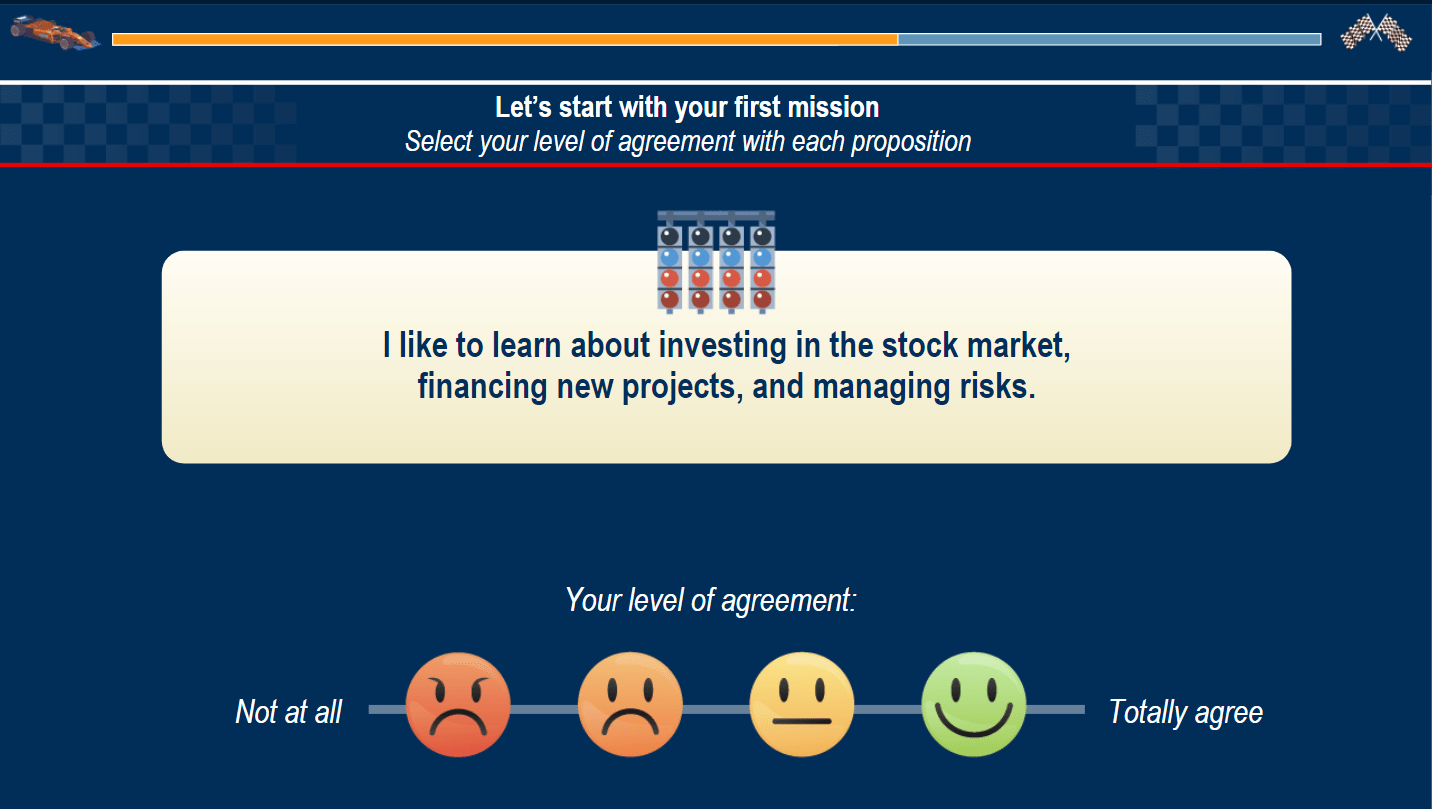
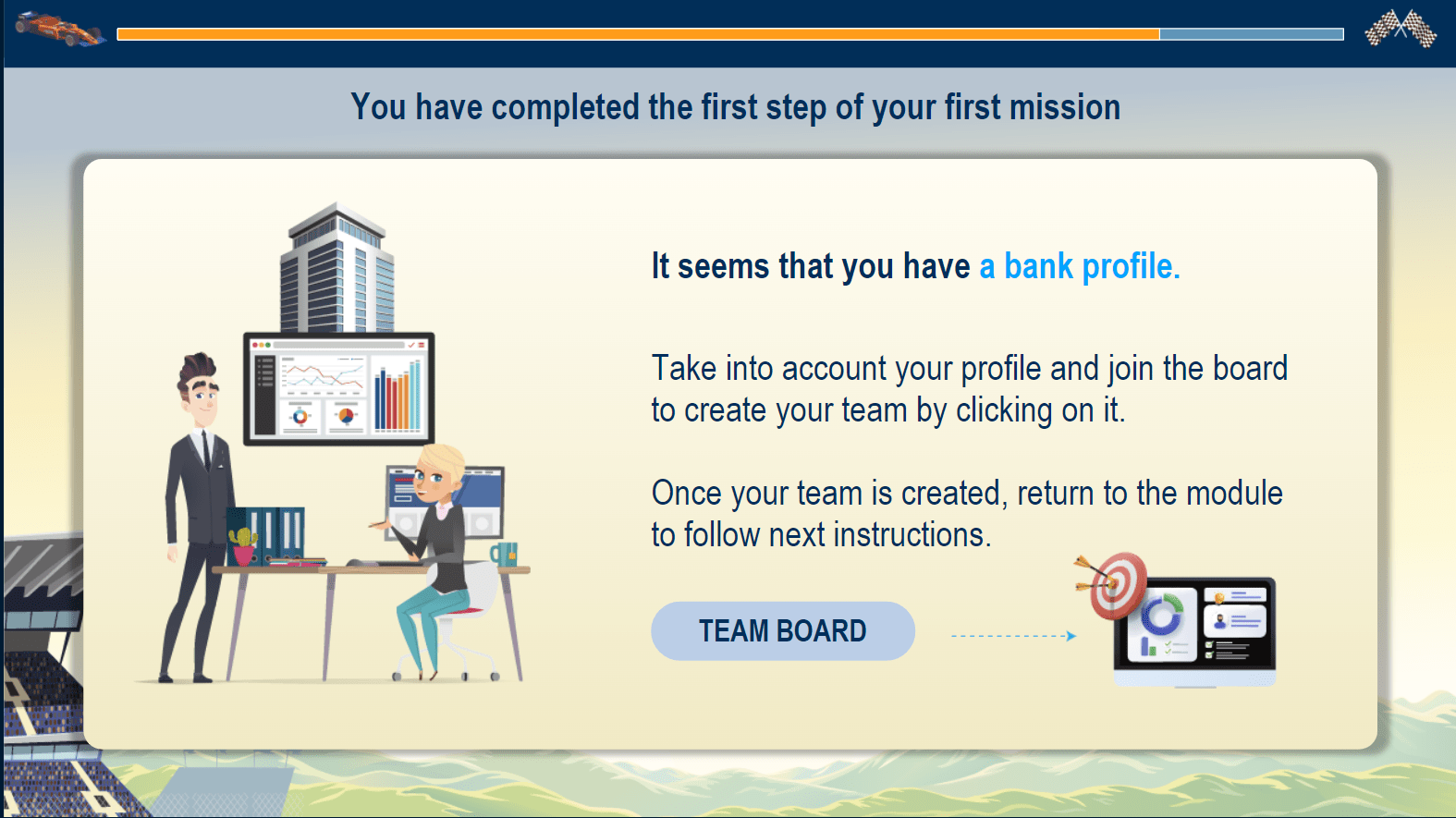
The learner answers a series of questions after which he is oriented towards a choice profile-specific (e.g., if they are to play a specific role in a group, the activity tests his preferences).
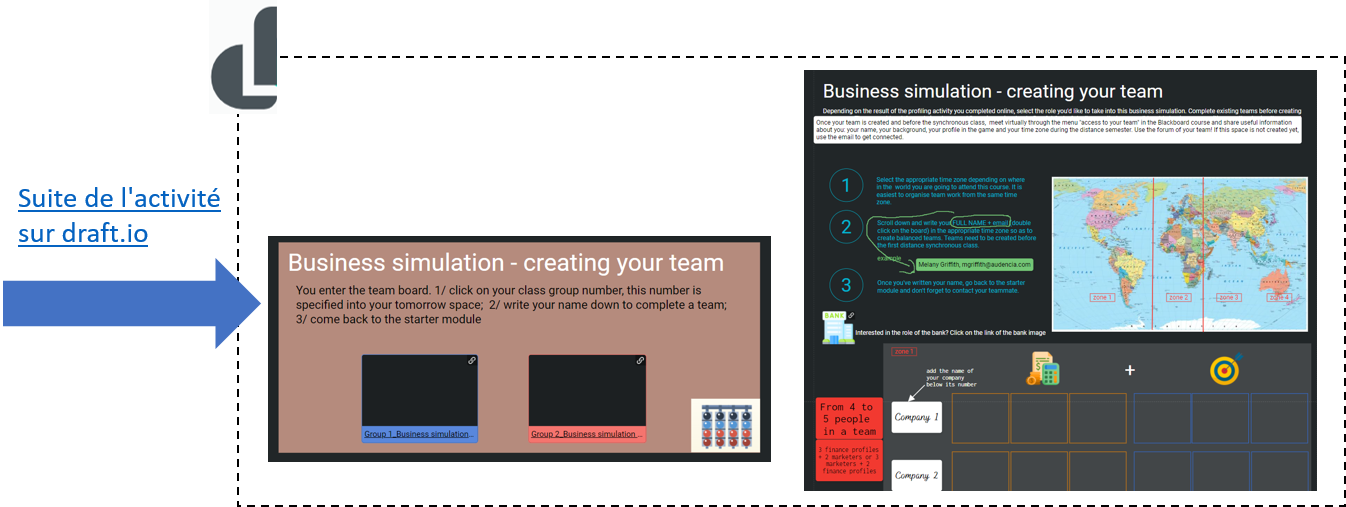
He then chooses, via an external tool like draft.io, a profile/role that he will then adopt.
In other words, the profiling module is here a preamble to a business simulation game called “Jesse”.
Some examples